18U Middle Atlantic AV rack build
A close look at the layout decisions that make a home’s technology easier to operate, cool, maintain, and upgrade.
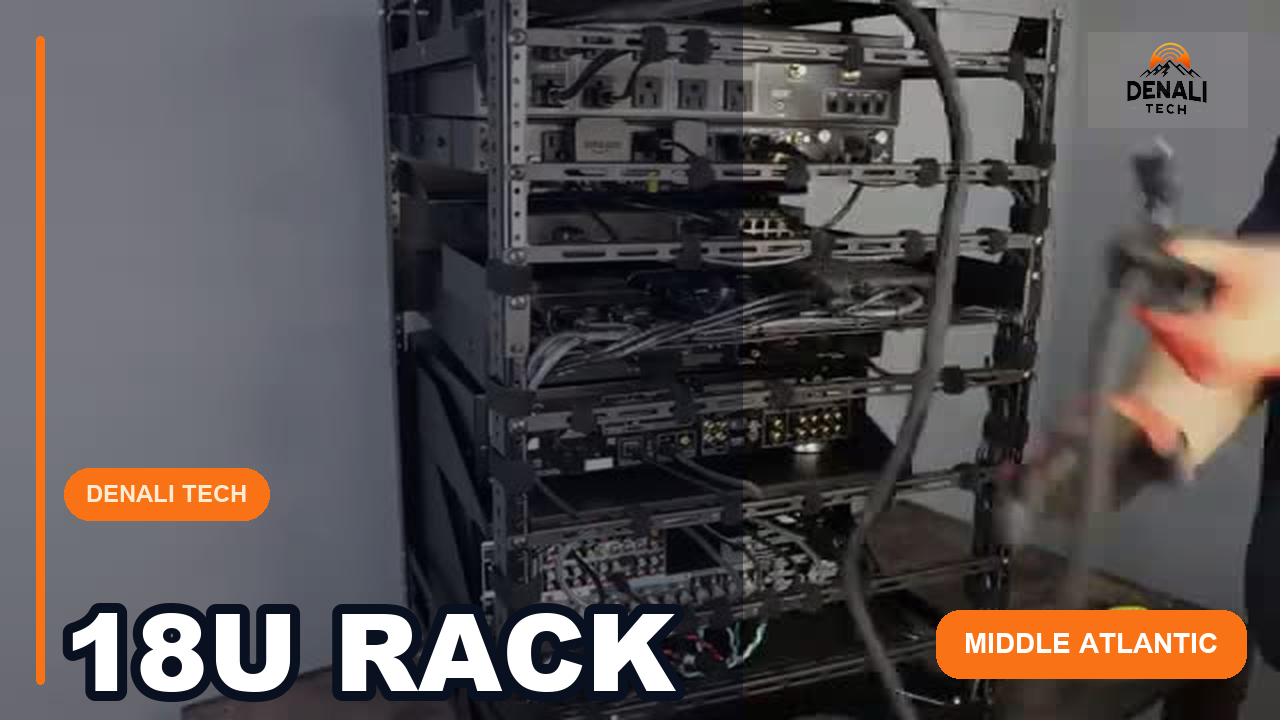
From an empty 18U frame to an organized system
The time-lapse moves quickly. The important part is the sequence: plan the equipment positions, establish the cable routes, secure each connection, then test and document the finished system.
The hidden room behind the smart home
The rack can hold the network, control, audio, video, surveillance, and power equipment that serves the rest of the home. When these systems share one organized location, the living spaces stay clean and the technology has a predictable service point. The rack should be sized around the actual equipment schedule—not squeezed into whatever space is left after construction.
What professional rack planning includes
Rack size
Count the equipment, shelves, ventilation panels, power devices, and reasonable space for future changes before selecting the rack.
Equipment order
Heavier components need proper support, while heat-producing equipment needs spacing and airflow that follow its manufacturer’s instructions.
Power strategy
Power protection and controlled power can help protect equipment and give a service technician a safer, clearer way to restart supported devices.
Cable paths
Power and signal cables need intentional routes, strain relief, usable bend radius, and enough slack for service without becoming a tangled bundle.
Access
A beautiful front is only half the job. Rear access, removable panels, lighting, and room to work can make future service much faster.
Documentation
Labels and an accurate equipment record help the next technician understand the system before changing it.
A finished rack should feel deliberate
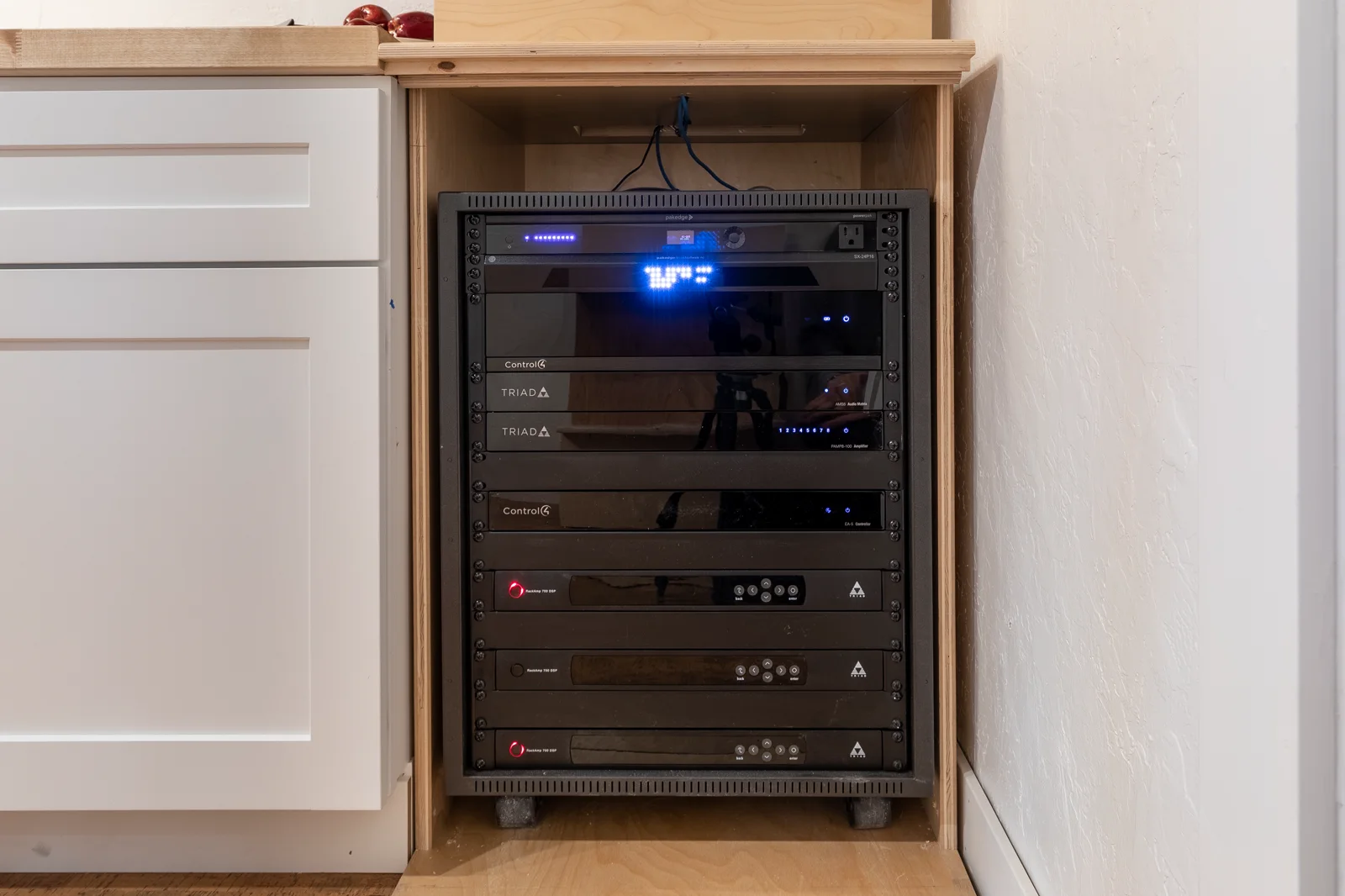
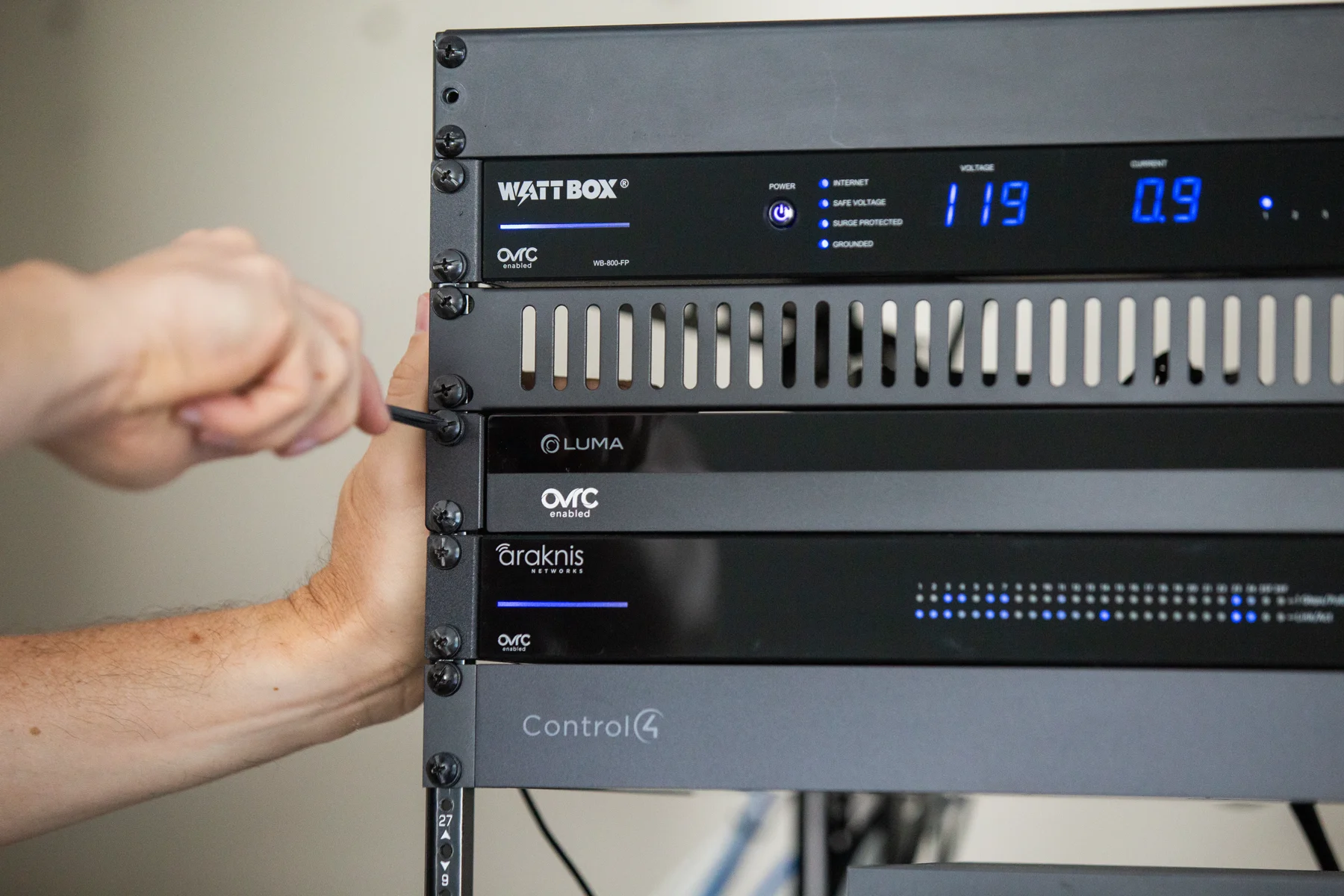
These supporting project photos show two parts of a professional result: a compact finished rack that fits its assigned space and a close view of rack-mounted power, surveillance, networking, and control equipment. They are examples from other Denali Tech work, not additional views of the 18U build above.
Questions worth asking during planning
- Is the rack deep and strong enough for the specified equipment and accessories?
- Can a technician reach the front and rear without moving finished cabinetry?
- Does the location provide the ventilation and temperature control the equipment requires?
- Are dedicated electrical needs, grounding, surge protection, and backup power addressed?
- Do structured wiring runs return to this location with clear labels and safe bend radius?
- Is there spare rack space, power capacity, and cable pathway for reasonable future changes?
Choose the rack around the system
An 18U rack can be a good fit for some focused or medium-size systems, but rack height alone does not tell the whole story. Depth, weight capacity, ventilation, mounting style, and the equipment list matter just as much.
| Planning question | Why it changes the recommendation |
|---|---|
| What lives in the rack? | Network, audio amplifiers, video distribution, surveillance recording, control, and power equipment use very different amounts of space and create different heat loads. |
| Where will it be installed? | A closet, mechanical room, built-in cabinet, and open utility area each create different access and ventilation constraints. |
| Will the system grow? | Leaving intentional capacity is usually cleaner and less expensive than replacing a fully packed rack during the next upgrade. |
| How will it be serviced? | Slide-out, pull-out, rotating, wall-mounted, and floor-standing solutions serve different rooms and access conditions. |
Service should start with understanding, not untangling
When the rack is labeled and accessible, a technician has a clearer path to identify a device, trace a connection, isolate a problem, or replace a component. That does not eliminate every service visit, but it removes avoidable confusion and helps protect the rest of the system while work is performed.
Manufacturer references
For current product families and planning information, see Middle Atlantic products, Legrand AV residential infrastructure, and the Forward family guide.
Product requirements can vary. The final rack, shelves, rails, accessories, anchoring, electrical work, ventilation, load, and service clearances should be confirmed against the selected equipment and current manufacturer instructions.
Planning a rack, theater, or whole-home system?
We can review the equipment list, room, wiring paths, power, ventilation, and future needs before the rack is selected.