Beautiful furniture still has to carry the amplifier.
This Salamander Oslo 617 and McIntosh MC255 project shows the part homeowners rarely see: a cabinet must support the equipment, leave the required cooling space, control the cables, and remain serviceable after the room is finished.

The cabinet before the room looks finished.
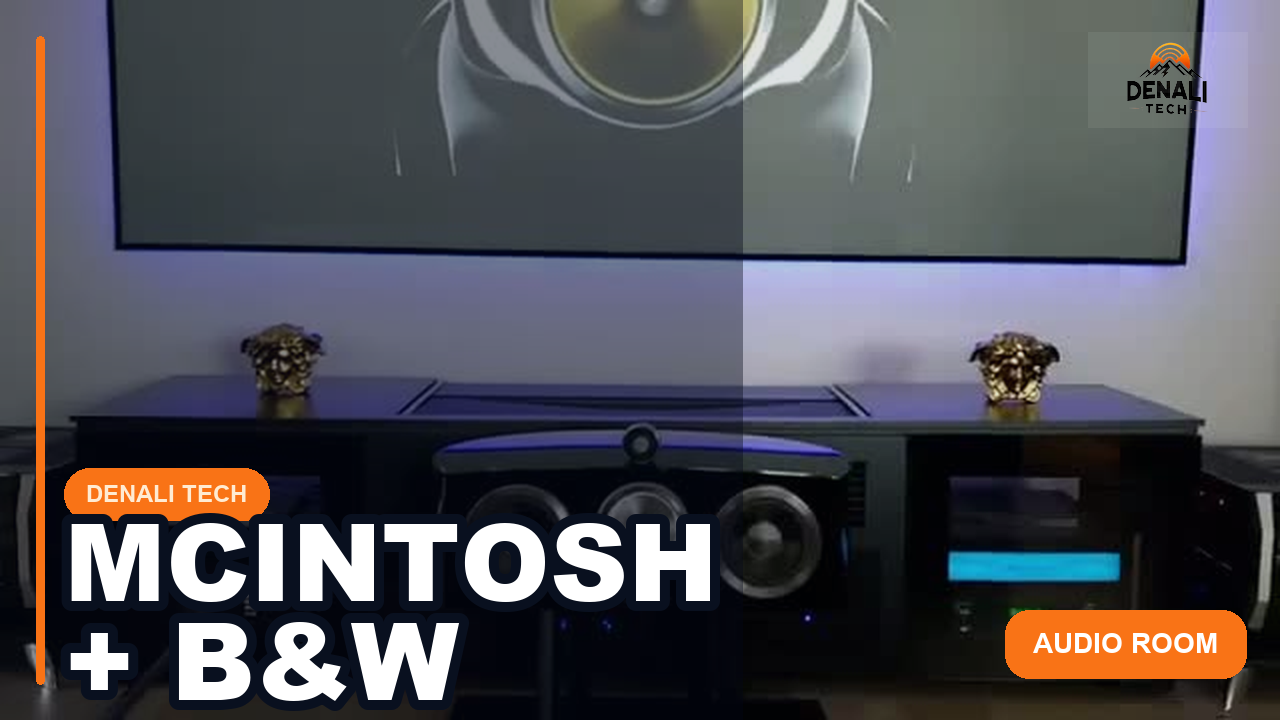
The video shows the work behind the clean result. This is where support, rack layout, ventilation, power, and cable routing are decided—before the doors hide the system.
Denali Tech project footage. The final support and ventilation plan must follow the exact cabinet configuration and current equipment documentation.
Three checks decide whether the idea works.
Looking at the front of the furniture is not enough. The decisive measurements are inside the cabinet and behind the equipment.
Can it carry the weight?
Verify the specific shelf, rack rail, chassis, bracket, and attachment method—not only the total cabinet rating.
Can it clear the depth?
Include the amplifier chassis, front panel, binding posts, power cord, signal cables, and a safe bend radius.
Can heat escape?
Follow the amplifier's clearance requirements and confirm how cooler air enters and warmer air exits the cabinet.
The design sequence: select the equipment, confirm its real dimensions and weight, choose the approved support method, map ventilation and wiring, and only then approve the cabinet configuration.
The amplifier changes the furniture plan.
McIntosh publishes the MC255's physical size and weight. Those numbers must be compared with the exact cabinet interior and support accessories, not the exterior furniture dimensions alone.
A substantial five-channel amplifier.
McIntosh lists the MC255 at 17.5 inches wide, 9-7/16 inches high including its feet, 21 inches deep including the front panel and cables, and 89.5 lb. The product delivers three front channels at 250 watts each or all five channels at 200 watts each into 4 or 8 ohms.
Do not assume the standard shelf is enough.
Salamander's current accessory page lists its standard adjustable MDF shelf at 75 lb, which is below the MC255's published 89.5 lb unit weight. This does not rule out the cabinet; it means the final project must use a manufacturer-approved support solution—such as the appropriate rack rails, heavy-duty support, or another verified configuration—and account for the complete installed load.
Ventilation needs actual space.
The MC255 owner's manual states that adequate ventilation is required and gives minimum spacing for a custom-cabinet installation. A quiet ventilation fan can help when multiple components share one enclosure.
Do not fill every visible opening.
McIntosh advises against installing the MC255 directly above another heat-generating component. The shelf also needs the specified ventilation cutout. Cabinet louvers help, but the complete airflow path must work with the doors and rear panel in place.
Clearances above are from the MC255 owner's manual for custom-cabinet installation. Check every installed component, because its requirements may differ.
Four systems share the same cabinet.
The amplifier is only one part of the enclosure. Power, signal, speakers, networking, control, and ventilation all need their own routes without blocking access to one another.
Weight and structure
Approved shelves or rails, cabinet chassis, feet or base, floor condition, and load distribution.
Intake and exhaust
Component clearances, vent openings, door behavior, rear panel, and active cooling if required.
Signal and power
Binding-post access, interconnects, network, power, bend radius, strain relief, and labeling.
Future access
Removable panels, lighting, cable travel, door clearance, and a safe route for removing heavy equipment.
The cabinet should remain serviceable.
A clean room should not require destructive work when an amplifier, source, or cable needs attention. The removal path matters as much as the installation path.
Ask how the equipment comes back out.
An 89.5 lb amplifier needs a safe lift path and enough room for hands, connectors, and temporary support. Rear access should not depend on pulling tight cables or moving finished furniture without protection.
Choose based on the room and the service burden.
Both can be excellent when designed correctly. The decision is whether the equipment must become part of the living space or can live in a dedicated technical area.
Furniture-integrated cabinet
- The equipment remains in the room
- Appearance is a major project requirement
- The verified support and ventilation plan fits the enclosure
- Doors and removable panels still permit service
Dedicated equipment rack
- The system includes more sources, power, network, or control equipment
- Full front-and-rear access is valuable
- Future growth is likely
- Heat and equipment noise are better kept outside the listening room
See other ways serious AV equipment gets integrated.
These are different projects, shown separately so the equipment and room choices are not confused with the Oslo 617 build.

MC452 cabinet integration
A separate heavy-amplifier furniture project.
Listening-room system planning
How room, speakers, amplification, and access work together.
Strong AV rack planning
When a dedicated rack is the cleaner long-term answer.
Official specifications reviewed
Checked August 18, 2026 against the McIntosh MC255 product page, MC255 owner's manual, Salamander's current Oslo cabinet information, current cabinet accessories, and product reference guide. The Oslo line and available configurations have changed over time; verify the exact model, shelf or rail system, interior dimensions, ventilation accessories, and current manufacturer approval before ordering or modifying a cabinet.
Design the room and the equipment home together.
Have the cabinet checked before the amplifier goes in.
Send the cabinet model, equipment list, room photos, and available power. Denali Tech can review weight support, depth, ventilation, cabling, and service access as one plan.