Whole Home Audio Systems: Sonos vs Traditional Multi-Room Audio 2026

Want music throughout your entire home? Whole home audio is one of the most popular smart home features - and for good reason. There's nothing like having your favorite music follow you from room to room, or playing different music in different zones simultaneously.
But when it comes to whole home audio, you have two main options: Sonos wireless speakers or traditional distributed audio systems with in-wall/in-ceiling speakers. Both can deliver great sound throughout your home, but they work very differently and suit different needs.
As professional smart home installers in Chicago, we've installed both Sonos and traditional audio systems in hundreds of homes. In this comprehensive comparison, we'll break down everything you need to know to choose the right whole home audio system for your home.
🔊 Quick Answer: Sonos is better for easy setup, flexibility, and wireless convenience. Traditional distributed audio is better for permanent installations, hidden speakers, superior sound quality, and integration with Control4/URC systems. Sonos costs $5,000-$12,000 for a whole home, while traditional systems cost $8,000-$25,000+.
What is Whole Home Audio?
Whole home audio (also called multi-room audio) lets you play music throughout your entire home. You can:
- Play the same music everywhere: Sync all speakers so the same song plays throughout your home
- Play different music in different rooms: Kids listen to their music in their rooms while you listen to yours in the kitchen
- Control everything from your phone: Choose what plays where, adjust volume, skip tracks - all from your smartphone
- Use voice control: "Hey Google, play jazz in the living room" or "Alexa, pause kitchen music"
- Integrate with your smart home: Include audio in scenes (e.g., "Dinner Party" scene dims lights and starts background music)
Whole home audio transforms how you experience music in your home. Instead of being tied to a single stereo system or room, music becomes ambient throughout your entire living space.
Sonos: Wireless Whole Home Audio
Sonos is the most popular wireless whole home audio system. Founded in 2002, Sonos pioneered the wireless multi-room audio category and remains the market leader.
How Sonos Works
Sonos uses a wireless mesh network to connect speakers throughout your home. Each Sonos speaker:
- Connects to your WiFi: No wiring needed between speakers
- Communicates wirelessly: Speakers sync over WiFi for synchronized playback
- Plays independently or together: Control each speaker individually or group them
- Streams directly: Each speaker connects to streaming services (Spotify, Apple Music, etc.) independently
Sonos Product Line
Sonos offers several speaker options:
Sonos Speakers:
- Sonos One ($219): Small smart speaker, perfect for bedrooms, offices, and smaller rooms
- Sonos Five ($549): Premium bookshelf speaker with excellent sound quality, great for living rooms
- Sonos Era 100 ($249): Compact smart speaker with improved sound and design
- Sonos Era 300 ($449): Premium speaker with spatial audio support
- Sonos Beam ($449): Soundbar for TV audio with whole-home audio capability
- Sonos Arc ($899): Premium soundbar with Dolby Atmos for home theater + whole-home audio
- Sonos Sub ($799): Wireless subwoofer to add bass to any Sonos system
- Sonos Amp ($699): Amplifier that lets you connect traditional speakers to Sonos
- Sonos In-Wall/In-Ceiling: Can integrate Sonos Amps with in-wall speakers for a hybrid approach
Sonos Advantages
- Easy Installation: No wiring between speakers - just plug in and connect to WiFi
- Flexibility: Move speakers easily, add speakers anytime, start small and expand
- User-Friendly: Excellent mobile app that's intuitive and easy to use
- Wireless Convenience: No need to run speaker wire throughout your home
- Great for Existing Homes: Perfect for homes where running wires would be difficult or expensive
- Streaming Integration: Works seamlessly with Spotify, Apple Music, Amazon Music, Pandora, and more
- Voice Control: Built-in Alexa and Google Assistant support
- Portability: Can move speakers between rooms (though they need power outlets)
Sonos Disadvantages
- Visible Speakers: Speakers sit on shelves, tables, or walls - not hidden like in-wall speakers
- WiFi Dependent: Requires strong WiFi network throughout your home
- Limited Integration: While Sonos works with Control4 and URC, integration isn't as seamless as native distributed audio
- Room Aesthetics: Speakers take up space and may not match every decor style
- Less Permanent: Easy to move, but also means they're not "built-in" to your home
- Cost Per Room: Each room needs its own speaker ($219-$899 per room)
Traditional Distributed Audio: In-Wall/In-Ceiling Systems
Traditional distributed audio systems use wired speakers installed in your walls and ceilings, connected to central amplifiers and audio distribution equipment. This is the professional approach used in custom smart home installations.
How Traditional Distributed Audio Works
Traditional systems use a centralized approach:
- Central Audio Processor: A central unit (often integrated with Control4 or URC) manages all audio sources and distribution
- Amplifiers: Multi-channel amplifiers power speakers throughout your home
- Wired Speakers: In-wall and in-ceiling speakers are wired back to the central equipment location
- Zone Control: Each room or area is a separate "zone" that can play independently or together
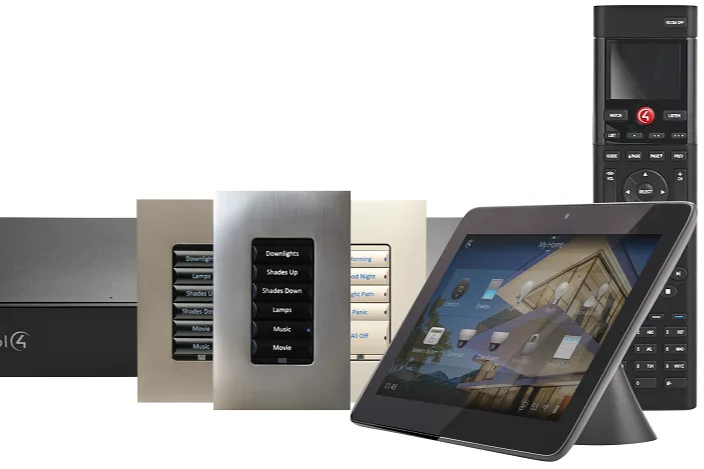
- Keypads or Apps: Control each zone via wall keypads or mobile app
Traditional Audio Components
System Components:
- Audio Processor/Matrix: Central unit that routes audio sources to different zones (e.g., Control4 Audio Matrix, URC controller)
- Amplifiers: Multi-zone amplifiers (typically 4, 8, or 16 channels) that power speakers
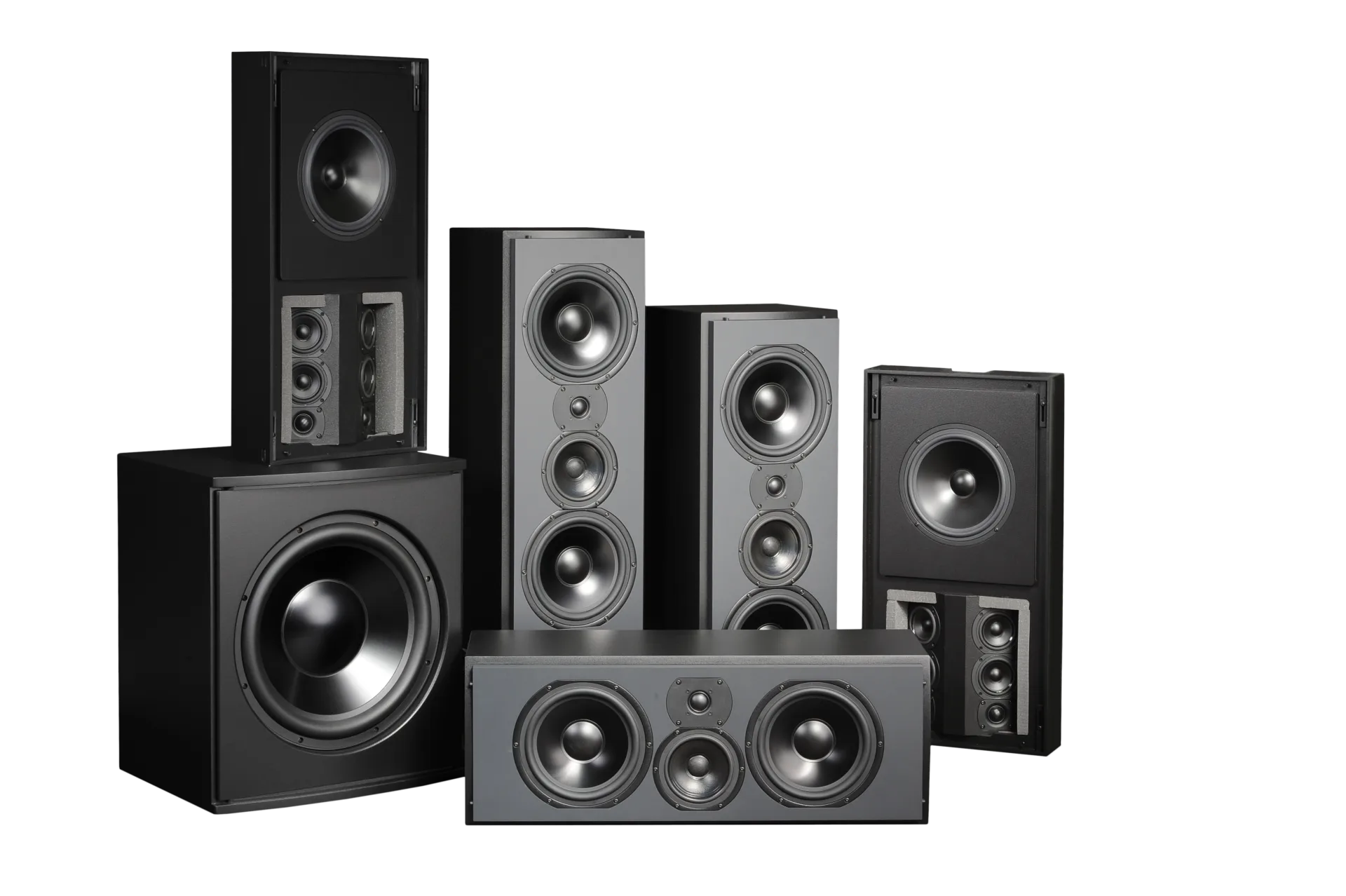
- In-Wall Speakers: Speakers installed in walls (typically in living rooms, kitchens)
- In-Ceiling Speakers: Speakers installed in ceilings (most common placement)
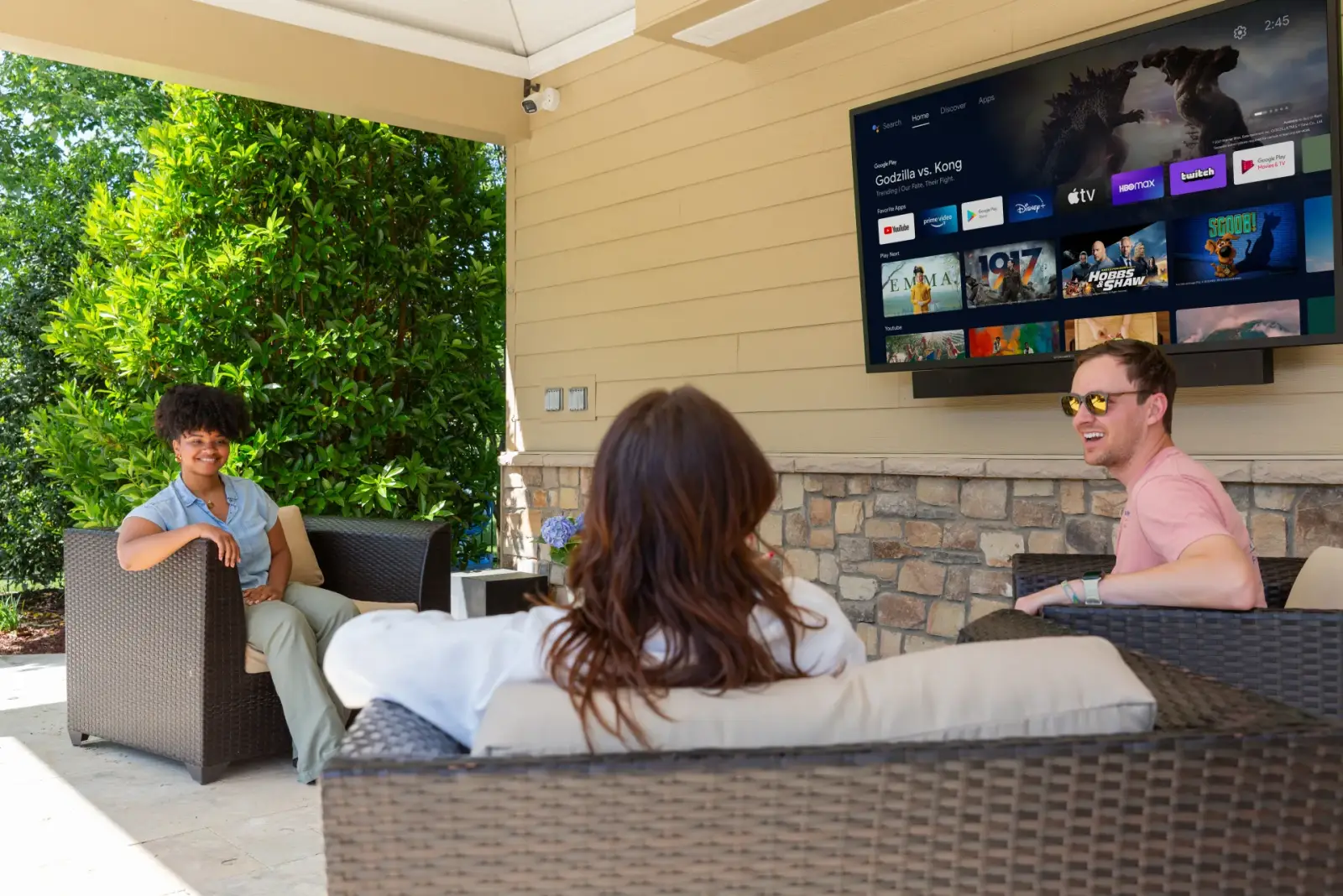
- Outdoor Speakers: Weather-resistant speakers for patios, decks, and outdoor areas
- Control Keypads: Wall-mounted keypads in each room for local control
- Speaker Wire: All speakers connect back to central location via speaker wire
Traditional Audio Advantages
- Hidden Speakers: In-wall and in-ceiling speakers are invisible - clean, professional appearance
- Superior Sound Quality: Better speakers, better amplification, better overall audio quality
- Perfect Integration: Seamlessly integrates with Control4 and URC smart home systems
- Permanent Installation: Built into your home, adds value and professionalism
- Scalability: Easy to add more zones and speakers as needed
- Professional Appearance: No visible speakers cluttering your rooms
- Multiple Source Support: Can play different sources in different zones simultaneously (TV audio, streaming, local music server)
- Better for Large Homes: More reliable for very large homes with many zones
Traditional Audio Disadvantages
- Installation Required: Requires running speaker wire throughout your home - best done during construction or major renovation
- Higher Cost: More expensive than Sonos, especially for installation in existing homes
- Less Flexible: Speakers are permanent - can't easily move or change location
- Professional Installation: Requires professional installer (like us) for proper setup
- More Complex: More components, more wiring, more complexity
- Wiring Requirements: Needs speaker wire run to each location - challenging in finished homes
Head-to-Head Comparison: Sonos vs Traditional Audio
| Feature | Sonos | Traditional Distributed Audio |
|---|---|---|
| Installation | Easy - plug in and connect to WiFi | Complex - requires wiring and professional installation |
| Speakers | Visible wireless speakers | Hidden in-wall/in-ceiling speakers |
| Sound Quality | Very good for wireless speakers | Superior - professional-grade audio |
| Cost | $5,000-$12,000 (whole home) | $8,000-$25,000+ (whole home) |
| Flexibility | Highly flexible - move speakers easily | Permanent - built into home |
| Control4/URC Integration | Works but less seamless | Perfect native integration |
| App Experience | Excellent Sonos app | Integrated with smart home app |
| Best For | Existing homes, easy setup, flexibility | New construction, renovations, premium installations |
| WiFi Dependency | Requires strong WiFi network | Wired - doesn't depend on WiFi for audio |
| Home Value | Adds some value (removable) | Adds significant value (permanent) |
Cost Comparison: Sonos vs Traditional Audio
Sonos Costs for Whole Home
Small Home (5-7 rooms):
- 5-7 Sonos One speakers: $1,095-$1,533
- 1-2 Sonos Five for main rooms: $549-$1,098
- Total Equipment: $1,644-$2,631
- Professional installation and setup: $500-$1,000
- Total Installed: $2,144-$3,631
Medium Home (8-12 rooms):
- 8-12 Sonos speakers (mix of One and Five): $2,000-$5,000
- 1-2 Sonos Sub for bass: $799-$1,598
- Professional installation: $800-$1,500
- Total Installed: $3,599-$8,098
Large Home (12+ rooms):
- 12-20 Sonos speakers: $4,000-$10,000
- Multiple subs and premium speakers: $1,500-$3,000
- Professional installation: $1,500-$2,500
- Total Installed: $7,000-$15,500
Traditional Distributed Audio Costs
Small Home (4-6 zones):
- Audio processor/matrix: $1,500-$3,000
- 4-zone amplifier: $800-$1,500
- In-wall/in-ceiling speakers: $200-$500 per pair
- 8-12 speakers: $800-$3,000
- Speaker wire and installation: $2,000-$4,000
- Professional installation: $1,500-$3,000
- Total Installed: $6,600-$14,500
Medium Home (6-10 zones):
- Audio processor: $2,000-$4,000
- 8-zone amplifier: $1,500-$3,000
- 12-20 speakers: $2,400-$6,000
- Wiring and installation: $3,000-$6,000
- Professional installation: $2,000-$4,000
- Total Installed: $10,900-$23,000
Large Home (10+ zones):
- Premium audio processor: $4,000-$8,000
- Multiple amplifiers: $3,000-$8,000
- 20-40 speakers: $4,000-$12,000
- Wiring and installation: $5,000-$10,000
- Professional installation: $4,000-$8,000
- Total Installed: $20,000-$46,000+
💰 Cost Note: Traditional distributed audio costs more upfront, but adds permanent value to your home. Sonos costs less initially, but speakers can be removed. For new construction or major renovations, traditional audio often makes more sense. For existing homes, Sonos is typically more cost-effective.
Which System is Right for You?
Choose Sonos If:
- You want easy setup: Don't want to run wires or do major installation
- Your home is already built: Running wires would be difficult or expensive
- You value flexibility: Want to move or change speakers easily
- You want to start small: Can add speakers room by room over time
- You prefer visible speakers: Don't mind speakers on shelves or walls
- You have strong WiFi: Your home has reliable WiFi coverage throughout
- Budget is a concern: Looking for a more affordable whole-home audio solution
- You're not deeply integrated with Control4/URC: If you have a basic smart home setup or are just getting started
Choose Traditional Distributed Audio If:
- You're building or renovating: Perfect time to run speaker wires
- You want hidden speakers: Prefer clean, professional appearance with invisible speakers
- Sound quality matters most: Want the best possible audio quality
- You have Control4 or URC: Want seamless integration with your smart home system
- You want permanent installation: Looking for a built-in system that adds home value
- You have a large home: Multiple zones, many rooms, complex audio needs
- You want professional installation: Want a fully integrated, professionally installed system
- Budget allows for premium: Willing to invest more for superior quality and integration
Hybrid Approach: Best of Both Worlds
You don't have to choose just one! Many homeowners combine Sonos and traditional audio:
- Traditional audio for main areas: Living room, kitchen, dining room with in-wall/in-ceiling speakers
- Sonos for flexibility: Bedrooms, offices, outdoor areas with Sonos speakers
- Sonos Amp integration: Use Sonos Amp to power traditional speakers, getting Sonos streaming with hidden speakers
This hybrid approach gives you the benefits of both systems - hidden speakers where you want them, and flexible wireless speakers where it makes sense.
Integration with Control4 and URC
If you have (or plan to have) a Control4 or URC smart home system, audio integration is important.
Sonos Integration
Sonos works with Control4 and URC, but it's not as seamless as native distributed audio:
- Control4 Integration: Sonos integrates via the Sonos driver in Control4, allowing Control4 to control Sonos speakers
- URC Integration: URC can control Sonos speakers through their integration
- Limitations: Some features may not be as smooth as native audio, and you still need the Sonos app for some functions
- Best Use: Good for homes that want Sonos convenience with basic smart home integration
Traditional Audio Integration
Traditional distributed audio integrates perfectly with Control4 and URC:
- Native Integration: Audio is fully integrated into your smart home system
- Unified Control: Control audio from your Control4 or URC app alongside everything else
- Scene Integration: Audio is part of scenes (e.g., "Dinner Party" scene includes music)
- Keypad Control: Use smart home keypads to control audio zones
- Better Experience: Single app controls everything - lights, audio, temperature, security
Bottom Line: If you have or want Control4/URC, traditional distributed audio provides the best integration experience.
Installation Considerations
Sonos Installation
Sonos installation is relatively simple:
- Place speakers: Decide where speakers go (need power outlets nearby)
- Connect to WiFi: Use Sonos app to connect speakers to your WiFi network
- Set up app: Download Sonos app, create account, add streaming services
- Test and calibrate: Test all speakers, set up rooms/zones, calibrate audio if needed
Time: Can be DIY in a few hours, or professional installation in 2-4 hours for whole home.
Traditional Audio Installation
Traditional audio installation is more involved:
- Design and planning: Determine speaker locations, zones, and wiring paths
- Run speaker wire: Wire from each speaker location back to central equipment location
- Install speakers: Cut holes, install in-wall/in-ceiling speakers
- Install equipment: Set up amplifiers, audio processors, and control equipment
- Wire and connect: Connect all speakers to amplifiers, connect sources
- Program system: Configure zones, sources, control interfaces
- Test and calibrate: Test all zones, calibrate audio levels, fine-tune
Time: Professional installation takes 3-7 days depending on home size and complexity.
Common Questions About Whole Home Audio
Can I use Sonos speakers with traditional in-wall speakers?
Yes! Sonos Amp allows you to power traditional in-wall or in-ceiling speakers while getting Sonos streaming and app control. This gives you hidden speakers with Sonos convenience.
Do I need a Control4 or URC system for whole home audio?
No, but it helps. Sonos works standalone with just the Sonos app. Traditional distributed audio works best with Control4/URC, but some systems can work standalone or with simpler control.
Can I add outdoor speakers?
Yes! Both systems support outdoor speakers. Sonos has outdoor-rated speakers, and traditional systems use weather-resistant in-wall or freestanding outdoor speakers.
What about home theater audio?
Home theater is separate from whole-home audio. You can have both - a dedicated home theater system for movies/TV, and whole-home audio for music throughout your home. They can share some components or be completely separate.
How many zones do I need?
Typically, each room or area is one zone. A typical home might have: Living Room, Kitchen, Master Bedroom, Guest Bedroom, Office, Outdoor Patio, etc. Each zone can play independently or be grouped with others.
Can I stream Spotify/Apple Music with both systems?
Yes! Both Sonos and traditional distributed audio systems support all major streaming services including Spotify, Apple Music, Amazon Music, Pandora, and more.
What if my WiFi isn't strong enough for Sonos?
Sonos uses a mesh network, so it's more forgiving than pure WiFi streaming. However, you may need to upgrade your WiFi network or use Sonos Boost to strengthen the mesh network. Alternatively, traditional wired audio doesn't depend on WiFi.
Which adds more value to my home?
Traditional distributed audio adds more permanent value because it's built into your home. Sonos adds value too, but speakers can be removed, so it's less "permanent" from a real estate perspective.
Why Choose Denali Tech for Whole Home Audio in Chicago
As professional smart home installers, we've installed both Sonos and traditional distributed audio systems throughout the Chicago area. Here's why homeowners choose us:
- Experience with Both Systems: We install Sonos and traditional audio regularly - we know both systems inside and out
- Honest Recommendations: We'll recommend the right system for your home, not just what we want to sell
- Control4/URC Expertise: We're authorized dealers who integrate audio seamlessly with smart home systems
- Professional Installation: Proper installation ensures optimal sound quality and reliability
- Custom Design: We design systems specifically for your home's layout and your listening preferences
- Ongoing Support: We're here long-term for troubleshooting, upgrades, and additions
- Transparent Pricing: No hidden fees, honest quotes upfront
Ready to Add Whole Home Audio to Your Chicago Home?
Get your free consultation today. We'll assess your home, discuss your audio preferences, and recommend the right system (Sonos, traditional, or hybrid) for your needs and budget.
What's Included in Your Free Consultation:
- Assessment of your home and audio needs
- Recommendation for Sonos vs traditional audio
- Custom design for your home
- Transparent pricing with no surprises
- Answers to all your questions
Or call us at (312) 439-7500
Serving Chicago and surrounding suburbs
Final Thoughts: Making the Right Choice
Both Sonos and traditional distributed audio can deliver excellent whole-home audio experiences. The right choice depends on your home, your priorities, and your budget.
Choose Sonos if: You want easy setup, flexibility, and don't mind visible speakers. Perfect for existing homes and those who value convenience.
Choose traditional distributed audio if: You want hidden speakers, superior sound quality, and seamless Control4/URC integration. Perfect for new construction, renovations, and premium installations.
And remember - you don't have to choose just one. A hybrid approach often works best, giving you the benefits of both systems.
As professional installers, we're here to help you make the right decision. We'll assess your home, understand your priorities, and recommend the system (or combination) that's perfect for you.
Get Started with Whole Home Audio Today
Ready to transform your home with whole-home audio? Let's talk about what's possible and what system makes the most sense for your home. No pressure, no sales pitch - just honest advice and transparent pricing.
Schedule Free Consultation