Traditional 4/8-ohm distributed audio when routing and volume control live elsewhere.
Start with the application—not the biggest watt number
Amplifiers with similar-looking front panels can solve completely different jobs. The correct family comes from the number of stereo zones, speaker impedance, cable distance, required DSP, control method and actual continuous load.
Integrated matrix, equalization, IP control and OvrC for a smarter multi-zone rack.
High-power 70V and low-impedance landscape speakers or subwoofers.
Many speakers, longer cable runs and scalable outdoor or commercial audio.
Episode Dynamic Series
Efficient Class-D power with audio sensing, 12V triggers and practical input flexibility. The multi-channel models provide independent channel inputs, global inputs and bridgeable outputs.
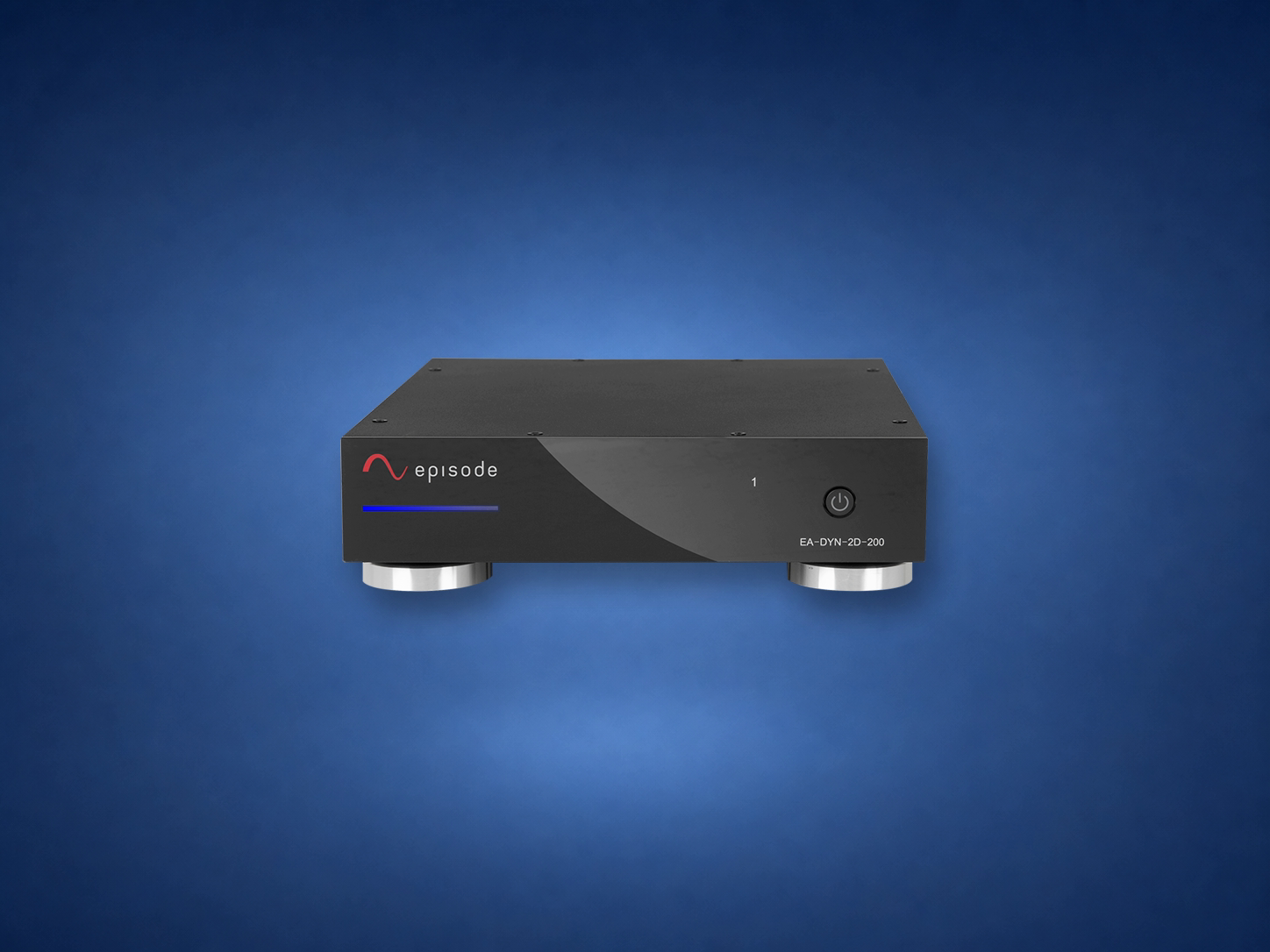
Dynamic 2D‑200
EA-DYN-2D-200
Best for: one higher-output room, a pair of speakers or a local audio upgrade.
- 2 channels
- 200W per channel at 4 ohms
- 100W per channel at 8 ohms
- Analog and optical input with loop and sub outputs
What this means: A compact, stronger two-channel amp when only one room needs power.
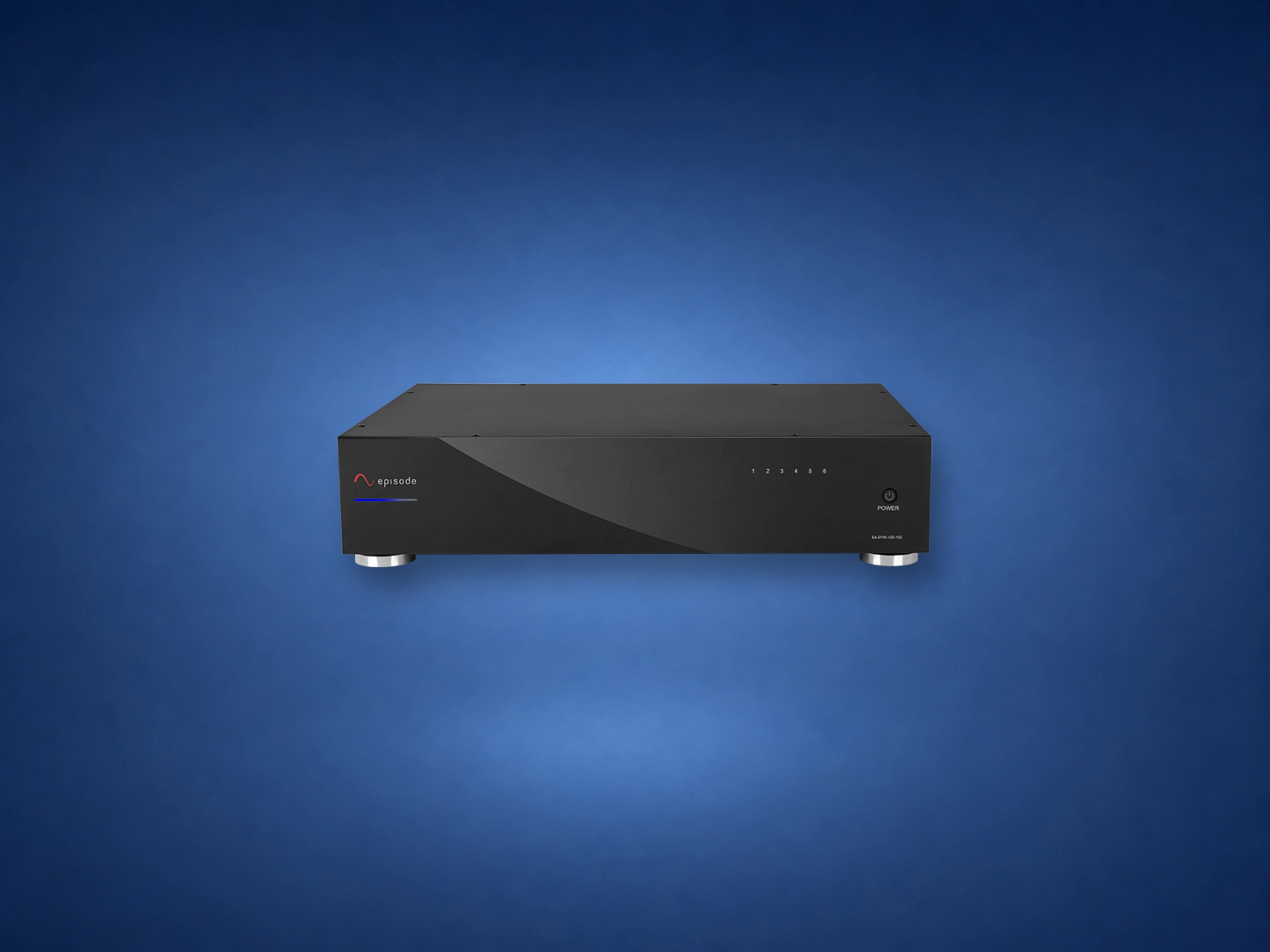
Dynamic 8D‑100
EA-DYN-8D-100
Best for: a compact whole-home audio system with up to four normal stereo zones.
- 8 channels / 4 stereo zones
- 100W per channel at 4 ohms; 50W at 8 ohms
- Bridgeable to 200W at 8 ohms
- Per-channel plus global inputs
What this means: The smaller centralized amp when four zones cover the project.
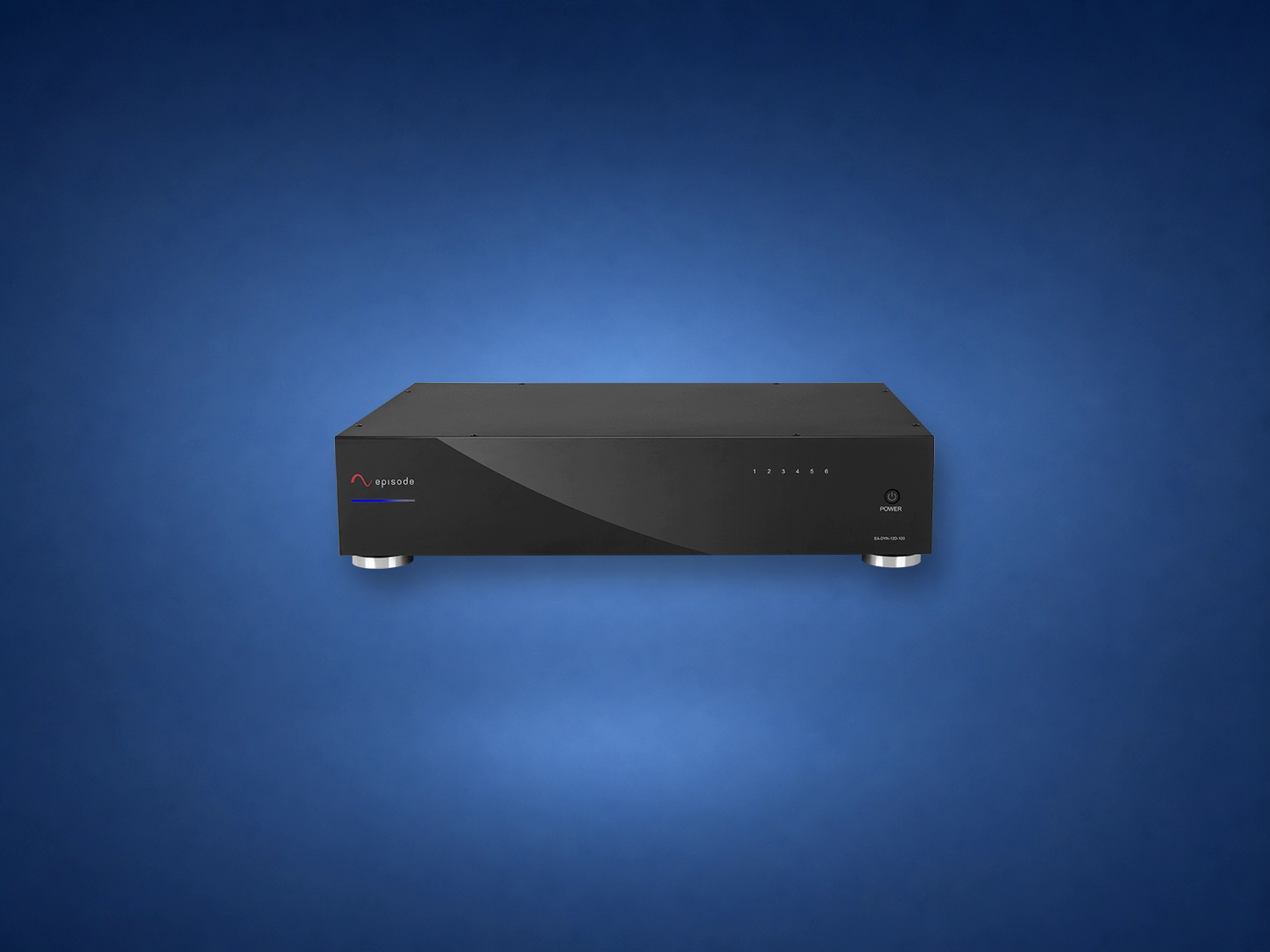
Dynamic 12D‑100
EA-DYN-12D-100
Best for: a standard multi-room system covering the main indoor living spaces.
- 12 channels / 6 stereo zones
- 100W per channel at 4 ohms; 50W at 8 ohms
- Bridgeable outputs for selected higher-power zones
- Audio sensing and 12V trigger control
What this means: The practical middle size for six rooms of architectural speakers.
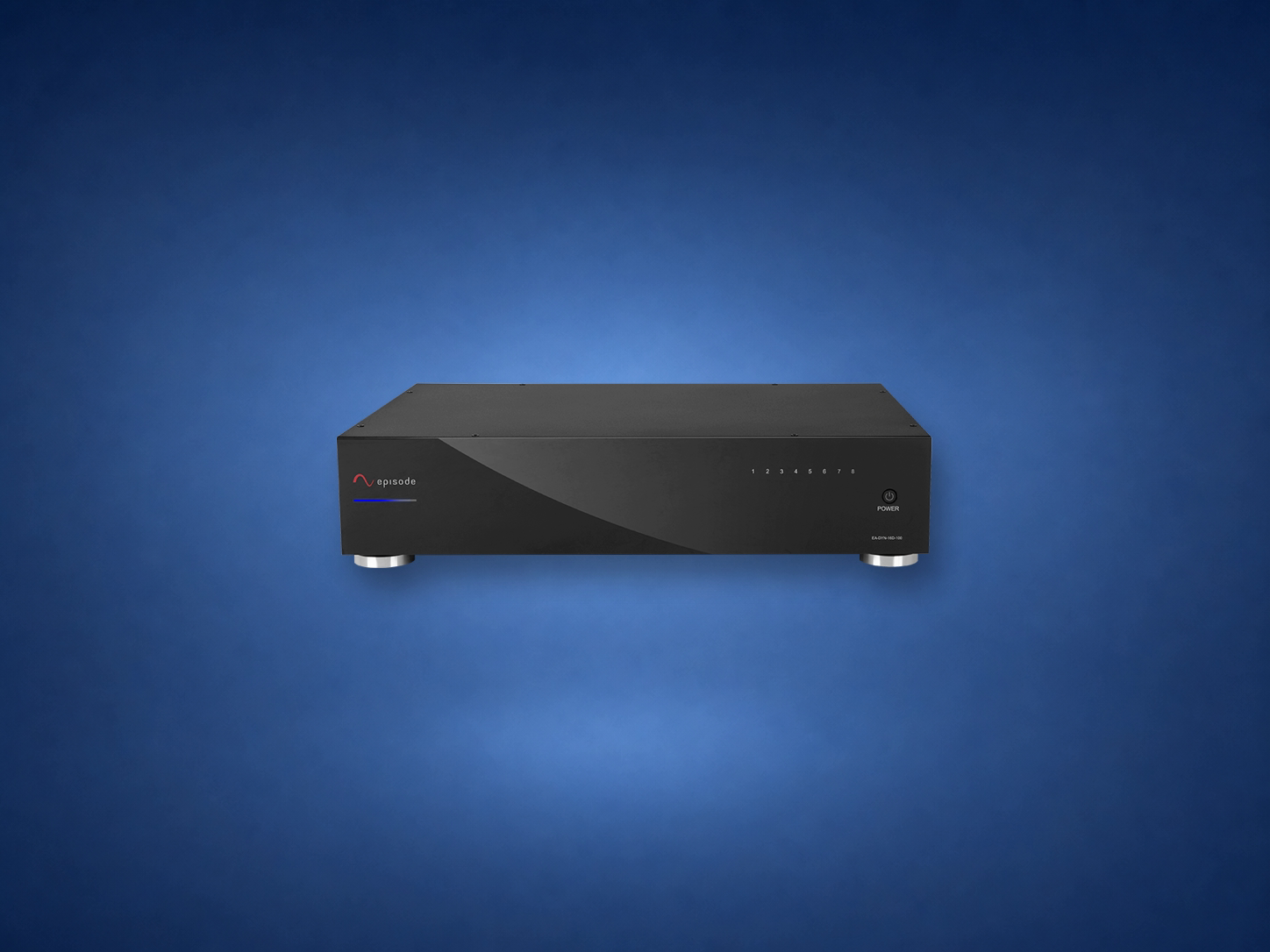
Dynamic 16D‑100
EA-DYN-16D-100
Best for: a larger home that needs eight stereo zones from one amplifier chassis.
- 16 channels / 8 stereo zones
- 100W per channel at 4 ohms; 50W at 8 ohms
- Bridgeable to 200W at 8 ohms
- Global inputs simplify shared-source distribution
What this means: More rooms in one chassis, without paying for DSP that the system may not need.
Episode Response DSP Series
Response combines amplification, matrix switching, per-zone DSP and system control. It is IP controlled, OvrC compatible and supported by drivers for Control4 and other professional control systems.
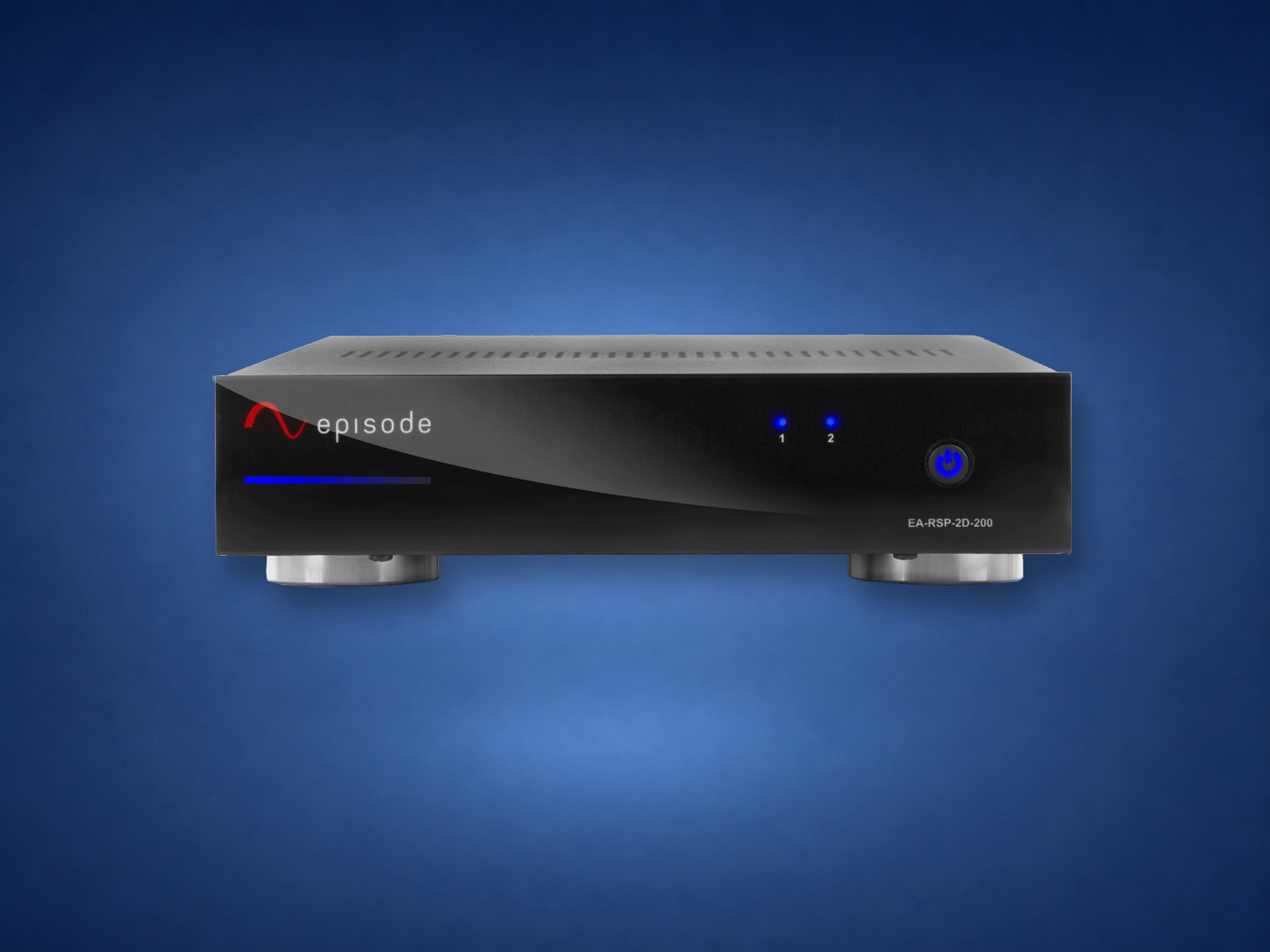
Response 2D‑200
EA-RSP-2D-200
Best for: one premium zone that needs stronger power, equalization and control.
- 2 × 200W at 4 ohms; 2 × 100W at 8 ohms
- Bridgeable to 400W at 8 ohms
- 10-band parametric EQ and dedicated sub output
- IP, IR, trigger and OvrC support
What this means: A complete one-room amplifier with the tuning and control built in.
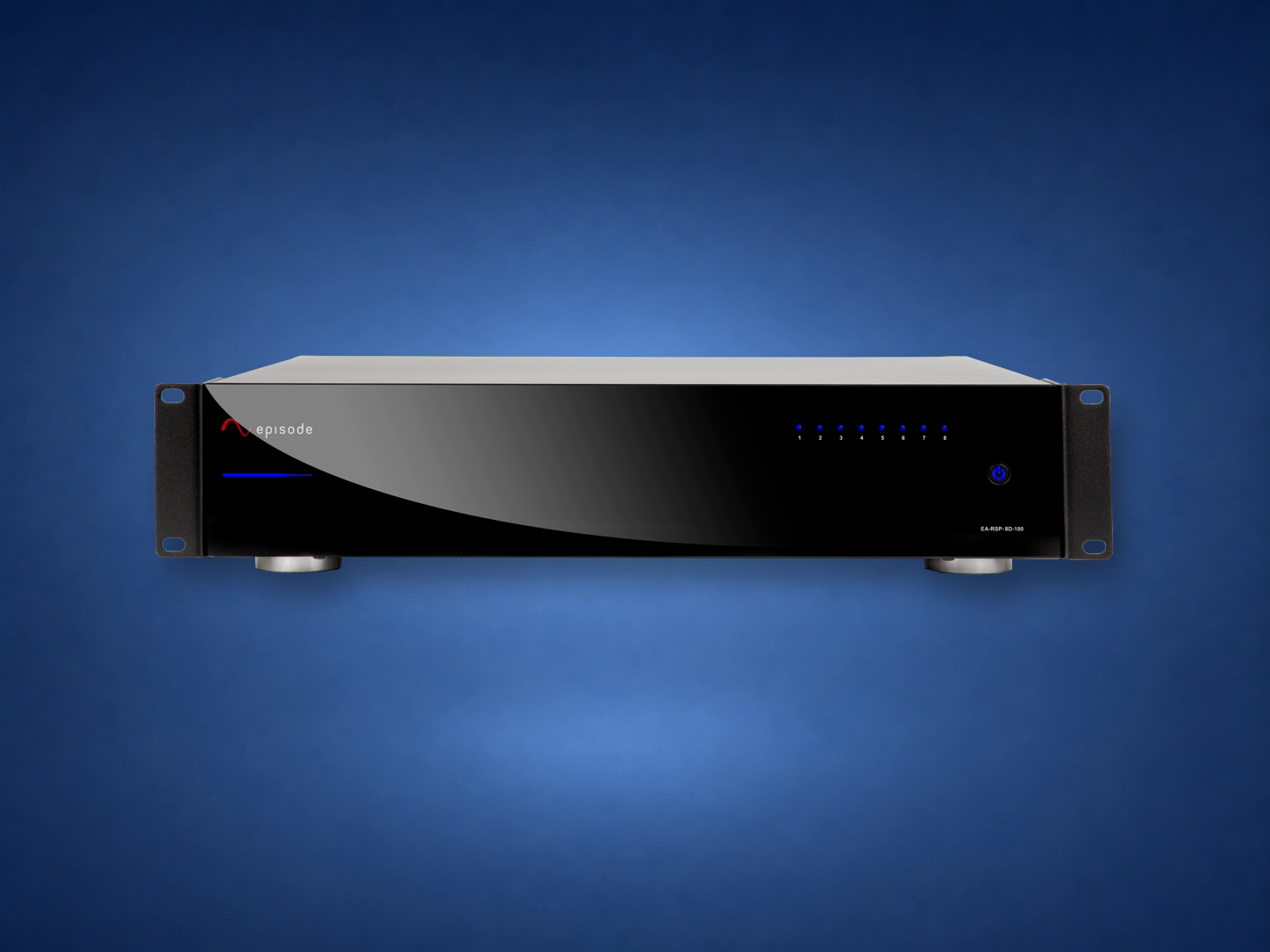
Response 8D‑100
EA-RSP-8D-100
Best for: four rooms that need source routing, DSP and automation from one component.
- 8 channels / 4 stereo zones
- Up to 100W per channel at 4 ohms
- 4-source matrix with per-zone volume and EQ
- Sub output for every zone
What this means: Four independently tuned rooms with less separate rack hardware.
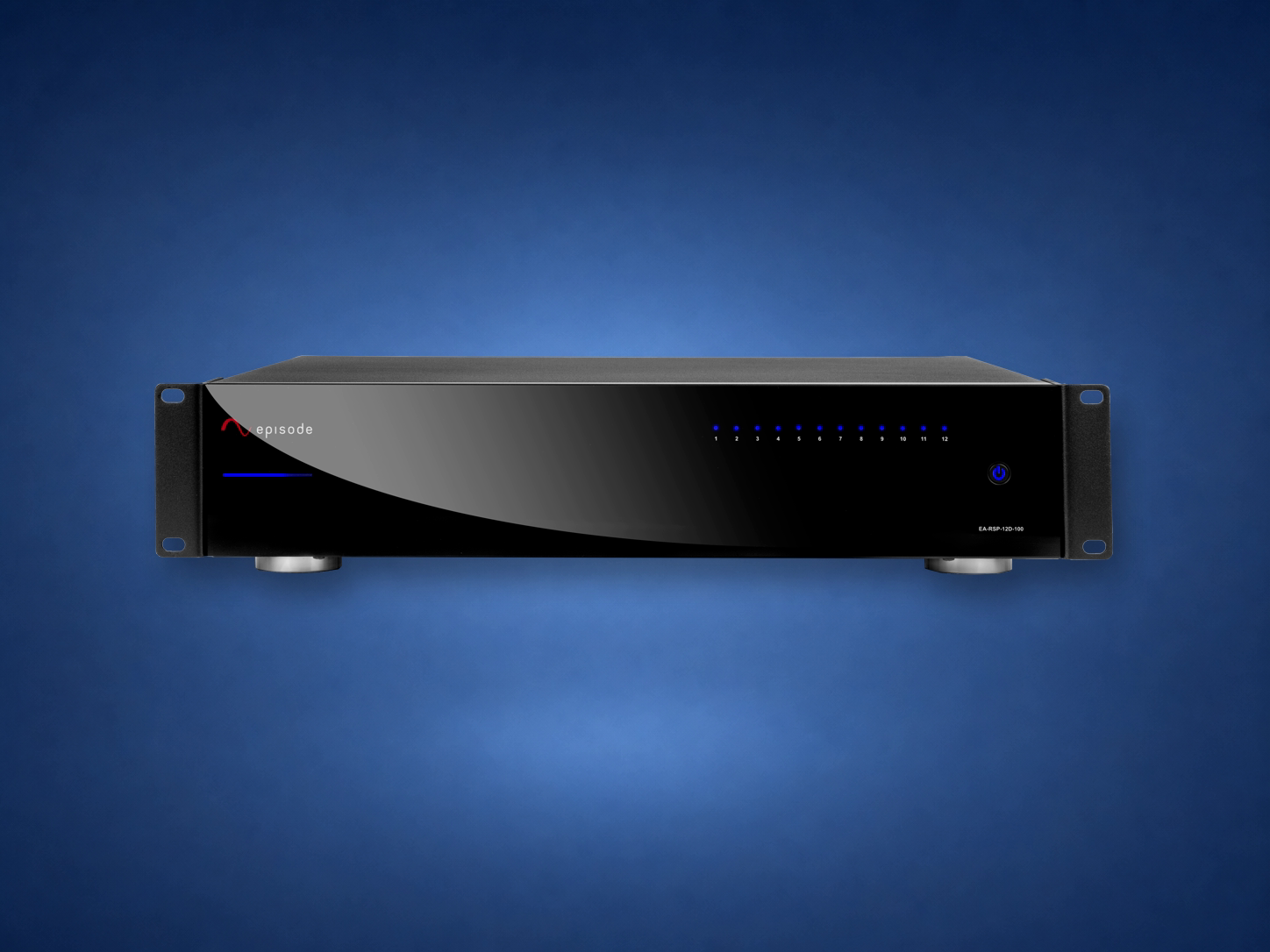
Response 12D‑100
EA-RSP-12D-100
Best for: a six-zone Control4 audio system needing centralized routing and tuning.
- 12 channels / 6 stereo zones
- Up to 100W per channel at 4 ohms; 85W all channels driven
- 6-source matrix and per-output DSP
- IP control, drivers and OvrC monitoring
What this means: The balanced all-in-one choice for six independently controlled rooms.
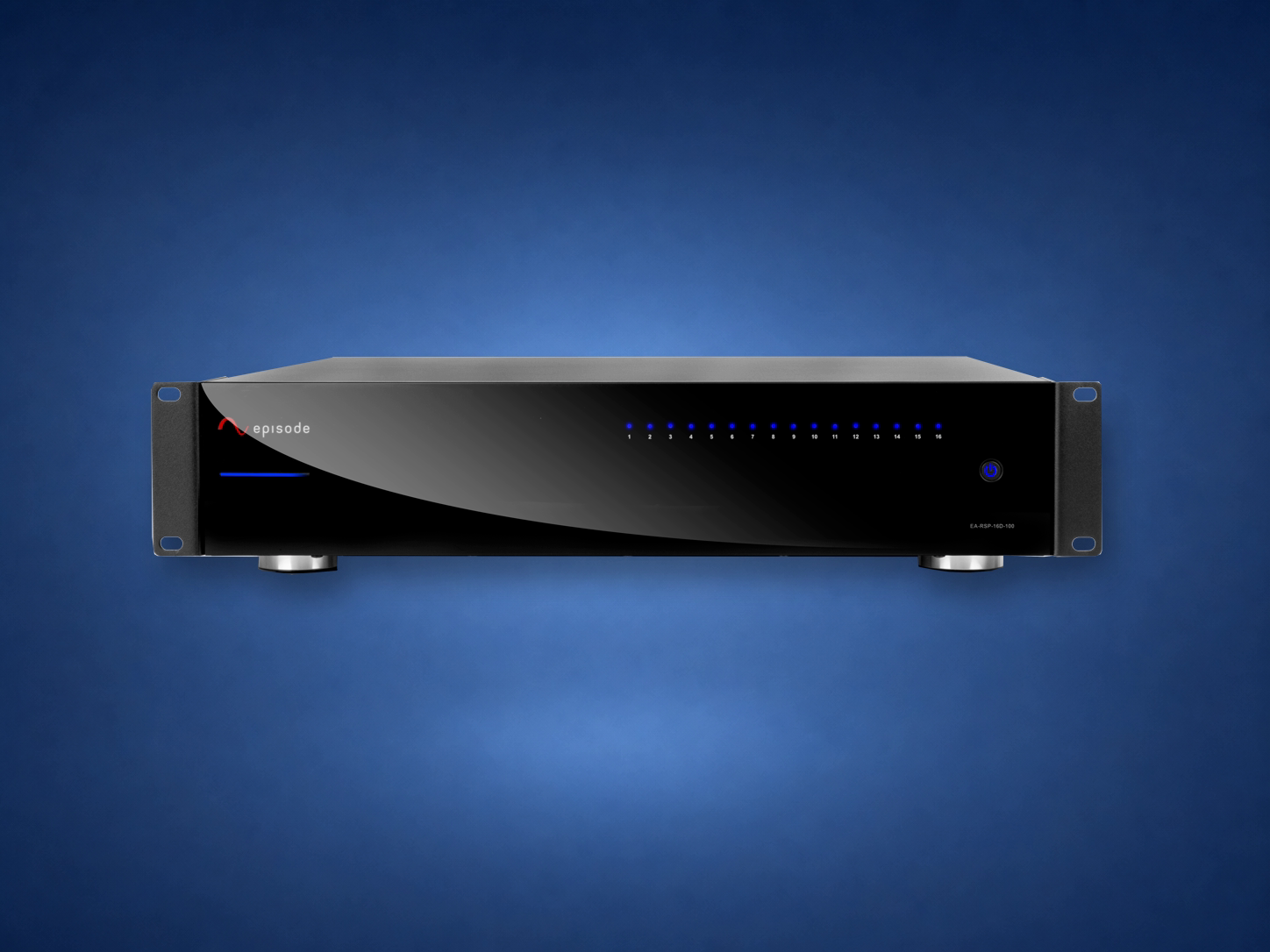
Response 16D‑100
EA-RSP-16D-100
Best for: a larger eight-zone system that needs full matrix and DSP control.
- 16 channels / 8 stereo zones
- Up to 100W per channel at 4 ohms; 80W all channels driven
- 8-source matrix with independent zone tuning
- Integrated sub outputs, IP control and OvrC
What this means: Eight smart audio zones in one serviceable amplifier platform.
Episode Hybrid DSP Amplifiers
The newest high-power family supports 70V, 100V and low-impedance speakers in configurable combinations. These are built for large landscape systems, powerful subwoofers and demanding outdoor designs.
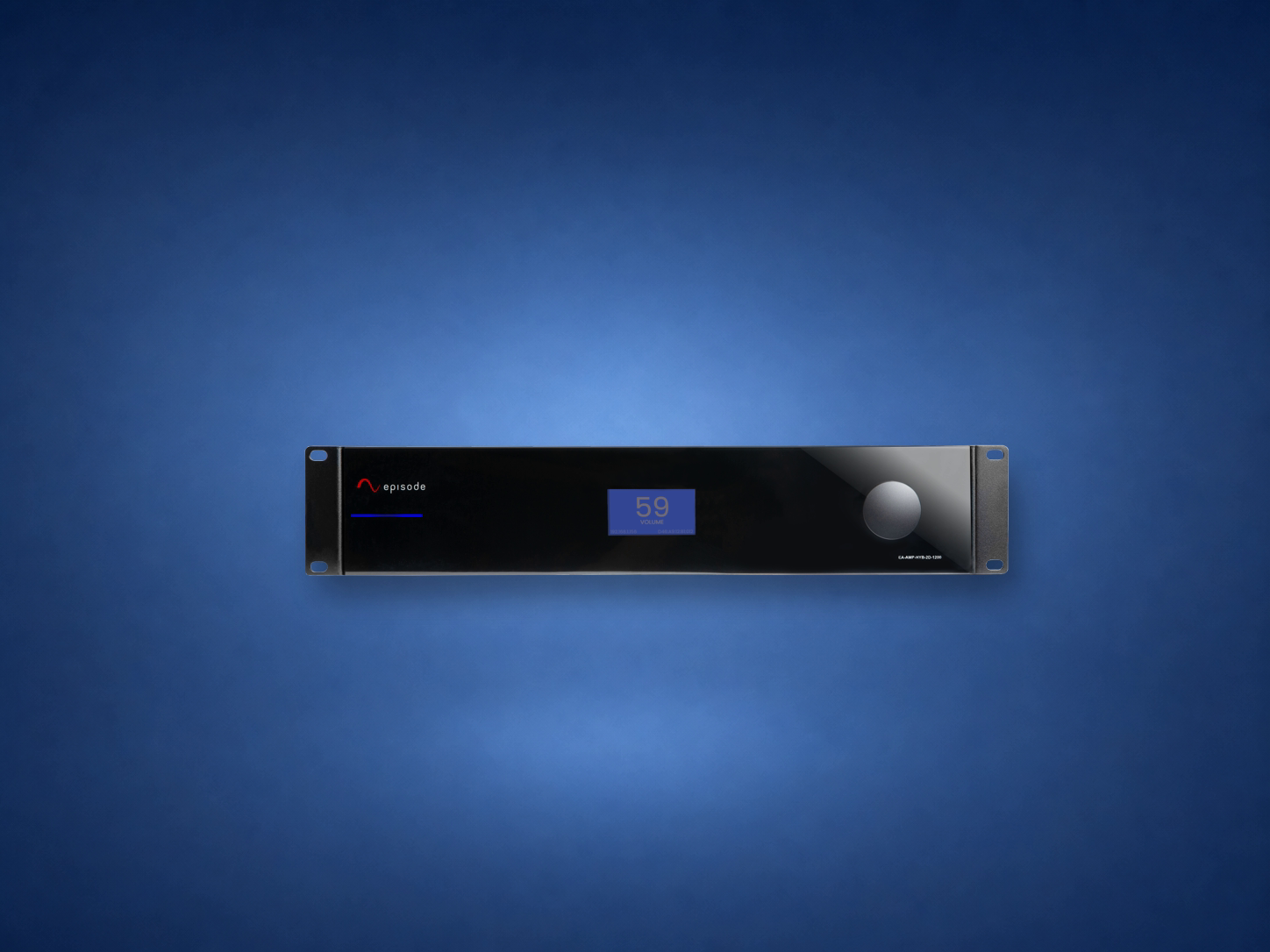
Hybrid 2D‑1200
EA-HYB-AMP-2D-1200
Best for: a substantial landscape system combining satellite speakers and outdoor subwoofers.
- 2 configurable output channels
- 600W per channel at 4 ohms or 70V
- 1200W per channel at 2 ohms
- Web UI, DSP presets, Control4 integration and OvrC
What this means: Serious outdoor power without automatically requiring a dedicated 20A circuit.
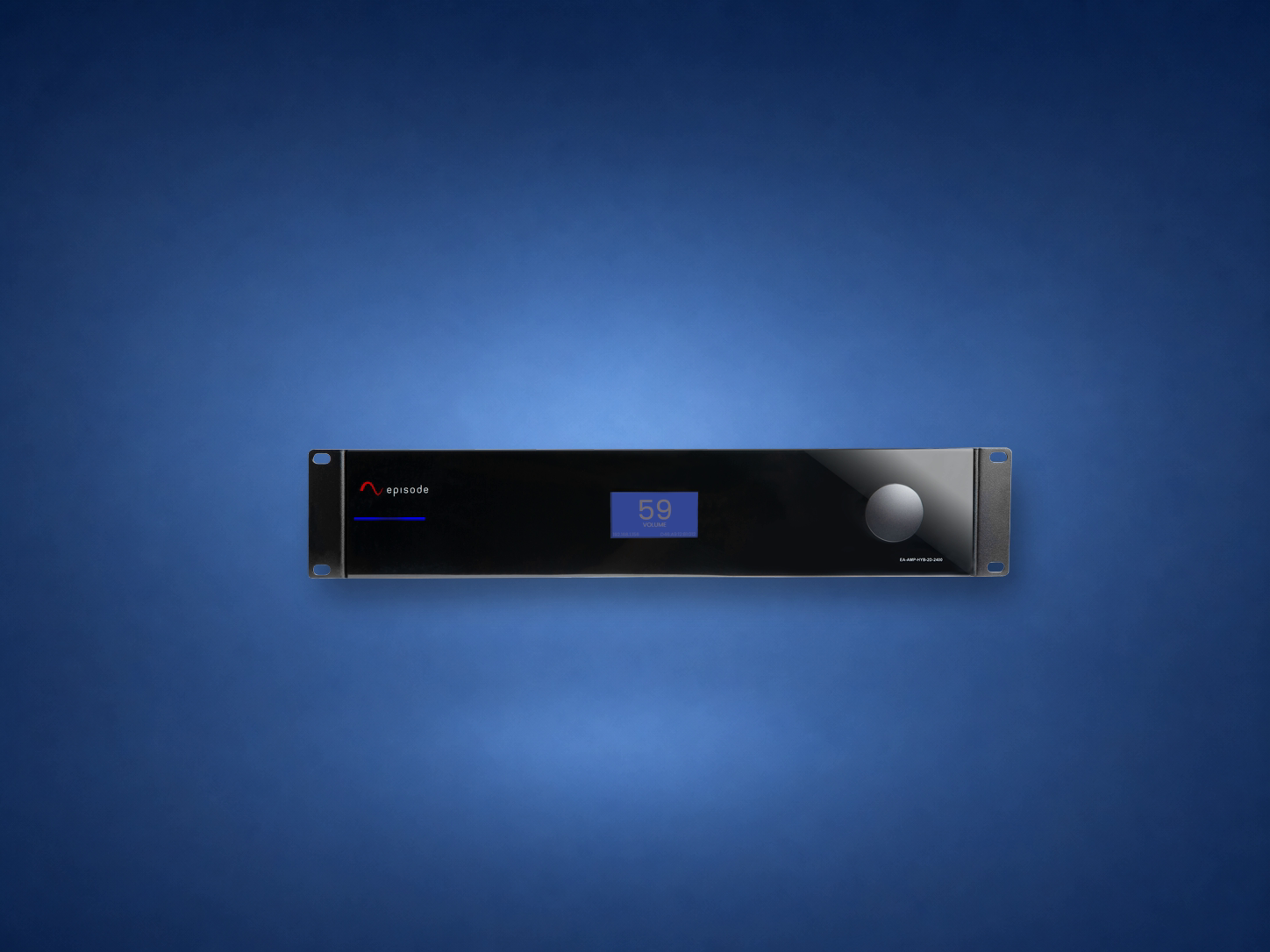
Hybrid 2D‑2400
EA-HYB-AMP-2D-2400
Best for: the largest landscape, 70V and high-output subwoofer projects.
- 2 configurable output channels
- 1200W per channel at 4 ohms or 70V
- 2400W per channel at 2 ohms
- 2U chassis with expanded airflow and professional I/O
What this means: The maximum-power option, selected only after speaker taps, impedance and branch circuit are engineered.
Episode 70V IP Amplifiers
Dedicated constant-voltage amplifiers for many speakers and longer cable runs. All three are two-channel, OvrC-enabled and support IR, RS‑232, IP, URC and Control4 integration.
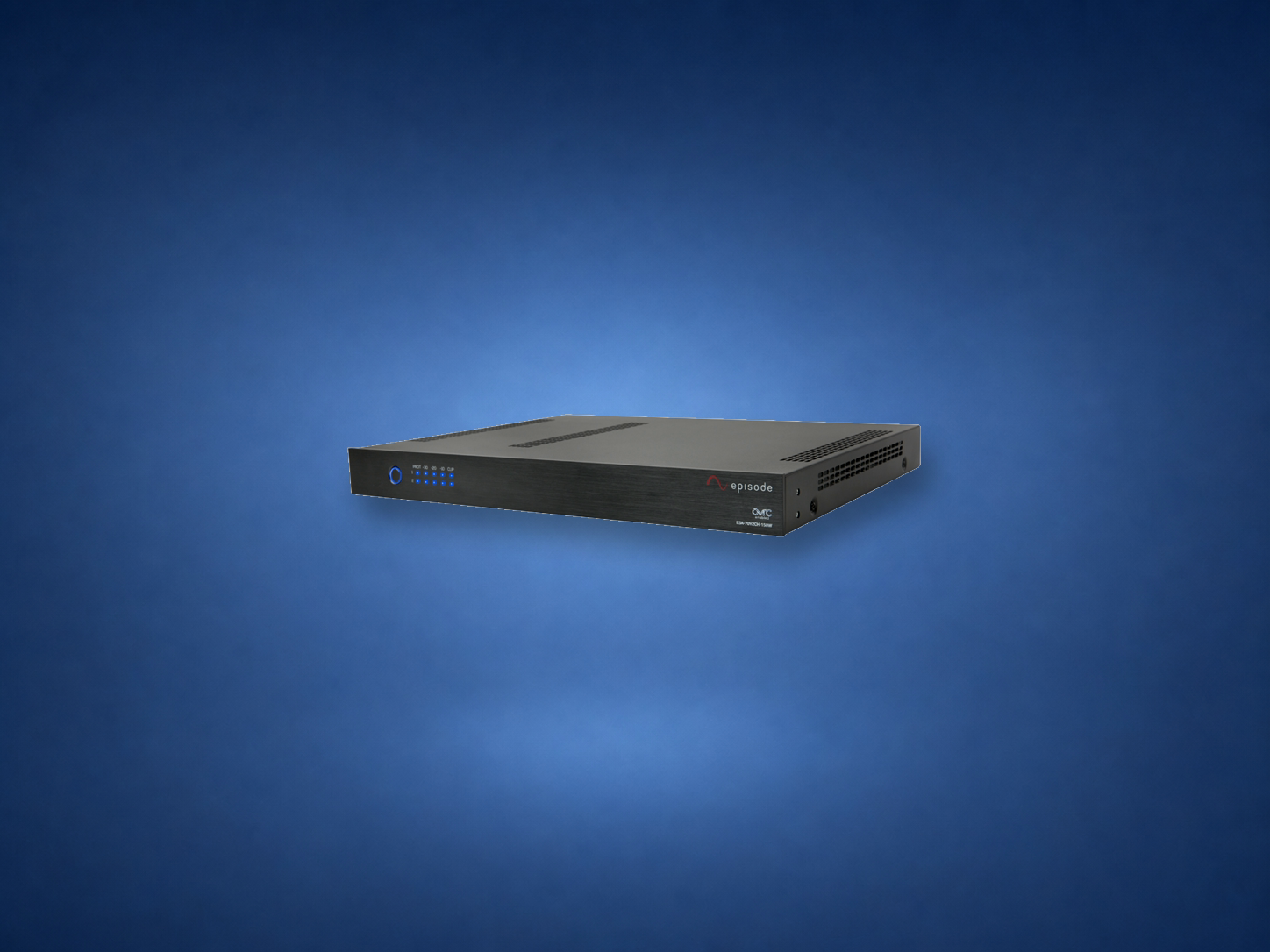
70V 2CH‑150W
ESA-70V2CH-150W
Best for: a smaller 70V patio, pool area or light commercial zone.
- 2 × 150W constant-voltage channels
- IP configuration and automation control
- OvrC remote management
- Scales by speaker tap total, not simple speaker count
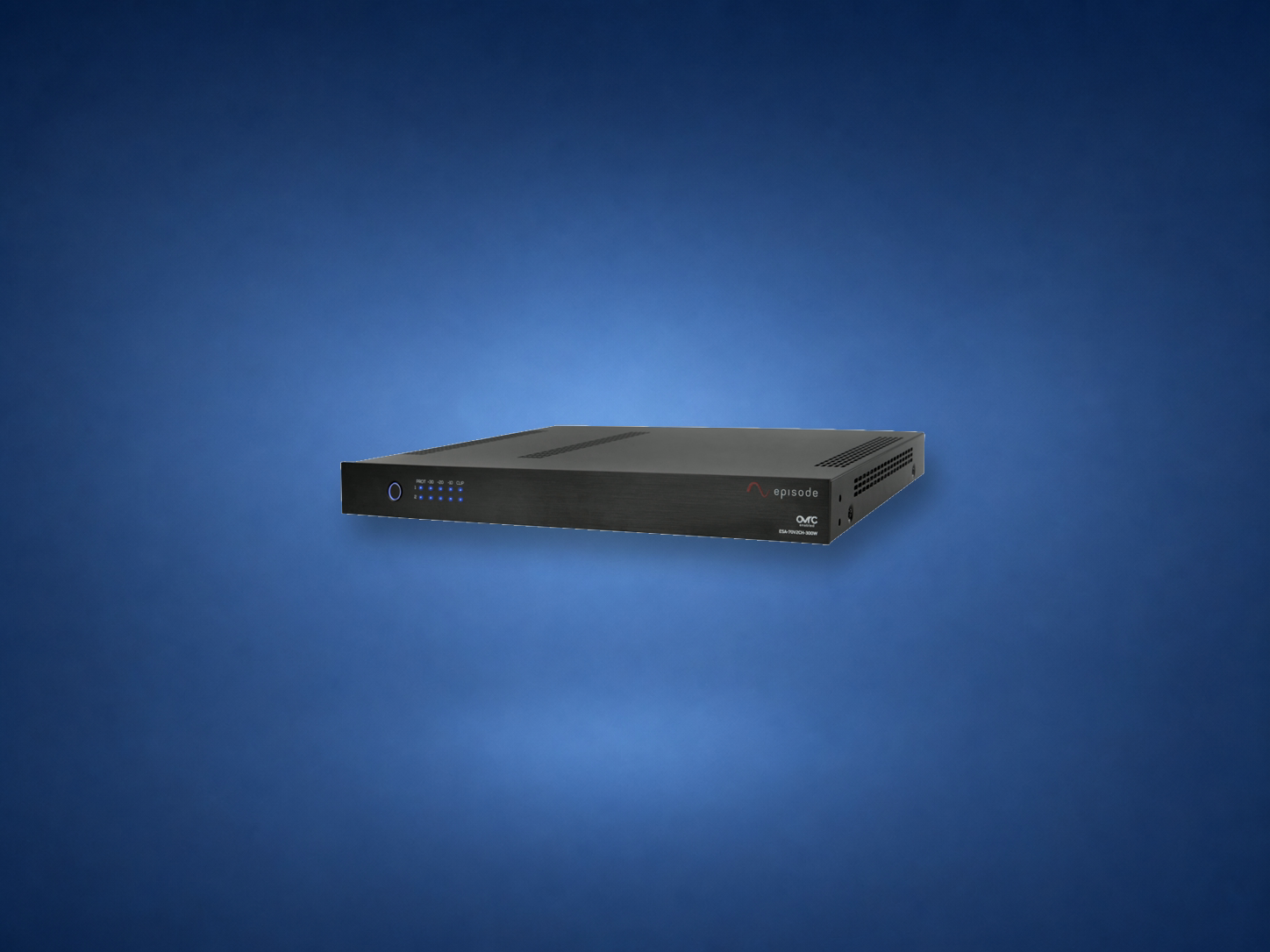
70V 2CH‑300W
ESA-70V2CH-300W
Best for: a medium outdoor or commercial-style distributed speaker system.
- 2 × 300W constant-voltage channels
- More tap capacity and practical design headroom
- Control4, IP, IR and RS‑232 support
- OvrC monitoring and service
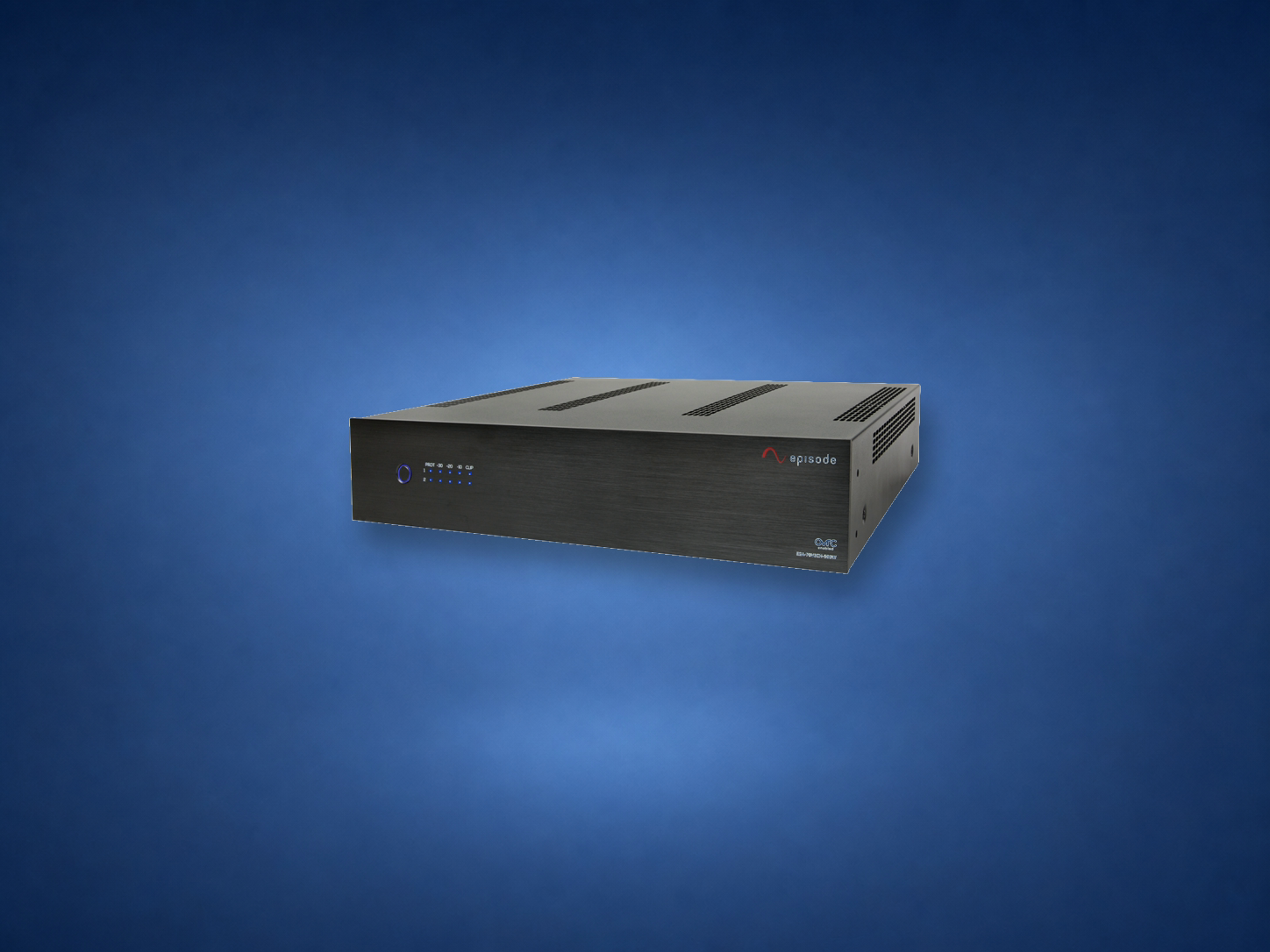
70V 2CH‑500W
ESA-70V2CH-500W
Best for: a large 70V layout with many speakers, higher tap settings or multiple outdoor areas.
- 2 × 500W constant-voltage channels
- Highest-output model in this dedicated 70V family
- Automation drivers and IP setup
- OvrC-enabled remote support
What about Episode Mini amps?
EA-MINI-2D-35 / EA-MINI-3D-35
Best for: a hidden local TV or very small speaker application—not a centralized whole-home rack.
- 35W compact two- or three-channel choices
- IR controllable with learning
- Flexible local mounting
- Useful when size matters more than large-system expansion
What this means: A small-purpose amp, not a substitute for Dynamic, Response or Hybrid in a multi-room design.
Family comparison
| Family | Models | Typical zones | Speaker format | DSP / matrix | OvrC / IP | Best fit |
|---|---|---|---|---|---|---|
| Dynamic | 2D‑200; 8D / 12D / 16D‑100 | 1 / 4 / 6 / 8 | 4 or 8 ohm | No internal matrix DSP | No | Traditional distributed audio with upstream routing |
| Response | 2D‑200; 8D / 12D / 16D‑100 | 1 / 4 / 6 / 8 | 4 or 8 ohm | Yes—matrix, EQ and per-zone control | Yes | Integrated smart multi-zone audio |
| Hybrid | 2D‑1200 / 2D‑2400 | 2 configurable channels | 70V / 100V / 8Ω / 4Ω / 2Ω | Yes—DSP presets and Web UI | Yes | Large landscape and high-power subwoofer systems |
| 70V IP | 2CH‑150 / 300 / 500W | 2 constant-voltage channels | 70V | System configuration and control | Yes | Many speakers and long cable runs |
| Mini | 2D‑35 / 3D‑35 | 1 local zone | Low impedance | No matrix | IR control | Hidden local TV or compact specialty use |
Official references: Episode amplifier family, Dynamic Series, and Response DSP Series. Specifications reviewed August 15, 2026. Published wattage depends on impedance, channel use, bridge mode, and test conditions; verify the exact amplifier, speaker load, ventilation, and electrical plan before ordering.
Five rules that prevent an expensive amplifier mistake
A stereo room normally consumes two amplifier channels. Eight channels usually means four stereo zones—not eight rooms.
4-ohm, 8-ohm and 70V systems are designed differently. Never choose an amp from wattage alone.
Add every speaker tap and leave engineering headroom. The number of speakers by itself does not define the load.
The Hybrid 2400 requires a North American 20A circuit. Rack depth, airflow and service clearance matter too.
Important: “100 watts per channel” does not always mean the same thing with every channel operating simultaneously. Read the all-channels-driven rating, speaker impedance and test conditions before comparing amplifiers.
A simple way to compare the options
“Dynamic is clean power for a system that already handles routing. Response adds the audio matrix, room-by-room tuning and remote support. Hybrid is for high-power outdoor and subwoofer systems. Dedicated 70V amplifiers are for many speakers and long runs. We choose the model from the zone count, speaker load and control plan—not from the biggest number on the box.”
Want the amplifier sized from your speaker plan?
Send the floor plan, speaker models, room count, outdoor layout and rack location. Denali Tech can calculate the channels, impedance, 70V taps, DSP needs, electrical circuit and thermal plan before equipment is ordered.