Which Episode speaker fits each room?
Compare the ceiling speakers you will see in a proposal, then consider the room, visible grille, music source and amplifier together.
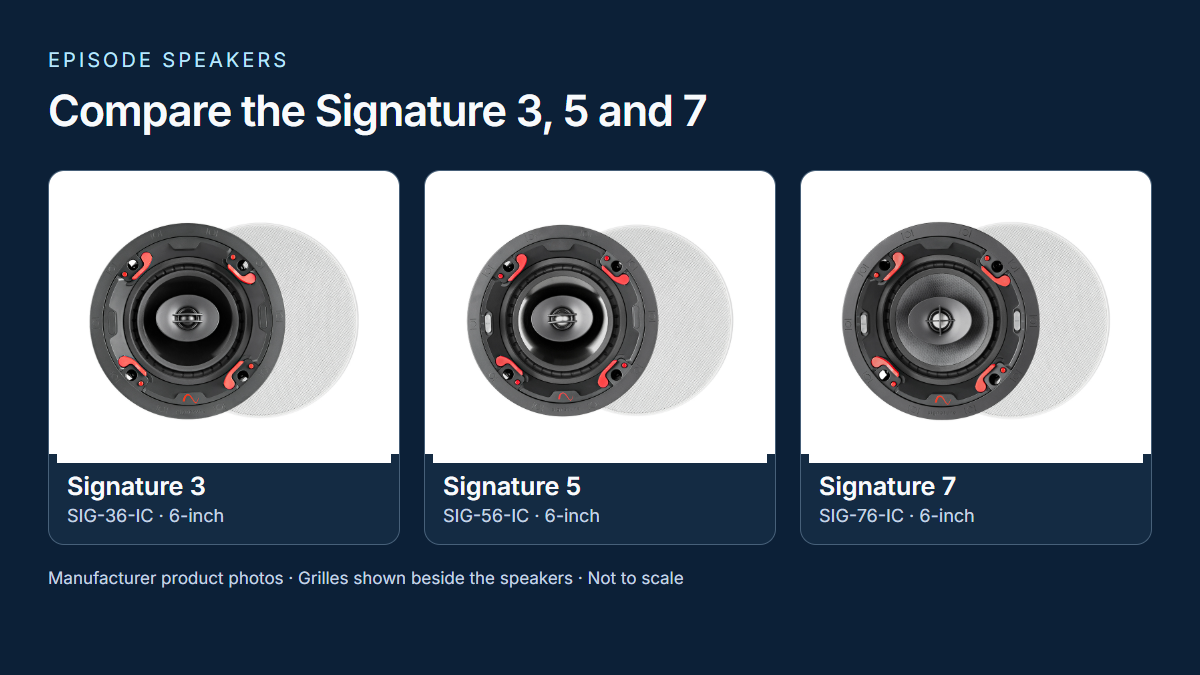
The short version: CORE is a value-oriented architectural range; Signature offers three construction tiers; Impression prioritizes a small ceiling opening; Surroundscape is for the landscape. A more expensive speaker is not automatically the right choice for every room. Placement and a suitable amplifier remain essential.
In this guide
Start with the zone, not the speaker count
Think of a zone as an area whose music and volume you want to control together. A kitchen and dining area might share music while the office plays something else. Explain that everyday behavior before deciding how many speakers to buy.
For background listening, aim for comfortable coverage across the room. For focused music, give the main seat a considered left/right arrangement. For TV dialogue, plan a screen-centered soundstage rather than assuming a pair of ceiling speakers will do every job.
Signature 3, 5 and 7 Series
These three standard 6-inch in-ceiling models make a like-for-like starting point. This compares documented construction, not a controlled listening test. The manufacturer lists these speakers individually; other sizes and specialty versions have their own specifications.
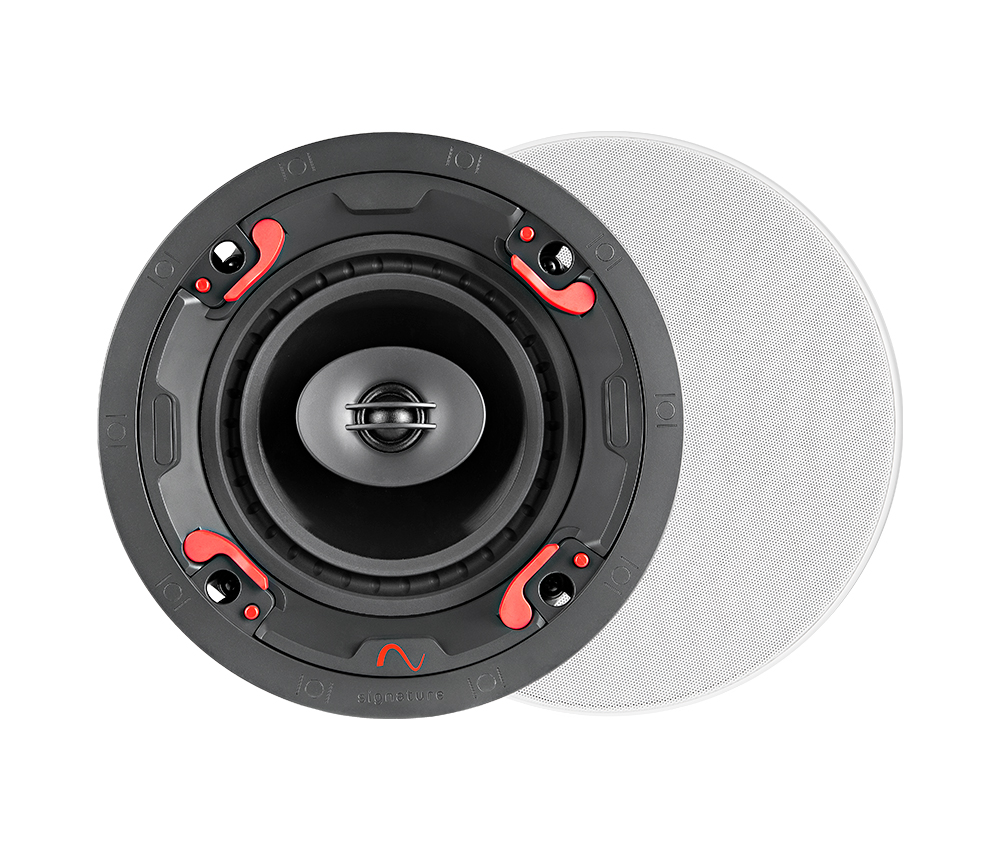
Signature 3
SIG-36-IC · 6-inchPolypropylene woofer and an adjustable silk-dome tweeter. Standard in-ceiling sizes are 4, 6 and 8 inches.
A practical starting point when several rooms need architectural audio. Budget for coverage and amplification as well as the speakers.
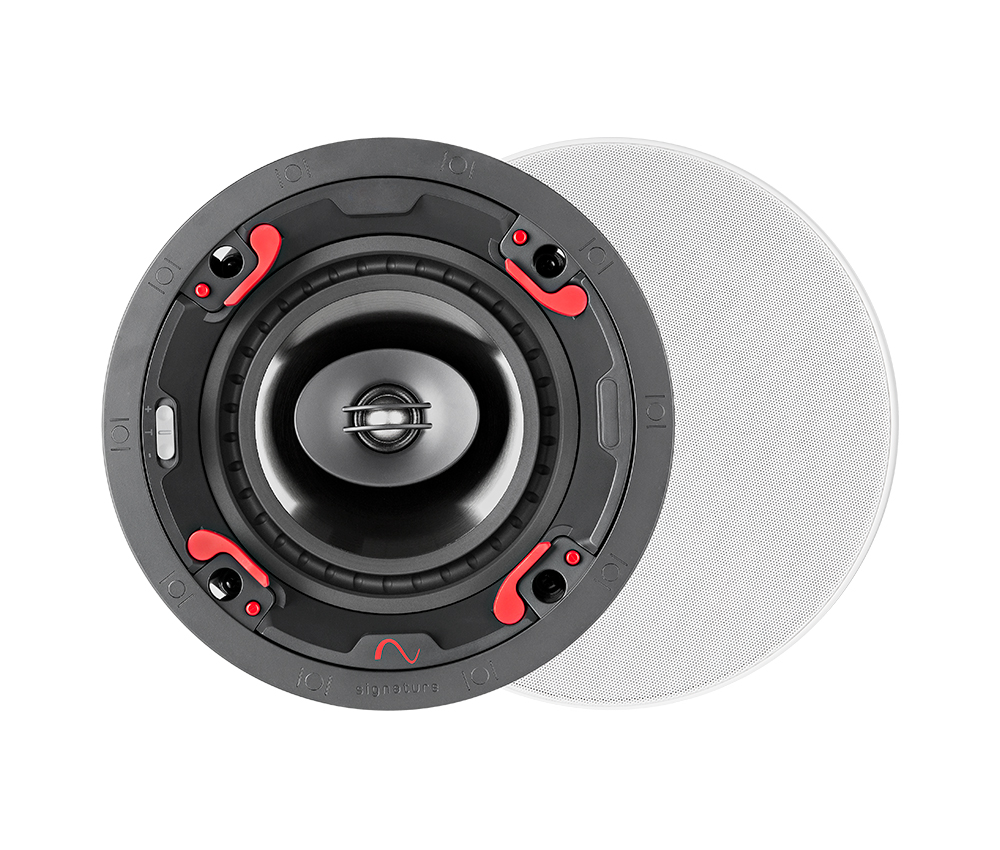
Signature 5
SIG-56-IC · 6-inchTitanium-coated polypropylene woofer and titanium-coated silk-dome tweeter, with a tweeter-level switch. Standard sizes are 4, 6 and 8 inches.
Worth comparing for a frequently used music room. The switch helps adjust tonal balance; it cannot correct poor placement.
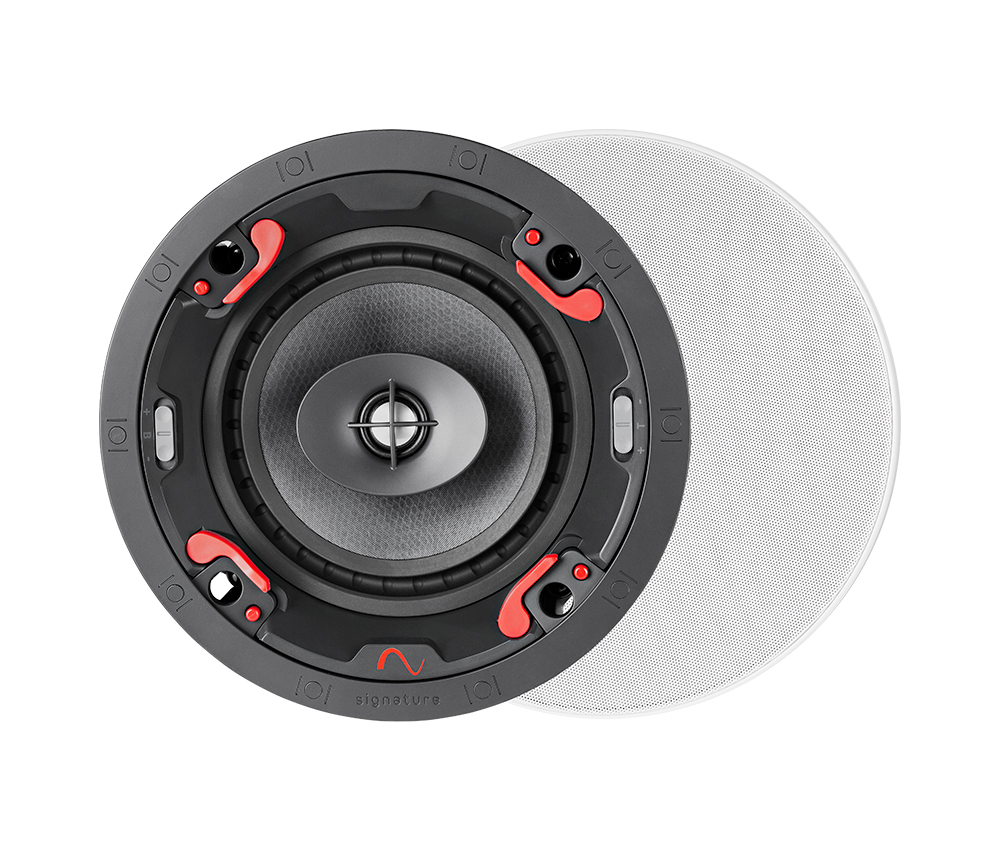
Signature 7
SIG-76-IC · 6-inchHoneycomb fiberglass Nomex woofer and pure titanium tweeter, with woofer- and tweeter-level switches. Standard sizes are 6 and 8 inches.
The higher Signature tier to consider for a priority listening space. Compare it in the context of the room, not only its driver materials.
All three pictured models use the Signature Push Lock installation system, with one- or two-step installation options. A compatible cradle and optional enclosure can be planned before the finished speaker is fitted. Confirm the exact accessories rather than assuming every part is included.
How the main Episode choices compare
The right shortlist depends on the room. CORE and Signature suit conventional architectural audio. Impression addresses a different design priority—a smaller opening. Surroundscape belongs outside. You can mix suitable families across separate zones without making every room use the most expensive tier.
CORE: another starting point for whole-home audio
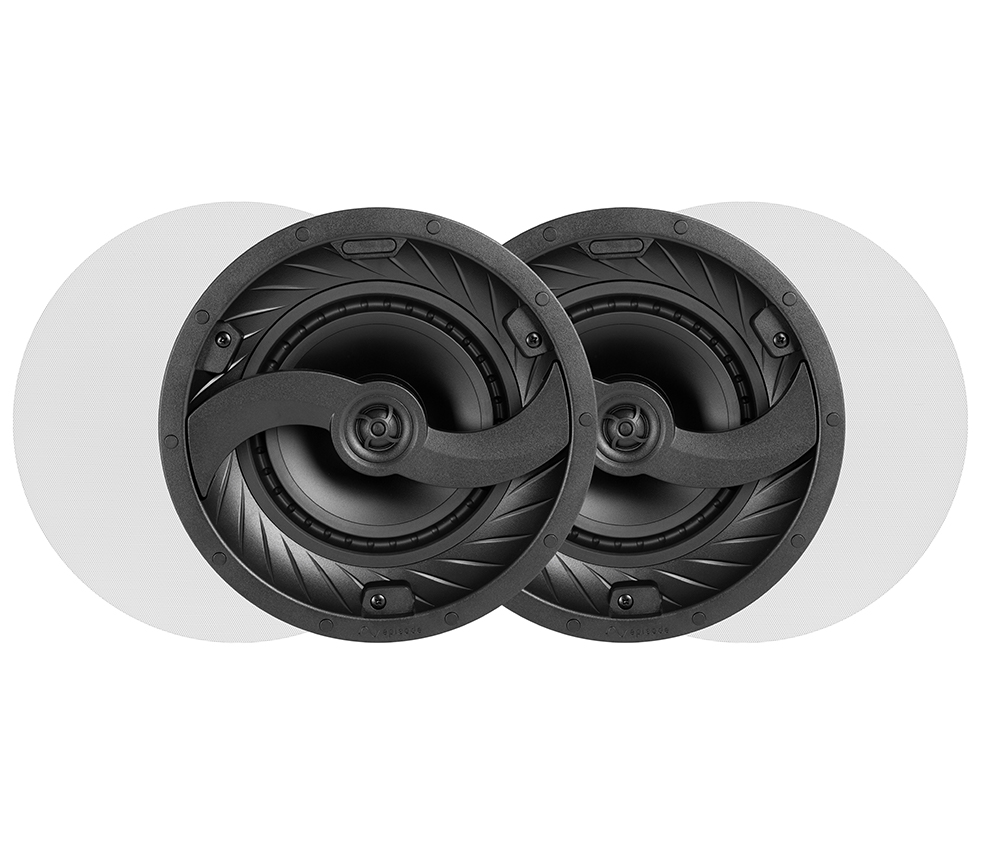
CORE includes 1, 3 and 5 Series, not a single universal model. The pictured CORE 3 ES-CORE-36-IC uses a polypropylene woofer and pivoting fabric-dome tweeter.
For casual listening or a project with many rooms, compare a suitable CORE layout against Signature before adding cost everywhere. There is no universal rule that a bedroom needs one tier and a living room another.
Indoor and all-weather variants are different products. A family name does not establish outdoor suitability, cutout compatibility or amplifier load.
Impression keeps the ceiling quieter visually
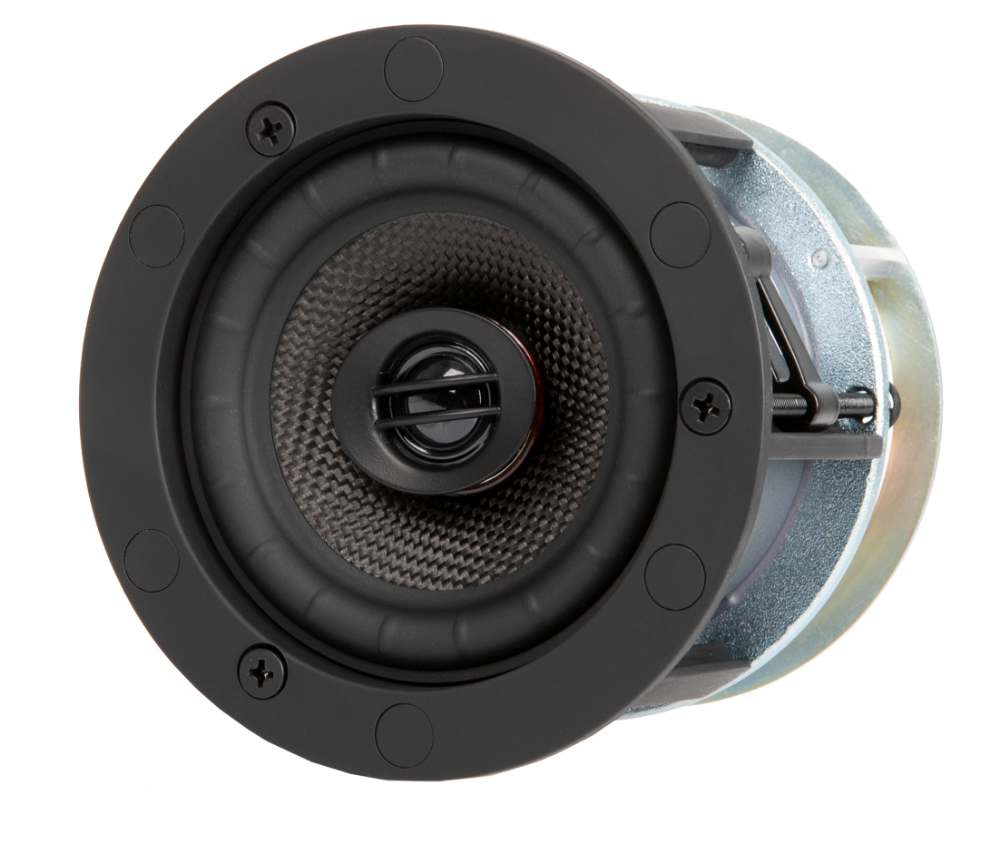
The ES-IM4IC has a 3½-inch carbon/aramid-fiber woofer. Its specified cutout is 102mm (about 4 inches), while the supplied round and square grilles are 124mm across. The cutout is not the visible grille size.
Impression is designed to work with a matching bandpass subwoofer when fuller bass is wanted. Its compact appearance does not remove the need to plan bass, wiring and cavity space. Ask where the subwoofer and its opening will go before approving the ceiling layout.
Choose size and type for the job
A nominal 6-inch speaker does not need a 6-inch hole. The size usually refers to the woofer, not the finished grille or cutout. Measure the actual model, cavity and accessories before any opening is cut.
See the fit measurements for the three Signature examples
- SIG-36-IC, SIG-56-IC and SIG-76-IC: each lists an 8.3-inch cutout, a 9.6-inch finished grille diameter and 4.8-inch mounting depth.
- With the listed enclosure: mounting depth increases to 6.2 inches. Allow space for connections and the actual construction conditions too.
- Not a universal replacement promise: matching a hole does not establish that the bracket, grille, enclosure or wiring will transfer. Confirm the current template and accessory compatibility for the exact SKU.
Figures are from the model listings linked below. They are planning references, not a cutting template.
- Standard stereo pair: separate left and right speakers for an intentional listening area.
- DVC / single-point stereo: selected models accept both channels at one location. Follow their wiring instructions; never join amplifier outputs together.
- Point model: angled drivers direct sound toward the listening area. It is not the same as the standard speaker pictured above.
- In-wall / LCR: consider front-channel placement near the screen for TV and theater use. A larger series number alone does not choose the right layout.
Outdoor audio needs its own plan
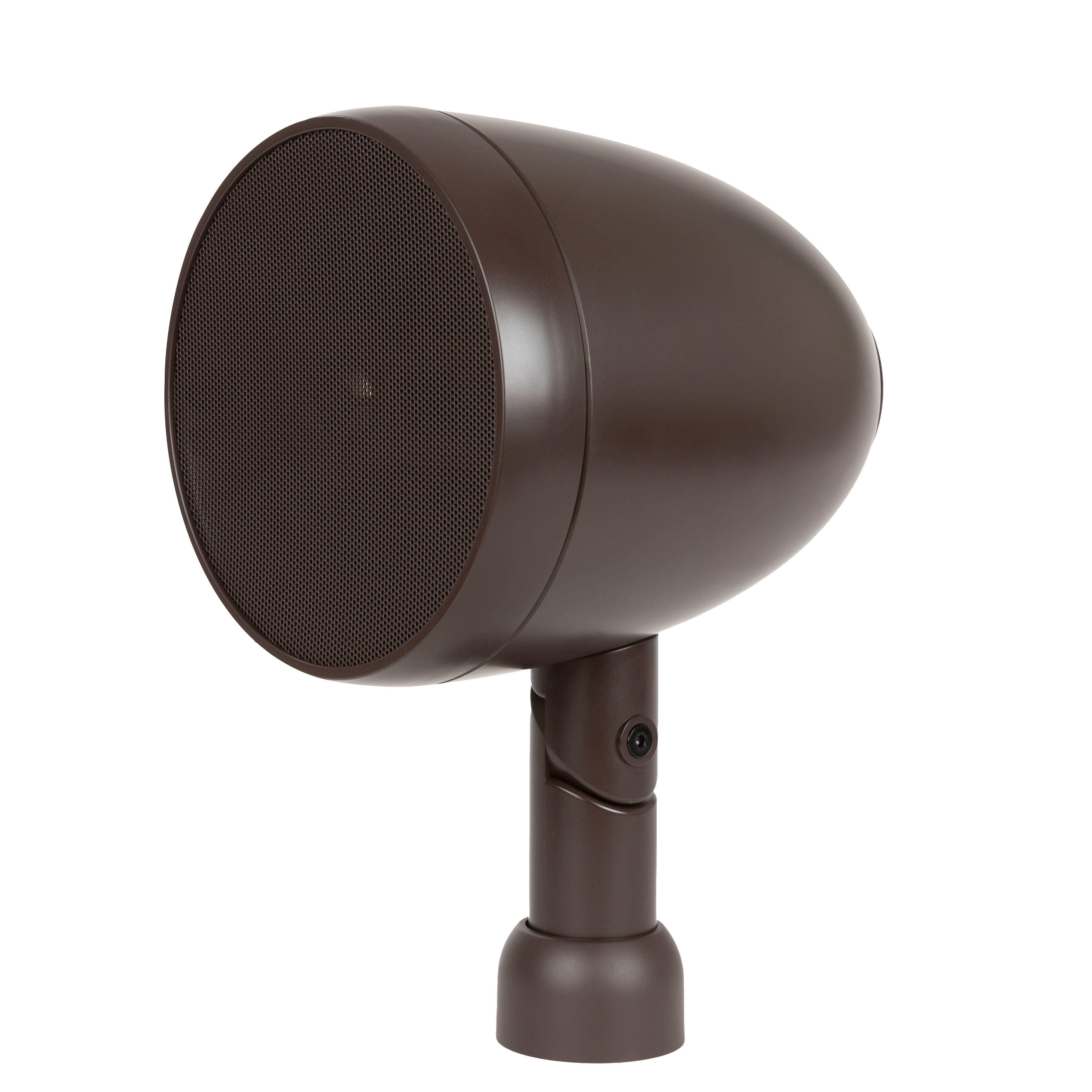
Surroundscape uses landscape satellites with optional subwoofer and mounting choices. The pictured ES-SS6 listing specifies selectable 70V taps and an 8-ohm bypass. Its IP67 rating does not replace the installation instructions for wiring, connections and mounting.
Plan the listening area and aim speakers inward. Several well-positioned speakers can provide comfortable coverage without relying on one very loud location. That is a design approach, not a guarantee that sound will stay within the property.
Choose the amplifier mode, cable, tap settings and any subwoofer together. Do not connect a 70V speaker circuit to a conventional low-impedance amplifier by assumption. Ask your installer to document the configuration and service access.
Speakers are only one part of the system
The examples here are passive speakers. They need a suitable amplifier and a music source; they do not stream Spotify, AirPlay or Bluetooth by themselves. Control4, Sonos or another source can be part of the design, but compatibility depends on the selected electronics and connections.
Choose power for the actual load
Confirm impedance, wiring and amplifier limits. Speaker peak-power handling is not a required amplifier wattage or a continuous-power rating. For 70V designs, calculate the selected tap total and the amplifier’s required headroom.
Choose controls for daily use
Decide which rooms can play different music, which can share it and where volume is adjusted. Adding speakers does not automatically add independently controlled zones or streaming sources.
An enclosure can help make the acoustic cavity more predictable, but it is not a promise of soundproofing. Discuss nearby bedrooms, insulation, ceiling construction and service access before installation.
Before the ceilings are finished
- Mark the listening areas. Agree background music, focused music or TV use for each room.
- Approve the visible finish. Check grille size, shape and paint instructions alongside lights and vents.
- Verify the space behind it. Check joists, ducts, depth, approved enclosure and access for the actual model.
- Document the system. Label speaker wires at both ends and record the source, amplifier channel, zone and any outdoor tap setting.
Keep useful existing speakers where they suit the plan. Before replacing them, check their condition, impedance, wiring and how they sound in the room. A new control interface does not automatically mean every speaker must be replaced.
Common questions
Do all rooms need the same Episode series?
No. Prioritize the rooms where music matters most, while keeping suitable equipment elsewhere. Within a focused stereo pair or theater soundstage, matching the speakers’ response matters more than using one brand everywhere.
Does an 8-inch speaker mean I will not need a subwoofer?
No. A larger woofer can be useful, but bass depends on the speaker design, cavity, placement and listening goal. Decide the bass requirement separately instead of promising a full-range result from nominal size alone.
Can I use a normal ceiling speaker on a covered patio?
Not automatically. Select a model approved for the exposure and follow its mounting and connection requirements. A roof does not eliminate moisture, temperature changes or wind-driven rain.
Plan the sound and the ceiling together
Tell us which rooms matter most, what you listen to and what equipment you already have. A floor plan or a few room photos is a useful place to start.
Plan My Home AudioOfficial references — reviewed October 19, 2026
Product facts below come from manufacturer listings and data sheets. Room recommendations are Denali Tech’s planning guidance, not a listening-test result. Confirm the current SKU, stock, accessories and installation manual before ordering.