Length, width, ceiling height and whether the room opens into another space.
Start with the room, not the badge
A premium theater is one balanced system. A higher tier cannot correct poor placement, an undersized amplifier, uneven bass or a reflective room. These six inputs should be known before the speaker package is quoted.
The farthest important seat often sets the output requirement.
One row is easier to cover evenly than a wide, multirow theater.
Comfortable movie nights and cinema-reference peaks require different headroom.
An acoustically transparent screen can place all three front speakers correctly.
Wall depth, isolation, treatment, wiring routes and service access shape the design.
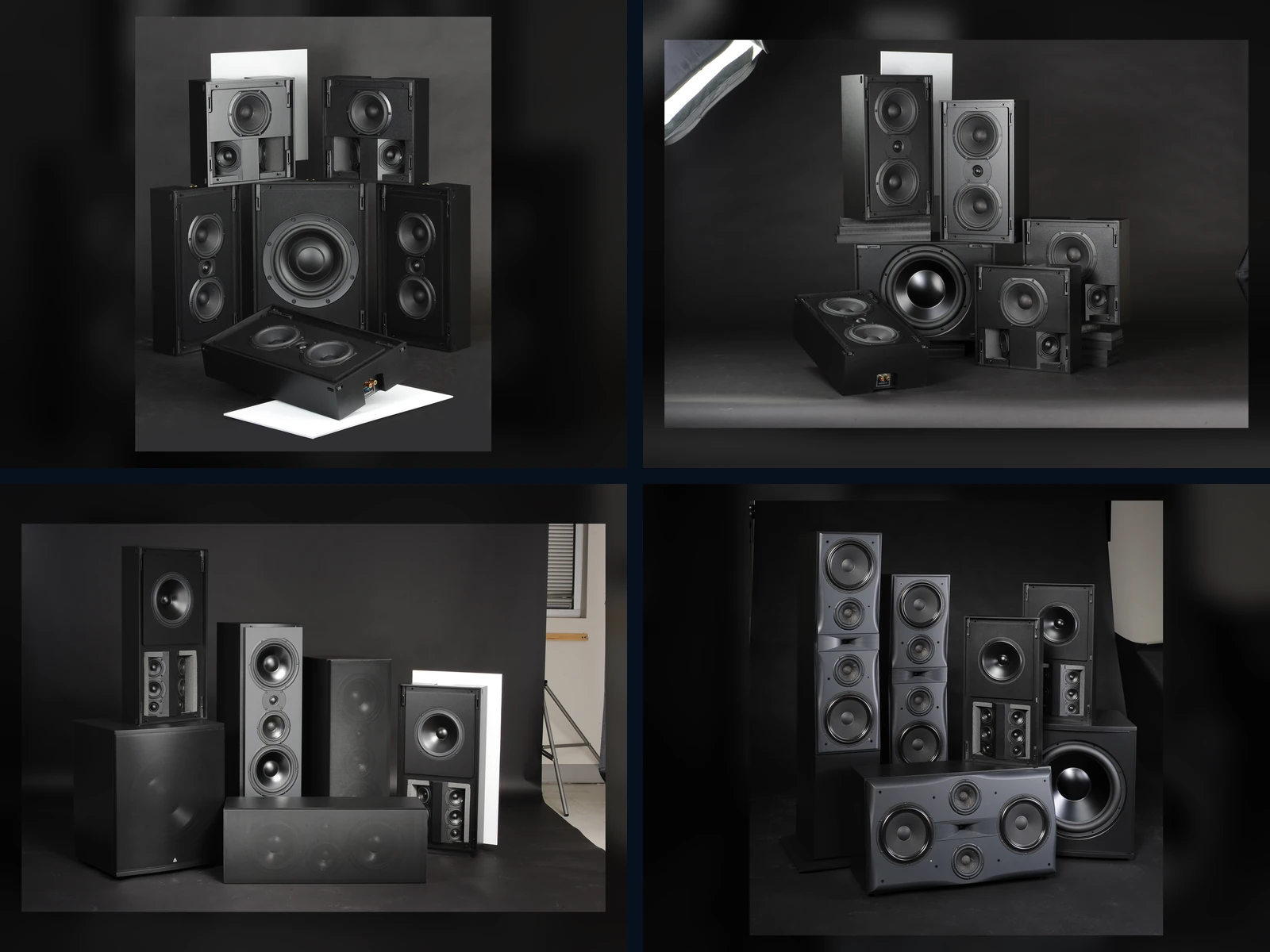
Four Triad tiers, side by side
Each family supports a different scale of room and performance target. The visual size difference is only part of the story; sensitivity, output, bass extension, amplifier demand and available form factors also matter.
COMPACT + CAPABLE
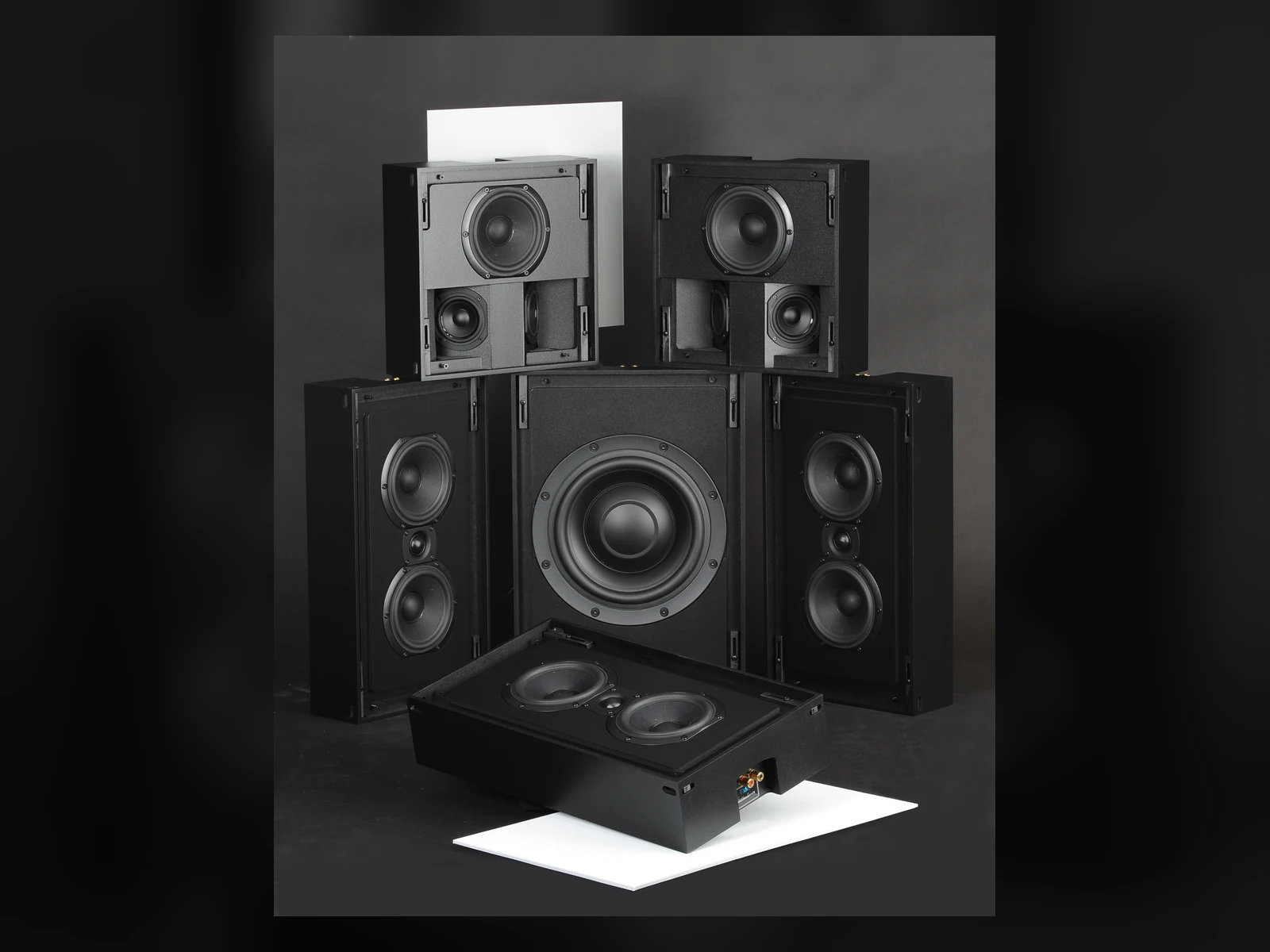
Bronze
A compact performance tier for smaller theaters, media rooms and installations where wall depth or visual impact must stay modest.
- Smaller enclosures are easier to integrate into tighter walls and cabinetry
- Strong solution when listening distances and output expectations are moderate
- Matched LCR, surround and subwoofer options support a coherent system
Best fit: a smaller enclosed room, a multipurpose media space or a homeowner who values clean integration over cinema-reference output.
RESIDENTIAL SWEET SPOT
Silver
Silver sits at the center of the line and fits a wide range of residential theaters—from a high-powered receiver system to a dedicated room with separate amplification.
- More sensitivity and output headroom than the representative Bronze LCR
- Broad fit for medium rooms and serious everyday movie listening
- Available in forms that support hidden, on-wall or in-room designs
Best fit: the homeowner who wants a substantial theater experience without designing the room around the physical and electrical demands of the largest speakers.
HIGH OUTPUT
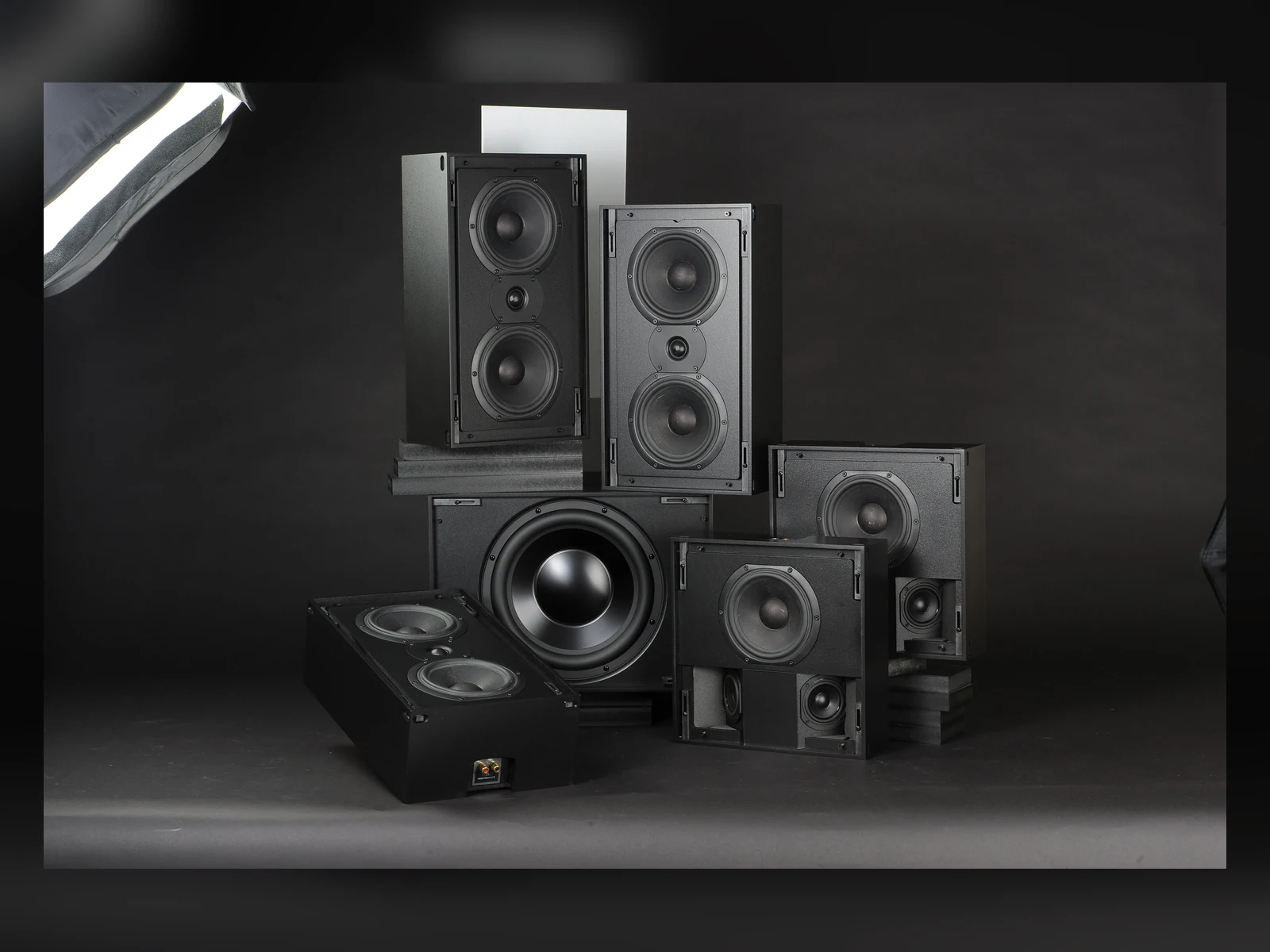
Gold
A larger three-way design intended for bigger media rooms and dedicated theaters where clean dynamics across a wider seating area matter.
- Higher representative sensitivity, maximum output and bass extension
- Three-way architecture supports clarity when playback demands rise
- A natural match for robust separate amplification and a treated room
Best fit: a larger dedicated theater, longer listening distance or a homeowner who wants stronger cinema impact without stepping into the physical scale of Platinum.
REFERENCE SCALE
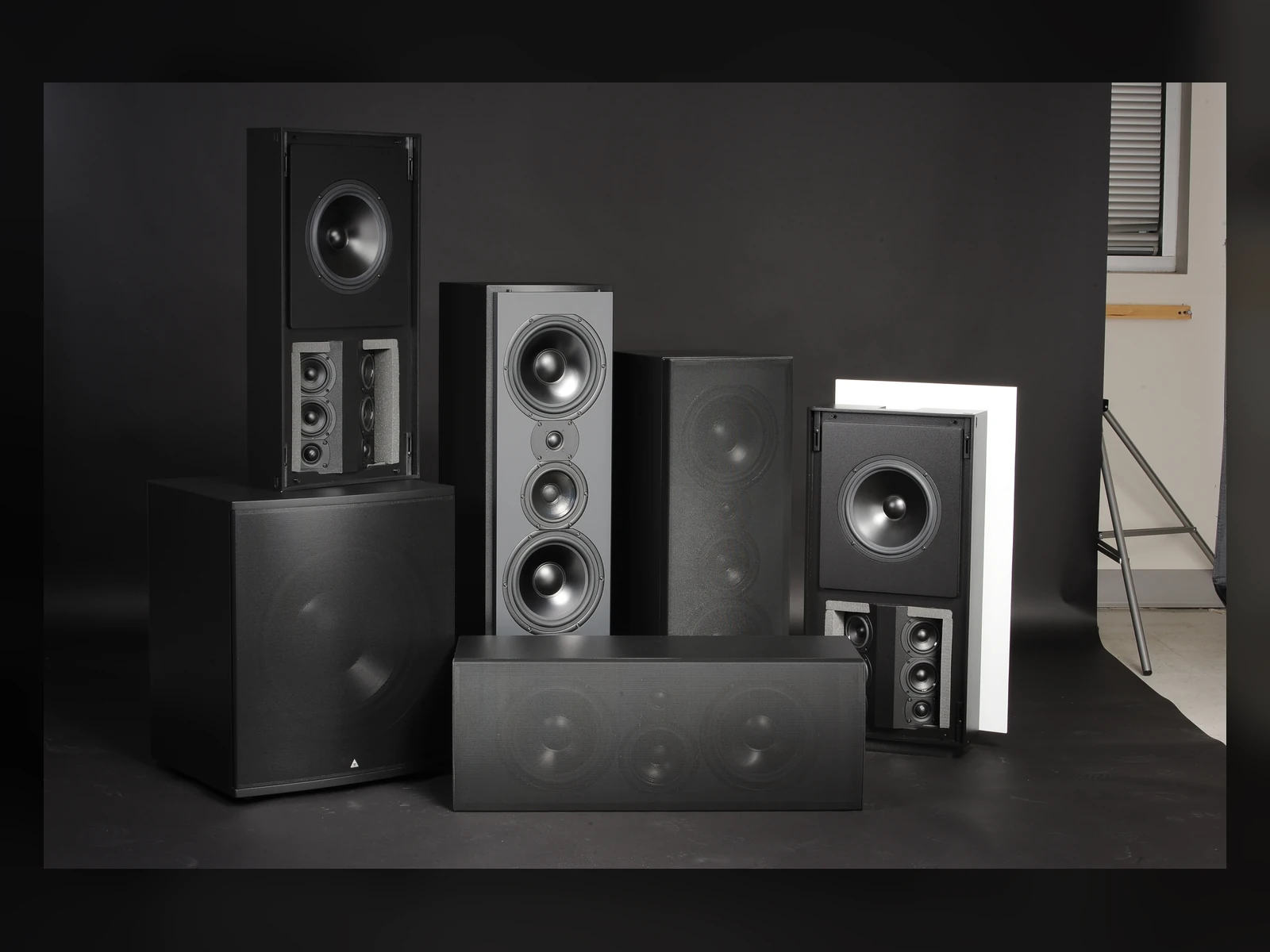
Platinum
The top tier is built for large theaters and reference-level goals. Its size and weight make construction, placement, amplification and service planning part of the speaker decision.
- Highest representative sensitivity and maximum output in this comparison
- Large three-way LCR with dual 10-inch woofers
- Designed for the dynamic headroom expected in a serious private cinema
Best fit: a purpose-built large theater with an acoustically transparent screen, engineered amplification, substantial subwoofers and professional acoustic treatment.
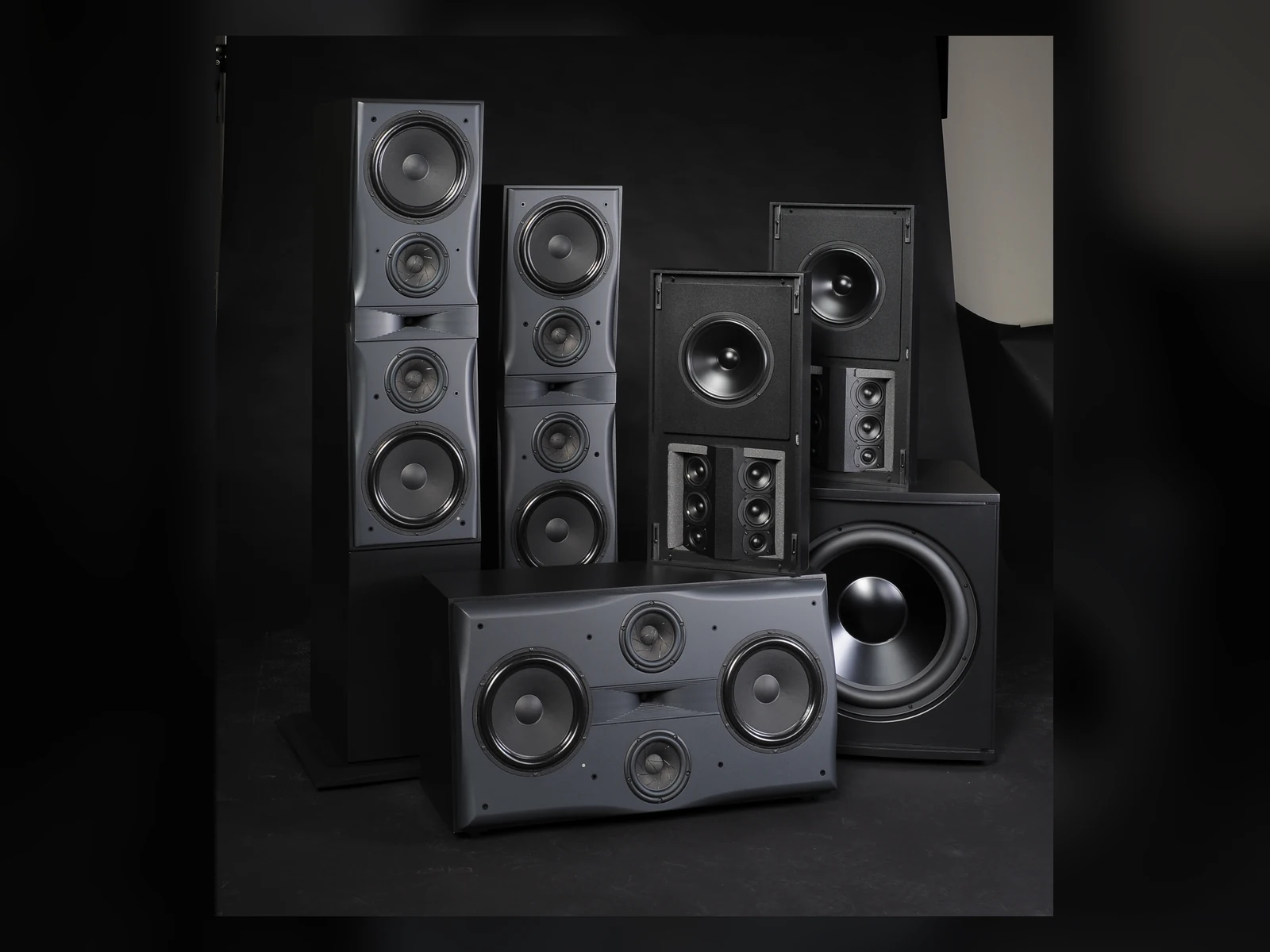
Representative LCR specifications
| Tier | Representative design | Recommended power | Sensitivity | Maximum output | Frequency response | Planning takeaway |
|---|---|---|---|---|---|---|
| Bronze | Dual 5.25-inch, 2-way | 50–200W | 89dB | 112dB | 80Hz–20kHz | Compact room and moderate distance |
| Silver | Dual 6.5-inch, 2-way | 50–200W | 91dB | 114dB | 75Hz–20kHz | Broad residential sweet spot |
| Gold | Dual 8.5-inch, 3-way | 100–450W | 92dB | 119dB | 50Hz–20kHz | Larger room and higher output |
| Platinum | Dual 10-inch + dual 5.25-inch, 3-way | 100–400W | 94.5dB | 121dB | 60Hz–20kHz | Large reference-level theater |
Official references: Triad home-theater speakers and the current Triad catalog. Representative LCR specifications reviewed August 15, 2026. Dimensions, sensitivity, impedance, maximum output, recommended power, finish, and installation details vary by the exact in-room, in-wall, on-wall, or custom-width SKU; the final project equipment schedule controls.
Choose the form factor after the acoustic position
First mark where a speaker should be for sound. Then choose the enclosure that can place it there cleanly. Hiding every speaker is not a win if the front stage ends up in the ceiling.
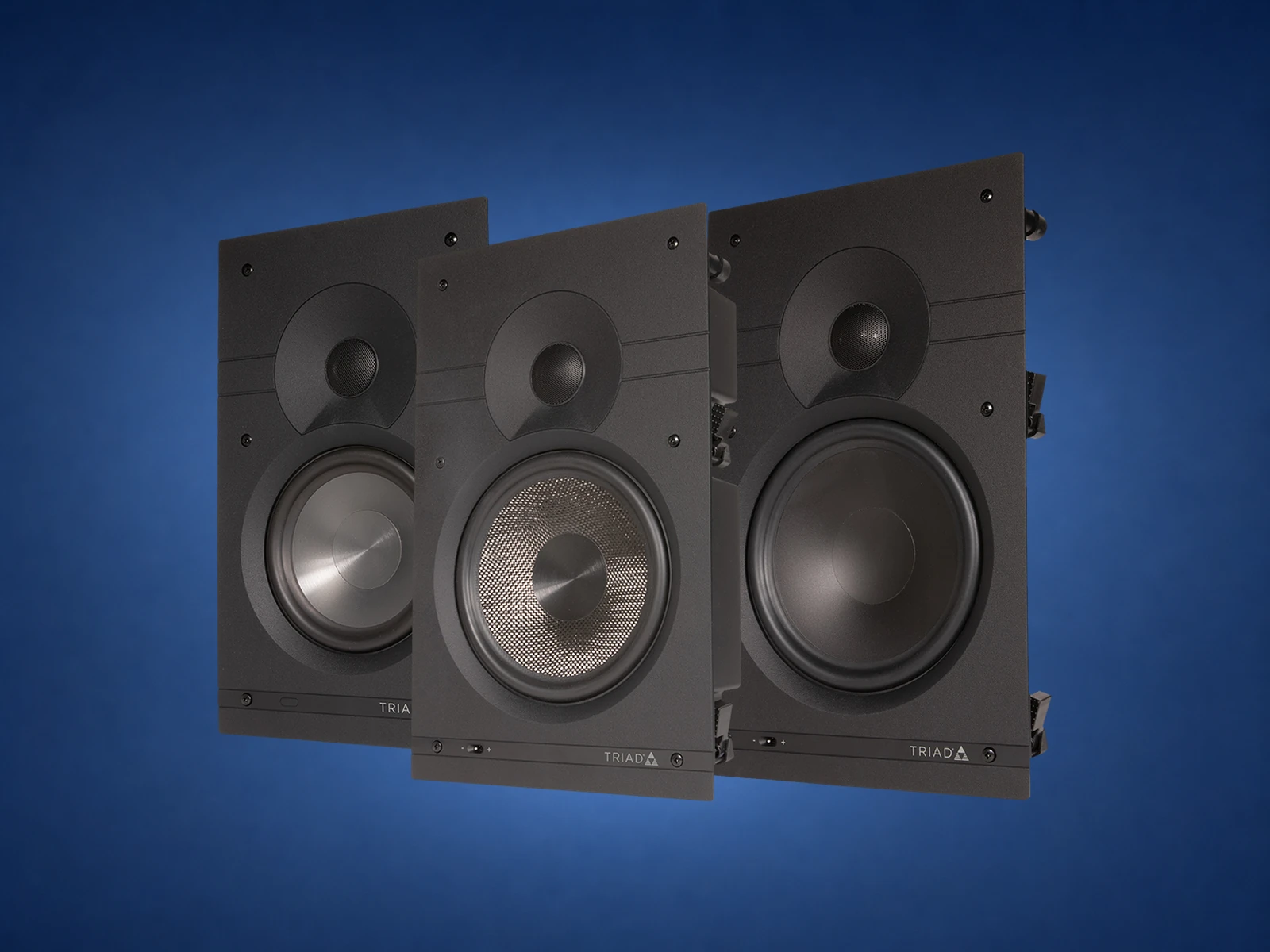
In-wall or behind the screen
Excellent for a clean front wall and an acoustically transparent screen. All three LCRs can sit at the proper height behind the image, but wall depth, back-box clearance and framing must be coordinated early.
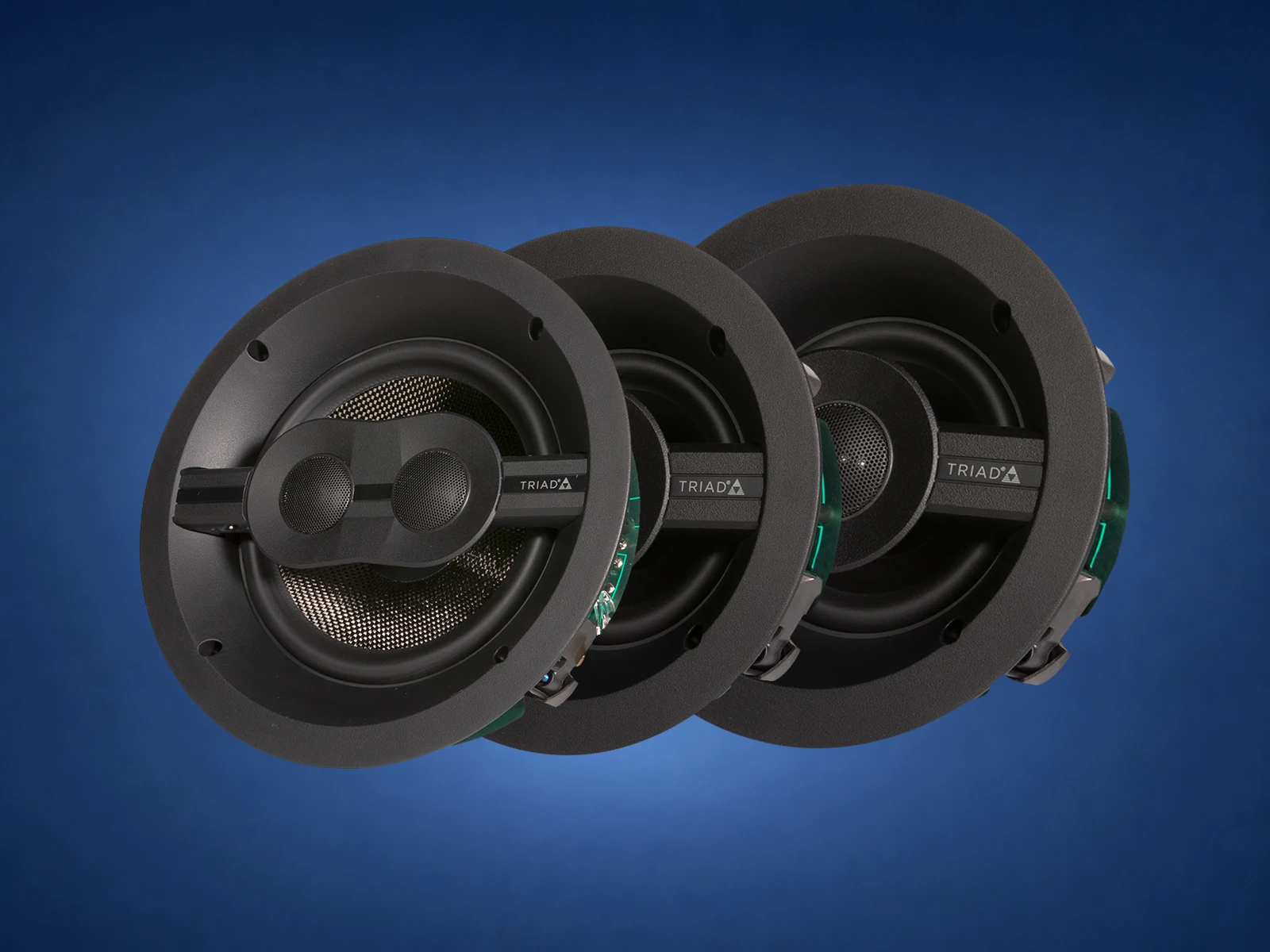
In-ceiling and height channels
A strong fit for Dolby Atmos overhead positions or rooms with architectural constraints. When ear-level placement is possible, ceiling speakers should not automatically replace the front LCR or surround layer.
Often easiest to aim, service and position for maximum performance. It needs physical floor, stage or cabinet space and a deliberate finish plan.
Useful for finished walls, shallow construction and retrofit work. Triad also supports custom width, paint and grille options on selected models.
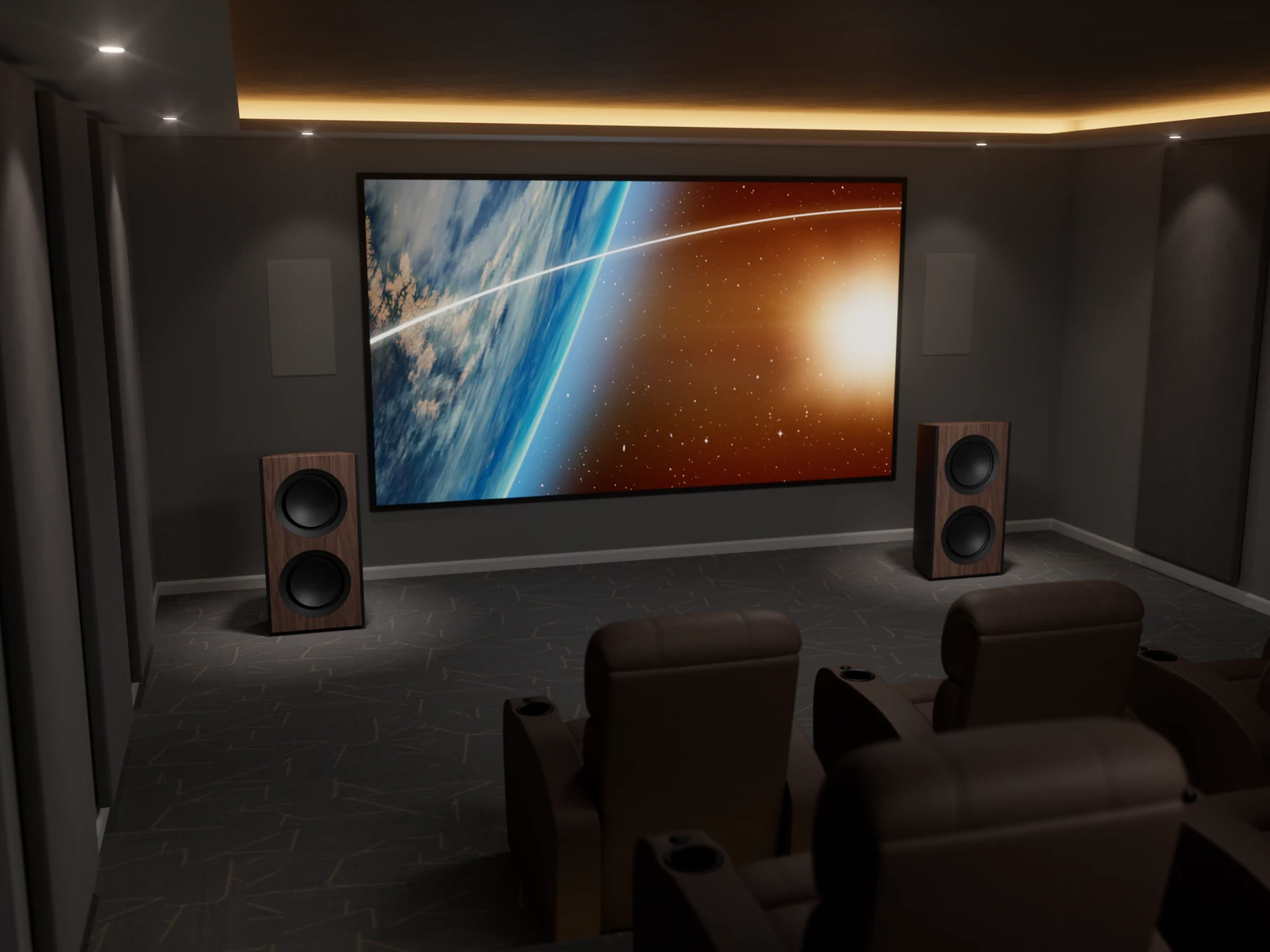
THE WHOLE ROOM
Placement creates the soundstage
Place the left, center and right speakers around ear height and keep their front plane consistent. An acoustically transparent screen makes it possible to anchor dialogue to the image instead of placing the center channel too low.
- Surrounds belong beside and behind the seating—not wherever an empty stud bay appears
- Atmos heights should create clear vertical separation from the ear-level layer
- Multiple rows may need different speaker angles, channel counts and calibration priorities
- A baffle wall can control placement and reduce front-wall acoustic problems when designed correctly
Subwoofers are a room decision
A large main speaker does not eliminate the need for a well-designed bass system. Subwoofer quantity and location affect how evenly every seat hears bass—often more than simply choosing a larger driver.
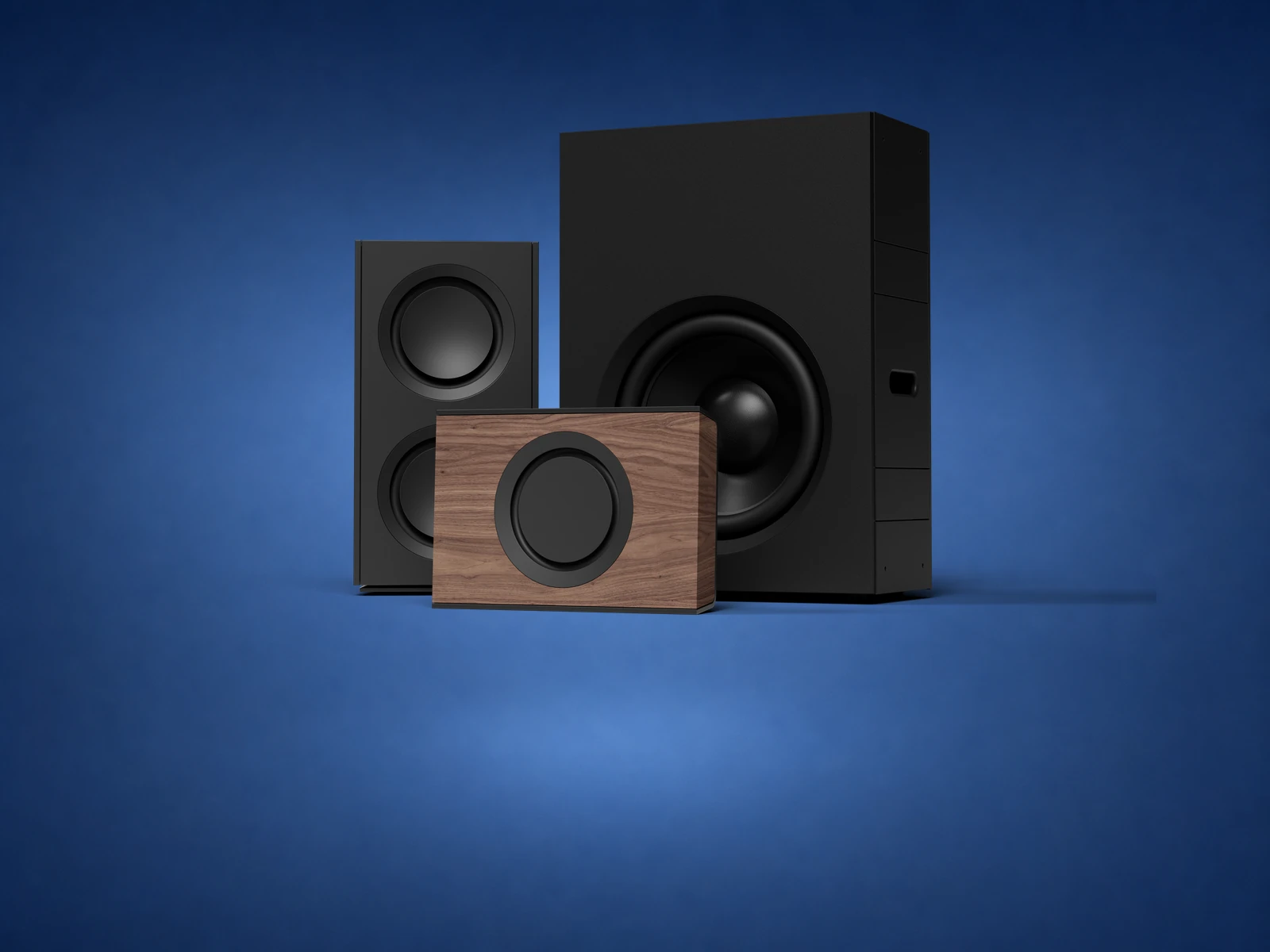
Choose the installation style
Triad offers in-room, in-wall, on-wall and in-ceiling approaches. Selected passive subwoofer kits pair with rack-mounted DSP amplification, keeping controls and heat serviceable in the equipment rack.
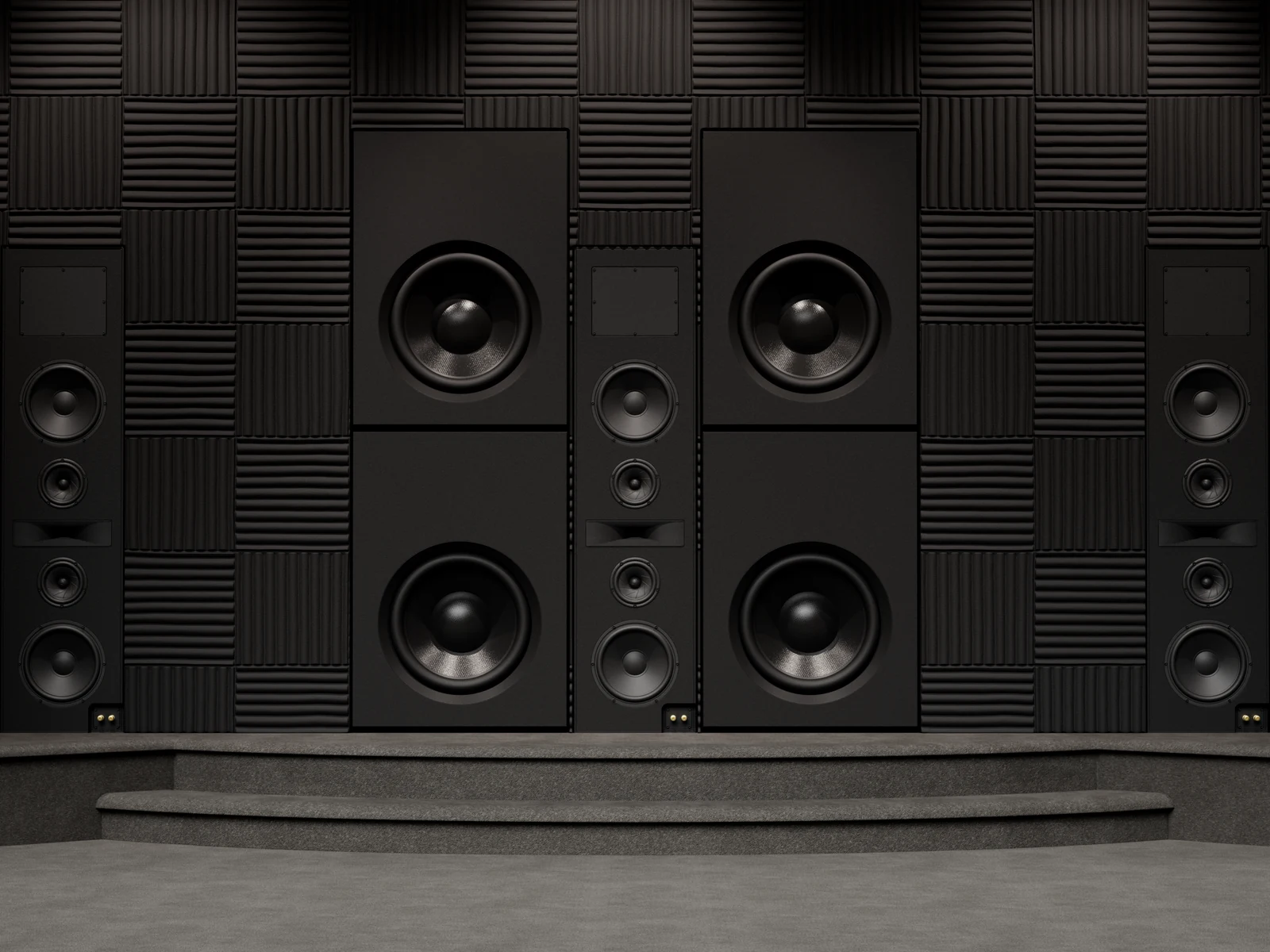
Choose the output and coverage
A purpose-built cinema may need multiple high-output subwoofers. The goal is not just more bass; it is adequate headroom and smoother seat-to-seat response after placement, delay, level and equalization are calibrated.
Planning rule: Do not promise that one expensive subwoofer will sound even in every chair. Model or measure the room, reserve wiring and power for sensible locations, and commission the final system from the main seats.
Amplification must match the real load
The speaker tier is only one input. Amplifier sizing should account for impedance, sensitivity, listening distance, crossover, target peaks, channel count and ventilation. Gold and Platinum systems commonly justify high-current separate amplification, but the final channel plan—not the family name—determines the rack.
An amplifier should reproduce short movie peaks cleanly without living at its limit.
LCR, surround and height channels may not need identical power, but each needs an intentional assignment.
Allow rack units, electrical circuits, heat management, DSP, network control and service access.
Prewire before the walls close
Mark centerline, height, orientation, back-box depth and framing conflict.
Coordinate screen opening, LCR locations, subwoofer cavities, baffle wall and fabric panels.
Run cable and power to viable front, rear and side locations when the room design allows.
Isolation clips, channels, doors and HVAC details must be designed before drywall.
Reserve depth for absorption, diffusion and bass management instead of decorating afterward.
Capture measured wire and blocking locations before insulation and drywall hide the work.
A simple way to compare the options
“Bronze is compact, Silver fits the widest range of homes, Gold is for a larger high-output theater, and Platinum is for reference-scale rooms. We choose the tier only after we know the room, seating distance and volume goal. Then we match the subwoofers, amplifiers, placement and acoustic treatment so the whole system performs as one.”
Want the speaker package mapped to your floor plan?
Send the room dimensions, screen wall, seating layout, ceiling height and performance goal. Denali Tech can map the Triad tier, channel positions, subwoofer strategy, amplification, wiring and rack requirements before construction locks in the room.