Sonos whole-house audio or a wired system?
The first decision is not a speaker brand—it is how the rooms should look, sound, and operate. A multi-room audio system can group compatible rooms or play different supported sources in separate zones. The available combinations depend on the players, service accounts, network, amplifiers, speaker wiring, and control platform.
This guide compares self-powered Sonos speakers with centrally amplified, wired speakers. They are not mutually exclusive: Sonos Amp can power architectural speakers, and Sonos Port can feed a compatible existing audio system. Start with how each room should look and operate, then choose the equipment.
Denali Tech installs both Sonos and centrally amplified audio systems in the Chicago area. This comparison focuses on the design choices a homeowner can verify: speaker visibility, wiring, zone behavior, sources, network dependence, control, service, and budget scope.
Quick answer: Sonos is often a good fit for flexible self-powered speakers and a Sonos-centered app experience. A centrally amplified system is often a good fit for hidden architectural speakers, dedicated wiring, and deeper control-system design. Either approach can sound excellent or poor depending on the selected speakers, room, placement, amplification, sources, and commissioning. Price requires an actual zone and equipment schedule.
What whole-home audio should let you do
Whole home audio (also called multi-room audio) lets you play music throughout your entire home. You can:
- Play the same music everywhere: Sync all speakers so the same song plays throughout your home
- Play different music in different rooms: Kids listen to their music in their rooms while you listen to yours in the kitchen
- Control everything from your phone: Choose what plays where, adjust volume, skip tracks - all from your smartphone
- Use voice control: "Hey Google, play jazz in the living room" or "Alexa, pause kitchen music"
- Integrate with your smart home: Include audio in scenes (e.g., "Dinner Party" scene dims lights and starts background music)
The useful result is simple: the rooms you care about can play together or independently without making everyday listening feel technical.
Sonos: Wireless Whole Home Audio
Sonos, founded in 2002, is a widely used multi-room audio platform with self-powered speakers, soundbars, subwoofers, portable products, and components for connecting passive speakers or existing audio systems.
How Sonos Works
Current Sonos products communicate over the home network using the connection methods supported by each model. Some can also use Ethernet. Do not assume every generation or product supports the same SonosNet, Wi-Fi band, or wired behavior. A Sonos player can:
- Connect to the network: Wi-Fi or Ethernet support varies by model; every powered player still needs electrical power
- Group compatible rooms: Playback can be synchronized across selected Sonos rooms, subject to network and service conditions
- Plays independently or together: Control each speaker individually or group them
- Streams directly: Each speaker connects to streaming services (Spotify, Apple Music, etc.) independently
Sonos Product Line
Sonos changes models and pricing over time. As of this review, the current categories include:
Sonos Speakers:
- Home speakers: Era 100, Era 100 SL, Era 300, and Five serve different room sizes and feature needs
- Portable speakers: Roam 2 and Move 2 add battery-powered options with model-specific Wi-Fi and Bluetooth behavior
- TV products: Ray, Beam (Gen 2), and Arc Ultra cover different soundbar roles
- Subwoofers: Sub Mini and Sub 4 have different size, output, and compatibility considerations
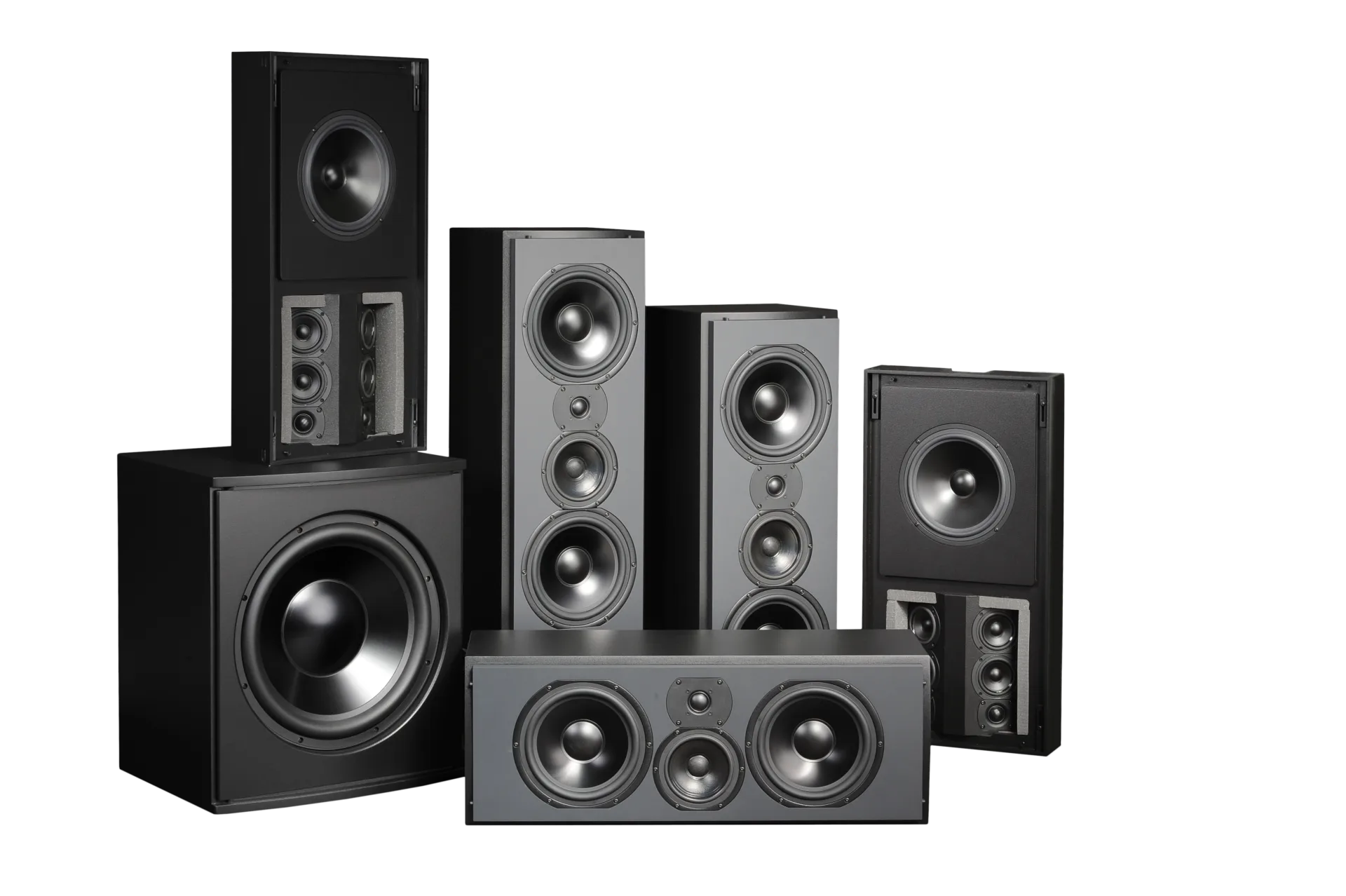
- Architectural audio: Sonos Amp powers compatible passive speakers; Sonos also sells architectural speaker packages
- Existing-system connection: Port adds Sonos streaming to a compatible amplifier or receiver
Sonos Advantages
- Self-powered speakers: Many models need power and network setup without speaker cable back to a central amplifier; Amp-based rooms still need speaker wiring
- Flexibility: Many self-powered models can move and new rooms can be added, subject to account, network, compatibility, and product availability
- App control: The Sonos app provides setup and playback functions; review current app and service support for the household's devices
- Wireless Convenience: No need to run speaker wire throughout your home
- Great for Existing Homes: Useful for homes where running wires would be difficult or expensive
- Streaming services: Sonos supports many services, but availability and features vary by service, region, account, and player
- Voice control: Voice-assistant support varies by Sonos model, region, account, and current software
- Portability: Can move speakers between rooms (though they need power outlets)
Sonos Disadvantages
- Visible Speakers: Speakers sit on shelves, tables, or walls - not hidden like in-wall speakers
- Network dependent: Wireless players need suitable Wi-Fi; supported products can use Ethernet. Check each model's networking and surround requirements
- Third-party integration: Control4 and URC functions depend on the current Sonos driver or module and may not mirror every function in the Sonos app
- Room Aesthetics: Speakers take up space and may not match every decor style
- Less Permanent: Easy to move, but also means they're not "built-in" to your home
- Cost per room: Each zone needs compatible playback hardware, power, network service, and any desired TV or bass components
Traditional Distributed Audio: In-Wall/In-Ceiling Systems
Centrally amplified distributed audio uses passive speakers wired to one or more amplifiers and source or matrix components. It is common in custom installations, but it is not automatically better than a self-powered system; the result depends on design and equipment.

How Traditional Distributed Audio Works
Traditional systems use a centralized approach:
- Central Audio Processor: A central unit (often integrated with Control4 or URC) manages all audio sources and distribution
- Amplifiers: Multi-channel amplifiers power speakers throughout your home
- Wired Speakers: In-wall and in-ceiling speakers are wired back to the central equipment location
- Zone Control: Each room or area is a separate "zone" that can play independently or together
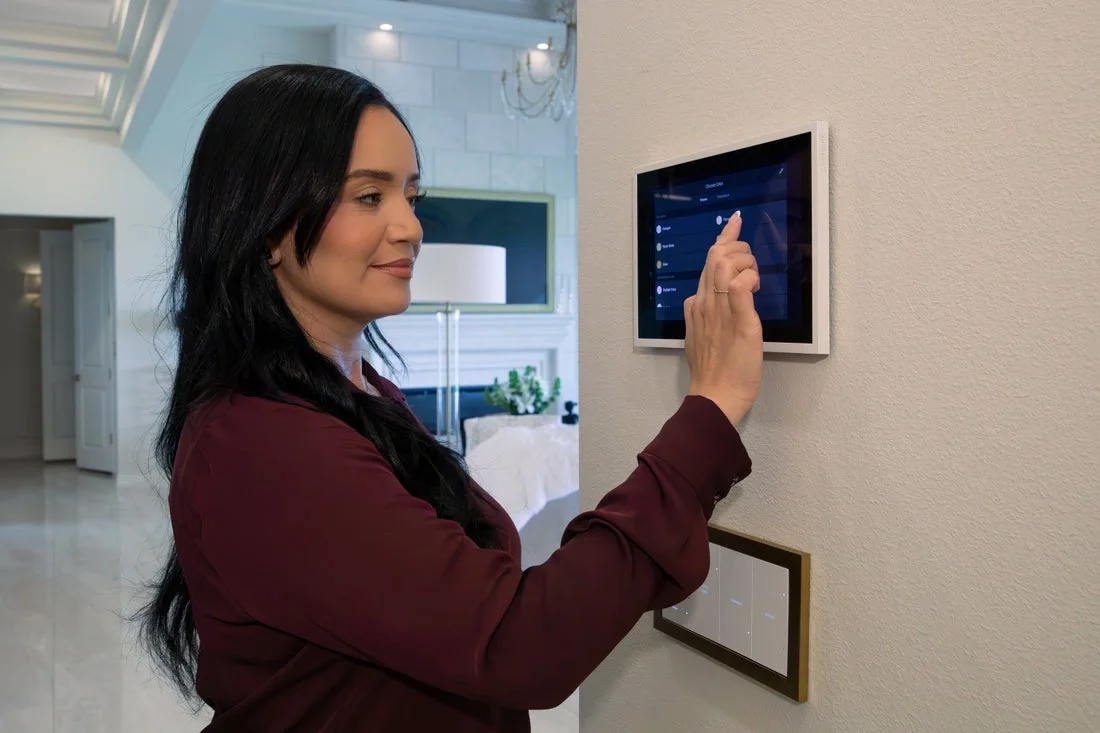
- Keypads or Apps: Control each zone via wall keypads or mobile app
Traditional Audio Components
System Components:
- Audio matrix or distribution platform: Routes sources to speaker zones. A control processor sends commands; it is not automatically an audio matrix
- Amplifiers: Multi-zone amplifiers (typically 4, 8, or 16 channels) that power speakers
- In-Wall Speakers: Speakers installed in walls (typically in living rooms, kitchens)
- In-Ceiling Speakers: Speakers installed in ceilings (most common placement)
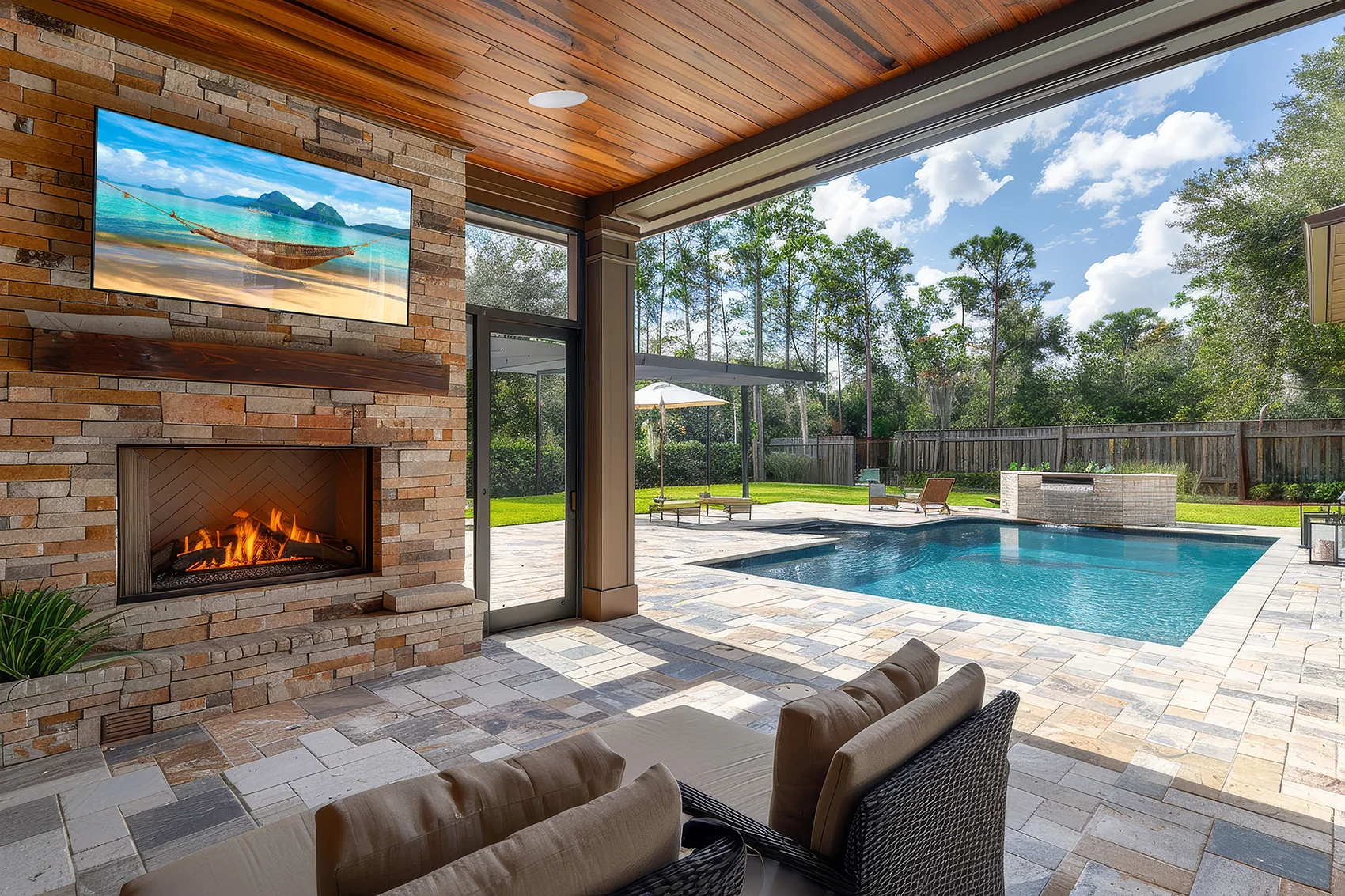
- Outdoor Speakers: Weather-resistant speakers for patios, decks, and outdoor areas
- Control Keypads: Wall-mounted keypads in each room for local control
- Speaker Wire: All speakers connect back to central location via speaker wire
Traditional Audio Advantages
- Less visible hardware: In-wall and in-ceiling speakers can reduce room clutter, though grilles remain visible
- Design range: The designer can choose among many speaker, amplifier, subwoofer, and source combinations
- Control-system integration: A compatible matrix or streaming platform can be programmed into Control4 or URC; verify exact functions
- Permanent installation: Wiring and architectural speakers remain with the home unless removed
- Scalability: Expansion is straightforward only when cable, rack space, amplifier channels, matrix inputs/outputs, and power capacity were reserved
- Professional Appearance: No visible speakers cluttering your rooms
- Multiple Source Support: Can play different sources in different zones simultaneously (TV audio, streaming, local music server)
- Many-zone design: Central equipment can organize larger zone counts, provided the system is sized and commissioned correctly
Traditional Audio Disadvantages
- Installation Required: Requires running speaker wire throughout your home - best done during construction or major renovation
- Installation cost: New cable routes and finish repairs can add cost, especially in a finished home. Compare complete quotes for the same rooms and functions
- Less Flexible: Speakers are permanent - can't easily move or change location
- Professional Installation: Requires professional installer (like us) for proper setup
- More Complex: More components, more wiring, more complexity
- Wiring Requirements: Needs speaker wire run to each location - challenging in finished homes
Head-to-Head Comparison: Sonos vs Traditional Audio
| Feature | Sonos | Traditional Distributed Audio |
|---|---|---|
| Installation | Easy - plug in and connect to WiFi | Complex - requires wiring and professional installation |
| Speakers | Visible wireless speakers | Hidden in-wall/in-ceiling speakers |
| Sound Quality | Depends on model, placement, room, source, and tuning | Depends on speakers, amplification, placement, room, source, and tuning |
| Cost | Quote from zone and product schedule | Quote from zone, wiring, rack, and product schedule |
| Flexibility | Highly flexible - move speakers easily | Permanent - built into home |
| Control4/URC Integration | Driver-supported; verify available functions | Platform- and hardware-dependent; verify available functions |
| App Experience | Sonos app; confirm the functions and services you use | Integrated with smart home app |
| Best For | Existing homes, easy setup, flexibility | New construction, renovations, higher-end installations |
| Network dependency | Wi-Fi or Ethernet, depending on the product and configuration | Speaker cable carries amplified audio; streaming sources and app control may still need the network or internet |
| Home Value | Portable products normally remain personal property | Built-in wiring and speakers remain, but resale value is not guaranteed |
Cost Comparison: Build the Same Zone Schedule
Retail prices and available Sonos models change. Installed distributed-audio pricing also changes with speaker, amplifier, matrix, wiring, finish, and labor choices. Compare the two approaches from one room-by-room schedule rather than stale package totals.
Include in a Sonos Scope
- Playback product for each room, plus any soundbars, surrounds, and subwoofers
- Sonos Amp and passive speakers where architectural audio is used
- Power outlets, mounts, network upgrades, Ethernet adapters or cabling, and installation
- Account setup, streaming services, room naming, tuning, integration, testing, and training
Include in a Centrally Amplified Scope
- Speaker count and exact models, backboxes or brackets, subwoofers, and outdoor hardware
- Amplifier channels and power, source or matrix equipment, streaming services, and control interfaces
- Speaker cabling, network, rack space, ventilation, power protection, installation, and finish work
- Programming, gain structure, room balancing, integration, testing, documentation, and training
Cost note: Sonos is not automatically cheaper, and architectural audio is not automatically more expensive or better sounding. Product level, room count, wiring access, labor, and performance goals determine the result.
Which System is Right for You?
Choose Sonos If:
- You want easy setup: Don't want to run wires or do major installation
- Your home is already built: Running wires would be difficult or expensive
- You value flexibility: Want to move or change speakers easily
- You want to start small: Can add speakers room by room over time
- You prefer visible speakers: Don't mind speakers on shelves or walls
- You have strong WiFi: Your home has reliable WiFi coverage throughout
- You want phased purchasing: Rooms can often be added without building a central multi-zone amplifier at the start
- You're not deeply integrated with Control4/URC: If you have a basic smart home setup or are just getting started
Choose Traditional Distributed Audio If:
- You're building or renovating: Good time to run speaker wires
- You want hidden speakers: Prefer clean, professional appearance with invisible speakers
- You want more speaker choice: The system can be designed around many passive speaker and amplifier combinations
- You have Control4 or URC: Want an audio platform selected and programmed as part of the control-system design
- You want permanent installation: Prefer built-in wiring and architectural speakers
- You have a large home: Multiple zones, many rooms, complex audio needs
- You want professional installation: Want a fully integrated, professionally installed system
- Budget includes infrastructure: Willing to include wiring, rack equipment, installation, programming, and commissioning
Hybrid Approach: Best of Both Worlds
You don't have to choose just one! Many homeowners combine Sonos and traditional audio:
- Traditional audio for main areas: Living room, kitchen, dining room with in-wall/in-ceiling speakers
- Sonos for flexibility: Bedrooms, offices, outdoor areas with Sonos speakers
- Sonos Amp integration: Use Sonos Amp to power traditional speakers, getting Sonos streaming with hidden speakers
This hybrid approach gives you the benefits of both systems - hidden speakers where you want them, and flexible wireless speakers where it makes sense.
Integration with Control4 and URC
If you have (or plan to have) a Control4 or URC smart home system, audio integration is important.
Sonos Integration
Sonos can integrate with Control4 and URC through supported drivers. Available browsing, grouping, favorites, transport, volume, and service functions can change with the platforms, software, and driver:
- Control4 integration: Verify the current Control4 Sonos driver, supported player models, authorization, and desired functions
- URC integration: Verify the current URC module, supported models, and desired functions
- Limitations: Some setup and service functions remain in the Sonos app, and updates can affect third-party behavior
- Best Use: Good for homes that want Sonos convenience with basic smart home integration
Traditional Audio Integration
A centrally amplified system can integrate closely with Control4 or URC when the selected matrix, streaming sources, amplifiers, and drivers support the planned functions:
- Platform integration: Sources, zones, and volume can be exposed according to the chosen hardware and drivers
- Unified Control: Control audio from your Control4 or URC app alongside everything else
- Scene Integration: Audio is part of scenes (e.g., "Dinner Party" scene includes music)
- Keypad Control: Use smart home keypads to control audio zones
- Unified experience: Supported audio functions can share the same interface as other programmed home systems
Bottom line: For a Control4 or URC project, compare the exact Sonos driver workflow with the proposed centralized-audio workflow. Neither should be described as the best without demonstrating the functions your household will use.
Installation Considerations
Sonos Installation
Sonos installation is relatively simple:
- Place speakers: Decide where speakers go (need power outlets nearby)
- Connect to WiFi: Use Sonos app to connect speakers to your WiFi network
- Set up app: Download Sonos app, create account, add streaming services
- Test and calibrate: Test all speakers, set up rooms/zones, calibrate audio if needed
Time: A single-room setup may be quick, while a multi-room project with mounting, network work, architectural speakers, TV audio, integration, and troubleshooting can take longer. Estimate after the scope and site conditions are known.
Traditional Audio Installation
Traditional audio installation is more involved:
- Design and planning: Determine speaker locations, zones, and wiring paths
- Run speaker wire: Wire from each speaker location back to central equipment location
- Install speakers: Cut holes, install in-wall/in-ceiling speakers
- Install equipment: Set up amplifiers, audio processors, and control equipment
- Wire and connect: Connect all speakers to amplifiers, connect sources
- Program system: Configure zones, sources, control interfaces
- Test and calibrate: Test all zones, calibrate audio levels, fine-tune
Time: The schedule depends on wiring access, construction phase, speaker and rack work, trade coordination, programming, testing, and finish repairs. State those assumptions in the proposal.
Common Questions About Whole Home Audio
Can I use Sonos speakers with traditional in-wall speakers?
Yes! Sonos Amp allows you to power traditional in-wall or in-ceiling speakers while getting Sonos streaming and app control. This gives you hidden speakers with Sonos convenience.
Do I need a Control4 or URC system for whole home audio?
No, but it helps. Sonos works standalone with just the Sonos app. Traditional distributed audio works well with Control4/URC, but some systems can work standalone or with simpler control.
Can I add outdoor speakers?
Yes, with products rated for the intended location. A Sonos Amp can power compatible passive outdoor speakers, and portable Sonos models have model-specific water and dust ratings. Do not permanently expose an indoor-only player or speaker outdoors.
What about home theater audio?
Home theater is separate from whole-home audio. You can have both - a dedicated home theater system for movies/TV, and whole-home audio for music throughout your home. They can share some components or be completely separate.
How many zones do I need?
Typically, each room or area is one zone. A typical home might have: Living Room, Kitchen, Master Bedroom, Guest Bedroom, Office, Outdoor Patio, etc. Each zone can play independently or be grouped with others.
Can I stream Spotify/Apple Music with both systems?
Sonos supports many streaming services. A traditional system supports the services available through its selected streamer or control platform. Confirm the household's specific services, account tier, region, audio format, and control features before specifying hardware.
What if my WiFi isn't strong enough for Sonos?
Current Sonos products still depend on a healthy network even when some components use Ethernet. Wireless and wired behavior varies by model, and older SonosNet or Boost advice does not apply to every current player. Diagnose the existing network and check each model's requirements. Centrally wired speakers do not use Wi-Fi for the amplifier-to-speaker link, but streaming sources and apps can still depend on the network and internet.
Which adds more value to my home?
Built-in wiring and architectural speakers usually remain with the property, while portable speakers may not. The effect on resale value depends on buyer preferences, system age, condition, documentation, serviceability, and the local market; this article does not promise a financial increase.
What Denali Tech includes in an audio plan
Denali Tech plans Sonos, architectural speakers, centralized amplification, and hybrid systems for Chicago-area homes. The recommendation begins with the rooms and listening habits rather than forcing every project into one product family.
- One room-by-room schedule: Compare both approaches using the same rooms, sources, speakers, and control expectations
- Visible choices: Decide where freestanding speakers are welcome and where architectural speakers should disappear
- Control4/URC experience: We verify the audio products, drivers, and required functions before proposing integration
- Professional installation: We document speaker placement, wiring, equipment, configuration, and testing
- Custom Design: We design systems specifically for your home's layout and your listening preferences
- Ongoing Support: We're here long-term for troubleshooting, upgrades, and additions
- Written pricing: Equipment, labor, allowances, exclusions, subscriptions, and service terms are stated in the proposal
Want a room-by-room audio plan?
Tell us which rooms matter, where speakers can be visible, what you listen to, and whether the home is finished or under construction.
A useful project review includes:
- Assessment of your home and audio needs
- Recommendation for Sonos vs traditional audio
- Custom design for your home
- Written equipment, labor, assumptions, exclusions, and support terms
- Answers to all your questions
Or message us on WhatsApp
Serving Chicago and surrounding suburbs
Official references
Sonos Amp specifications · Sonos Amp setup · Episode amplifier family. Reviewed August 21, 2026. Zone count, simultaneous sources, speaker load, streaming services, app behavior, network dependence, control integration, and supported audio formats depend on the exact products and software. Neither architecture is automatically better for every home.
The short answer
Both Sonos and traditional distributed audio can deliver excellent whole-home audio experiences. The right choice depends on your home, your priorities, and your budget.
Choose Sonos if: You want easy setup, flexibility, and don't mind visible speakers. Useful for existing homes and those who value convenience.
Choose centrally amplified audio if: You want hidden speakers, dedicated wiring, broad passive-speaker choice, and a system designed around a central rack. It is especially practical during construction or renovation.
A hybrid approach can also be appropriate when some rooms need hidden speakers and others benefit from flexible self-powered products.
The correct answer should come from a room-by-room plan, not a generic claim that one architecture is always better.
Choose the audio system from the rooms—not the brochure
Send the room list, construction stage, listening habits, and photos or plans. We will help define the simplest supportable approach.
Send Audio Project Details