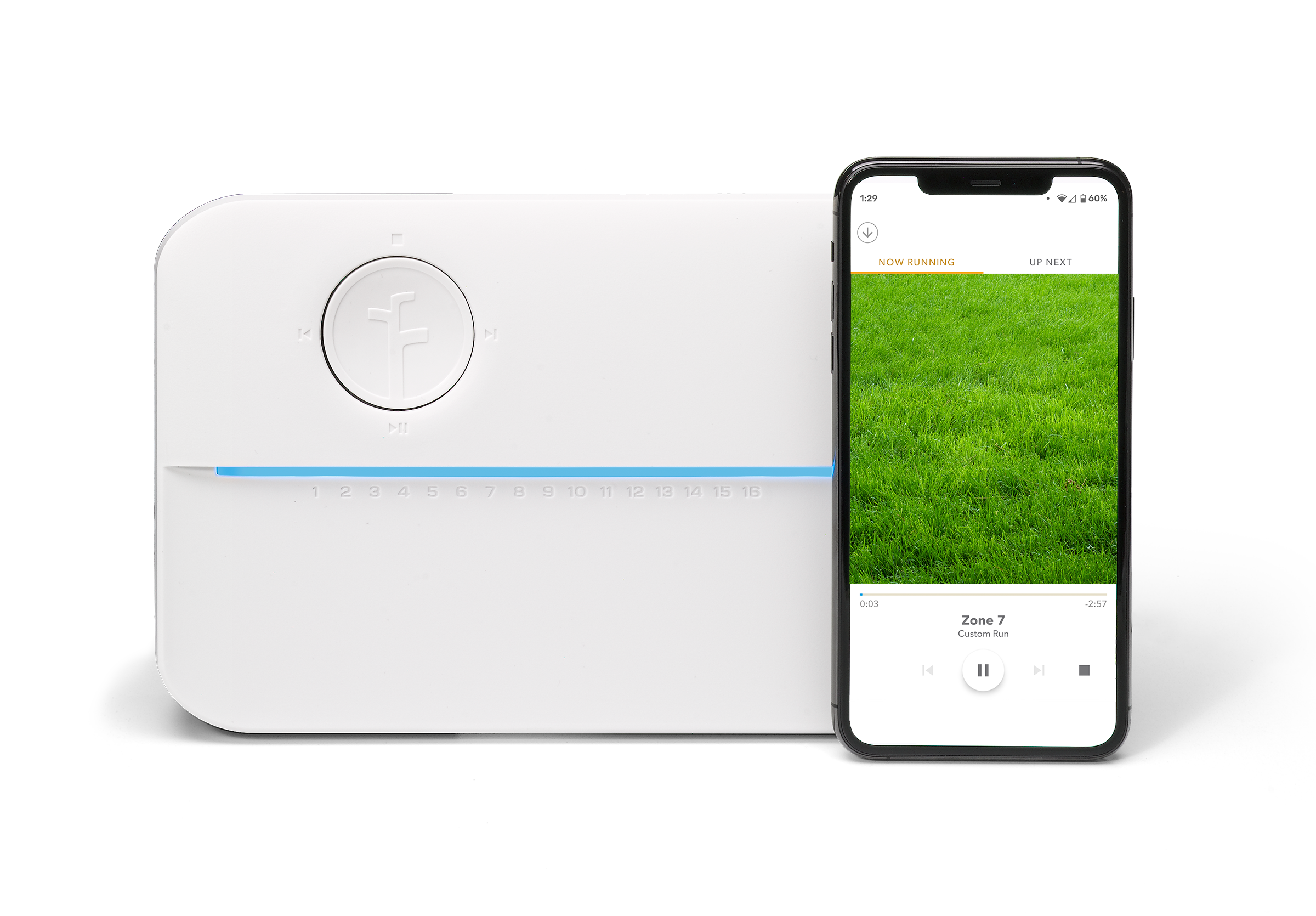
- Zone names, plants, soil, slope and nozzle type
- Fixed or adaptive watering schedules
- Rain, freeze, wind and saturation skips
- Master valve or pump-start control
- Zone faults and irrigation history
One yard, two clear responsibilities
+
- Simple run, stop and pause controls
- Party, arrival and service scenes
- Useful notifications and keypad feedback
- Coordination with gates, cameras and lighting
- One clear interface for supported status
The complete irrigation system is more than a controller
A smart timer cannot correct bad coverage, mixed precipitation rates, leaking pipe, poor pressure or an unprotected backflow connection.
Approved isolation, backflow prevention and service access belong in the plumbing/irrigation design.
Pipe sizing, pressure, pump and master valve must support the required zone flow without excessive velocity or loss.
Match the required zone count, common wire, valve voltage, sensors, master valve/pump and expansion plan.
Solenoids, valve boxes, drip regulation, spray/rotor nozzles and check valves determine what actually happens outside.
Use controller-supported weather sources and sensors with thresholds appropriate to the property and plant material.
Different sensors detect different failures; design the response around what each measurement can truly prove.
Cloud-integrated controllers need strong Wi-Fi or the required network path at the actual mounting location.
Document spring startup, seasonal adjustment, inspections, shutdown, winterization and emergency isolation.
CURRENT EXAMPLE
Rachio and Control4: confirm the integration chain
Rachio currently directs Control4 users to a third-party driver from BlackWire Designs. Rachio also states that third-party integrations require the controller to be registered to the primary account and remain connected to the internet.
- Confirm Rachio model and zone count
- Confirm the current Control4 driver and license
- Verify OAuth/API or account setup and ownership
- List supported zone, schedule, stop and status functions
- Document behavior during internet or cloud loss
- Keep the Rachio app available for native diagnostics
Compatibility rule: rely only on commands and feedback verified in the current driver. “Works with Control4” does not mean every native app feature appears in Control4.
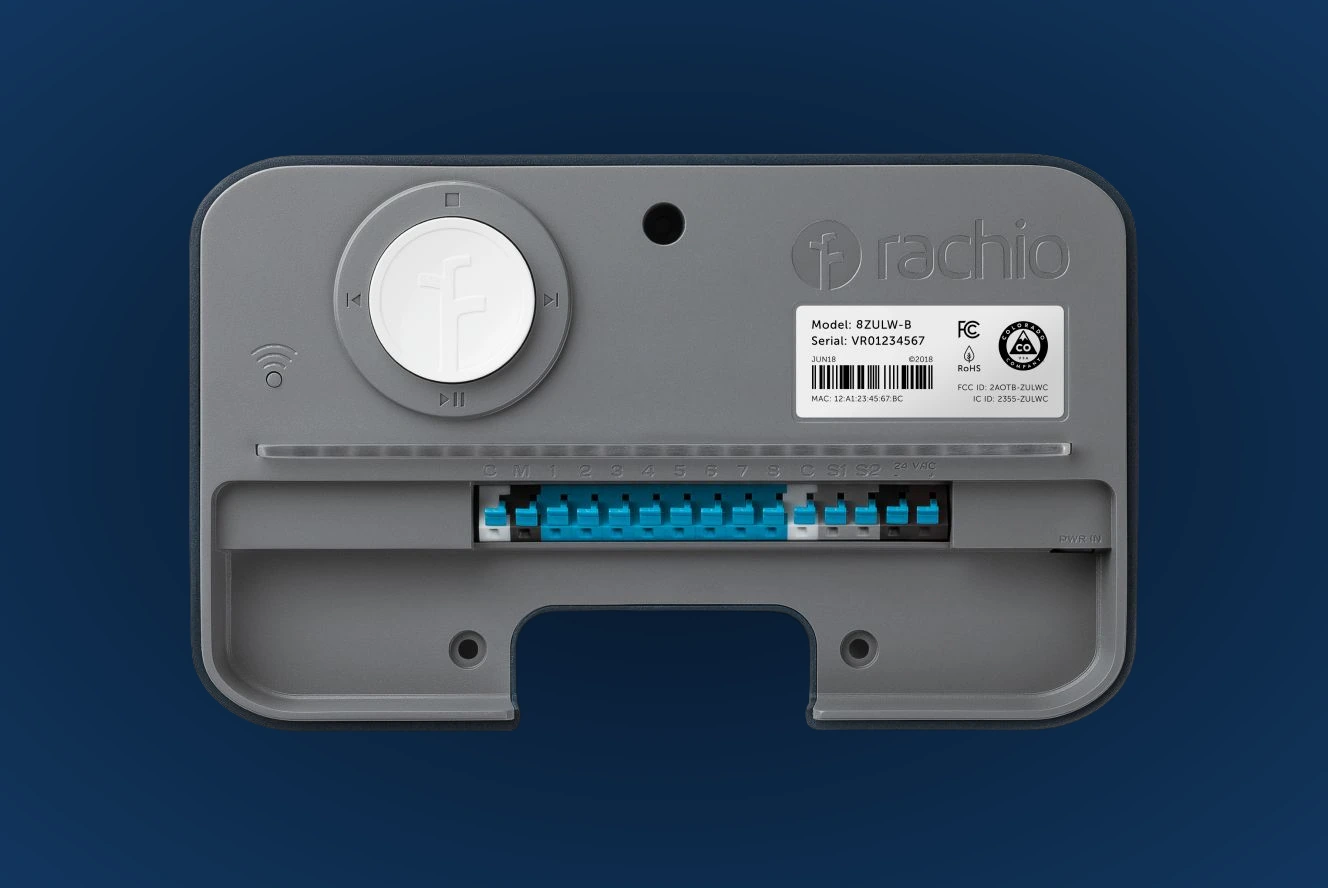
Choose the right place for each kind of logic
| Function | Best owner | Why | Control4 role | Verify |
|---|---|---|---|---|
| Zone definition | Native irrigation controller | Plant, soil, slope, sun and nozzle data belong with the watering engine | Display a clear homeowner-focused name where supported | Zone naming and count match the field wiring |
| Fixed / adaptive schedule | Native irrigation controller | Weather and seasonal calculations need one source of truth | Show status and provide deliberate pause/stop controls | Local watering restrictions and allowable days |
| Rain/freeze/wind skip | Native irrigation controller | It understands upcoming schedule, zone needs and native weather data | Notify or coordinate other scenes if useful | Thresholds, source accuracy and cloud dependency |
| Party / arrival pause | Control4 coordination | It understands the gate, driveway, patio, lighting and occupancy context | Pause or stop through verified driver functions | Resume behavior and maximum pause duration |
| Quick zone run | Native controller or verified Control4 command | Useful for testing and hand watering | Provide a timed, clearly named shortcut where supported | Runtime limit, zone feedback and stop command |
| Leak / abnormal flow response | Flow device + irrigation controller | Requires real hydraulic measurement and an approved isolation strategy | Notify and coordinate supported shutoff action | Sensor limits, master valve, false positives and recovery |
| Winterization | Irrigation professional | Physical draining, blowout and backflow service cannot be automated away | Seasonal reminders and interface lockout only | Climate, system type and responsible contractor |
Weather-aware does not mean “set it and forget it”
Rachio's current Weather Intelligence documentation includes Rain, Freeze, Wind and Saturation Skip plus Seasonal Shift. Every feature depends on correct zone settings and a trustworthy weather source.
Avoid a scheduled run when observed or forecast rain meets the configured condition.
Prevent scheduled watering near the chosen low-temperature threshold; this is not winterization.
Reduce inefficient spray drift when forecast wind exceeds the configured threshold.
Consider observed and forecast moisture so saturated soil can carry the zone to its next opportunity.
Adjust runtime as seasonal demand changes instead of using the same duration all year.
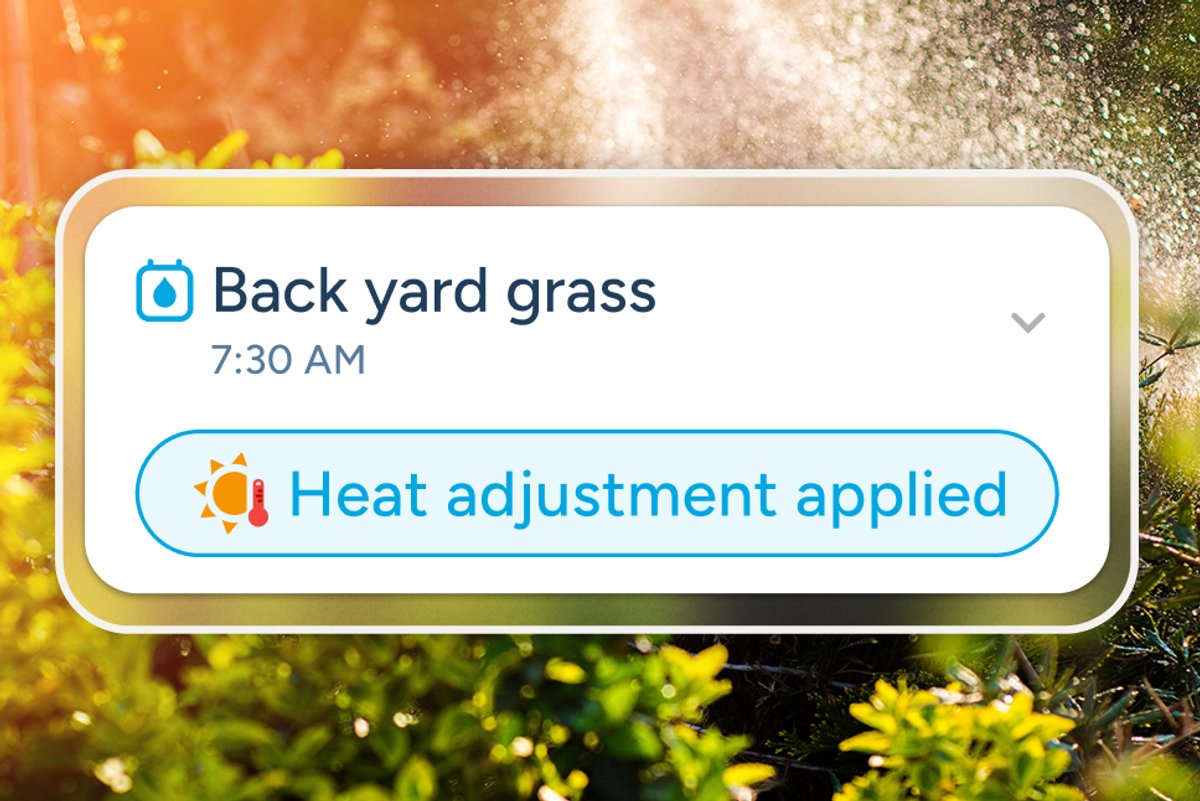
Map the yard before naming the buttons
You should see “Front Perennial Beds” or “Back Lawn East,” not “Zone 7.” The map must match the valves, wire labels and actual spray pattern.
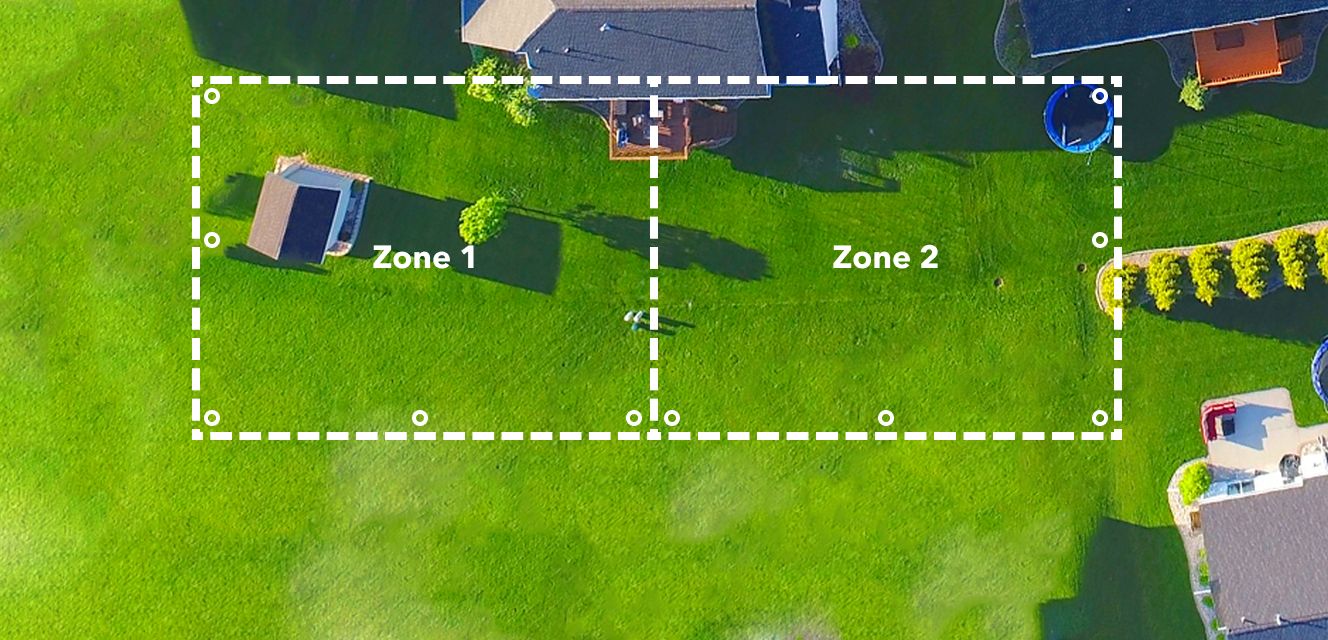
Separate turf, shrubs, trees, annuals and containers when their water needs differ.
Do not mix sprays, rotors and drip with very different precipitation rates in one zone.
Exposure, slope, soil infiltration and root depth affect duration, frequency and cycle/soak strategy.
Label each valve box, wire and controller terminal so the software map stays connected to the field.
Electrical monitoring and flow monitoring answer different questions
Abnormal current can indicate an open circuit, short, failing coil or wiring problem. It does not prove that water is moving, a pipe is intact or a valve has physically closed.
- Useful for zone electrical faults
- Requires a learned healthy baseline
- Can be affected by multiple valves on one terminal
An appropriately designed flow sensor can reveal unexpected water use, broken lines, stuck valves or poor zone behavior. It still needs thresholds, commissioning and a safe isolation plan.
- Measure normal flow for every zone
- Coordinate master-valve or pump response
- Define who inspects before automatic restart
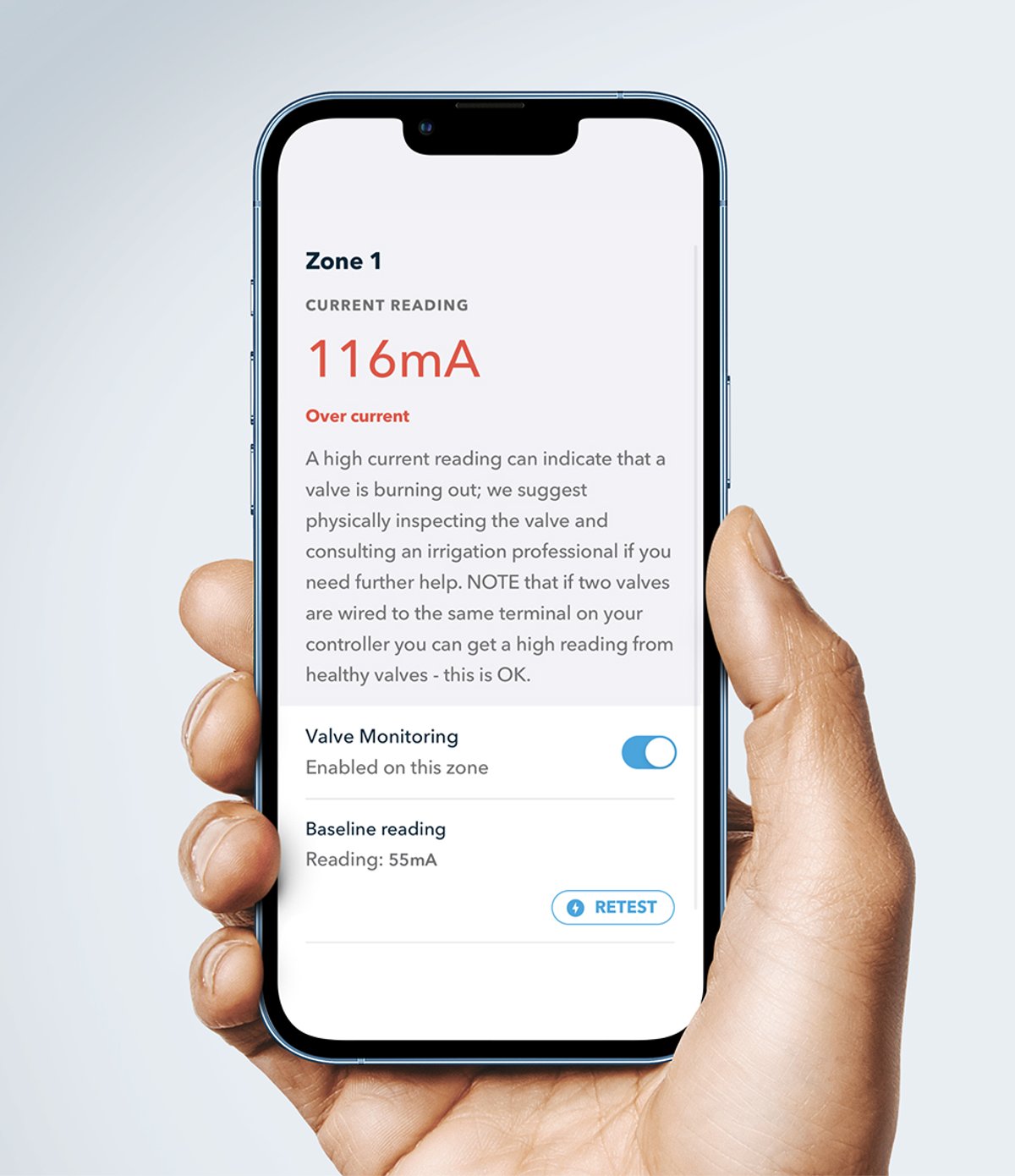
ACTIONABLE ALERTS
An alert should say what failed, where and what happened next
- Name the exact zone and property area
- Distinguish electrical fault from abnormal water flow
- State whether watering stopped or the master valve closed
- Identify the responsible irrigation contractor
- Require inspection before resuming a suspected leak
Scenes that make the outdoor system feel thoughtful
Pause active watering, prevent a new run during the event, and coordinate patio lights and outdoor audio—then resume through a defined rule.
Stop driveway-adjacent zones when a verified arrival occurs so guests and vehicles are not sprayed.
Give the irrigation professional a timed quick-run workflow with names that match the valve boxes and yard map.
Stop supported watering, apply the approved isolation response and notify the homeowner with zone, time and fault type.
Resume logic matters: a “pause” scene is incomplete until the design states when watering may resume, which schedule stays skipped and what happens if the event lasts overnight.
WATER + PROPERTY BOUNDARIESBackflow protection Water restrictions Freeze and winterization Overspray and runoff Pumps and master valves Reclaimed water
Smart watering still needs physical protection and professional service
Use the required approved backflow assembly, clearances, testing and winter service. Automation must never bypass it.
Program local watering days, time windows, drought rules and permit requirements into the controller's source-of-truth schedule.
A freeze skip prevents a run; it does not drain pipes, protect a backflow device or replace professional seasonal shutdown.
Correct heads, pressure, nozzle selection, cycle/soak and grading so water stays off roads, walls, windows and neighboring property.
Interlock and size them within the irrigation design. Do not duplicate critical pump protection in a generic Control4 scene.
Follow identification, separation, cross-connection and public-health requirements for the actual water source and jurisdiction.
Network, installation and commissioning checklist
Record plant type, nozzle/emitter, sun, slope, soil, valve box, terminal, expected runtime and normal flow where measured.
Allow for present zones, master valve or pump start, sensors and realistic future landscape expansion.
Measure real Wi-Fi at the controller, avoid metal enclosures that block signal, and document internet-loss behavior.
Use the manufacturer-approved outdoor enclosure, power, strain relief, surge strategy and service clearances where required.
Confirm current driver, license, primary account, API/cloud path, commands, state feedback and update latency.
Test every zone, correct coverage, establish precipitation/flow data, set weather thresholds and validate cycle/soak behavior.
Simulate rain/freeze skip, valve fault, abnormal flow, internet loss, controller restart, scene pause and controlled resume.
Provide spring startup, inspection, controller ownership, contractor access, winter shutdown and emergency isolation steps.
A simple way to compare the options
“The irrigation controller knows each zone, the plants, the weather and the watering schedule. Control4 knows when you are arriving, entertaining or need an alert. We connect the two so the yard responds to real life while keeping one reliable source of truth for watering and one clear service plan.”
Planning irrigation for a new landscape or smart-home renovation?
Tell us how you want watering to fit around daily life, and send your irrigation-controller model or a photo. Include a yard plan if you have one. We can coordinate the Control4 experience with the irrigation, landscape, plumbing and electrical teams before trenching and planting are finished.